
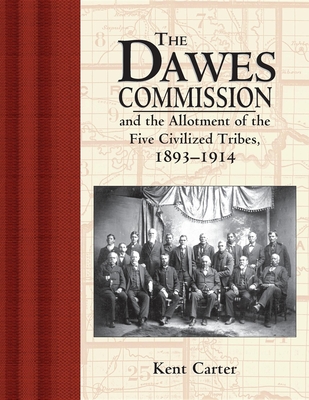
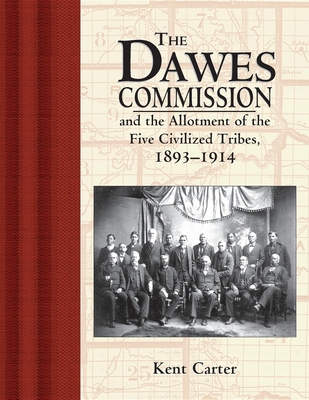
The Dawes Commission : And the Allotment of the Five Civilized Tribes, 1893-1914
by
Kent Carter
Book Details
Format
Hardback
ISBN-10
1630263109
ISBN-13
9781630263102
Publisher
Turner Publishing Company
Imprint
Turner Publishing Company
Country of Manufacture
GB
Country of Publication
GB
Publication Date
Jun 17th, 1999
Print length
296 Pages
KSh 4,700.00
Re-Printing
0 in stock
Delivery Location
Delivery fee: Select location
Secure
Quality
Fast
Important New Resource for Native American Research from Ancestry.com of special interest to researchers of the Cherokee, Choctaw, Chickasaw, Creek or Seminole Indian Nations. ""Well researched . . . all encompassing . . . The historian, the academician, the sociologist, and the genealogist--all will find it a vital work.” ?Curt B. Witcher, MLS, FUGA, Manager, Historical Genealogy Dept. Allen Co. Public Library Discover how the U.S. Congress tried to end self-government for five major American Indian tribes and assimilate them into the dominant culture. Regarded by some as a human tragedy, the Dawes Commission is one of the most highly controversial subjects involving US government treatment of Native Americans. From 1893 to 1914, the program provided an allotment of land to each Indian that enrolled. Yet of the 300,000 people who applied for enrollment, almost two thirds were rejected. Why? The answer to that golden question has eluded scholars for nearly a century. This important work takes major strides in unraveling the mystery. Ken Carter's thorough research of the Dawes Commission delves into its organization and procedures to clarify enrollment and allotment decisions for the thousands of people who applied. It points out the difficulties Congress had in implementing its plan and the disastrous effects the program had on the people it was designed to help. Rich in historical photographs, thoroughly footnoted, and containing actual documents of the commission's records, the book will provide anyone with interest in the Dawes Commission, or of Native American ancestry, a heightened understanding of the Dawes Commission and the Five Civilized Tribes. Includes a list of tribal rolls from the Dawes Commission records.
Important New Resource for Native American Research from Ancestry.com of special interest to researchers of the Cherokee, Choctaw, Chickasaw, Creek or Seminole Indian Nations. ""Well researched . . . all encompassing . . . The historian, the academician, the sociologist, and the genealogist--all will find it a vital work.” —Curt B. Witcher, MLS, FUGA, Manager, Historical Genealogy Dept. Allen Co. Public Library Discover how the U.S. Congress tried to end self-government for five major American Indian tribes and assimilate them into the dominant culture. Regarded by some as a human tragedy, the Dawes Commission is one of the most highly controversial subjects involving US government treatment of Native Americans. From 1893 to 1914, the program provided an allotment of land to each Indian that enrolled. Yet of the 300,000 people who applied for enrollment, almost two thirds were rejected. Why? The answer to that golden question has eluded scholars for nearly a century. This important work takes major strides in unraveling the mystery. Ken Carter''s thorough research of the Dawes Commission delves into its organization and procedures to clarify enrollment and allotment decisions for the thousands of people who applied. It points out the difficulties Congress had in implementing its plan and the disastrous effects the program had on the people it was designed to help. Rich in historical photographs, thoroughly footnoted, and containing actual documents of the commission''s records, the book will provide anyone with interest in the Dawes Commission, or of Native American ancestry, a heightened understanding of the Dawes Commission and the Five Civilized Tribes. Includes a list of tribal rolls from the Dawes Commission records.
Get The Dawes Commission by Kent Carter at the best price and quality guaranteed only at Werezi Africa's largest book ecommerce store. The book was published by Turner Publishing Company and it has 296 pages.
Customers Who Bought This Also Bought

A Sketch of the Willis Family of Virginia, and of Their Kindred in Other States. With Brief Biographies of the Reades, Warners, Lewises, Byrds, Carters, Champs, Bassetts, Madisons, Daingerfields, Thorntons, Burrells, Taliaferros, Tayloes, Smiths, And...
KSh 2,500.00

The Women Writers' Handbook
KSh 2,350.00

A Spotter’s Guide to the Countryside
KSh 2,350.00

The Artist's Curse
KSh 2,900.00

4001 Babies'' Names and Their Meanings
KSh 500.00

Historical and Critical Dictionary
KSh 3,650.00
Historical Dictionary of Aid and Development Organizations
KSh 12,050.00

Methuen Drama Handbook of Women in Contemporary British Theatre
KSh 25,400.00

The Artist''s Complete Guide to Facial Expression
KSh 4,400.00

Elson's music dictionary; containing the definition and pronunciation of such terms and signs as are used in modern music; together with a list of foreign composers and artists with Pronunciation of their Names, A list of popular errors in Music, Rules for
KSh 2,550.00

Malt Whisky Companion
KSh 4,050.00

Spider–Man For Dummies
KSh 4,150.00
More by Kent Carter
More in This Genre
A Sketch of the Willis Family of Virginia, and of Their Kindred in Other States. With Brief Biographies of the Reades, Warners, Lewises, Byrds, Carters, Champs, Bassetts, Madisons, Daingerfields, Thorntons, Burrells, Taliaferros, Tayloes, Smiths, And...
KSh 2,500.00
The Women Writers' Handbook
KSh 2,350.00
A Spotter’s Guide to the Countryside
KSh 2,350.00
The Artist's Curse
KSh 2,900.00
4001 Babies'' Names and Their Meanings
KSh 500.00
Historical and Critical Dictionary
KSh 3,650.00
