
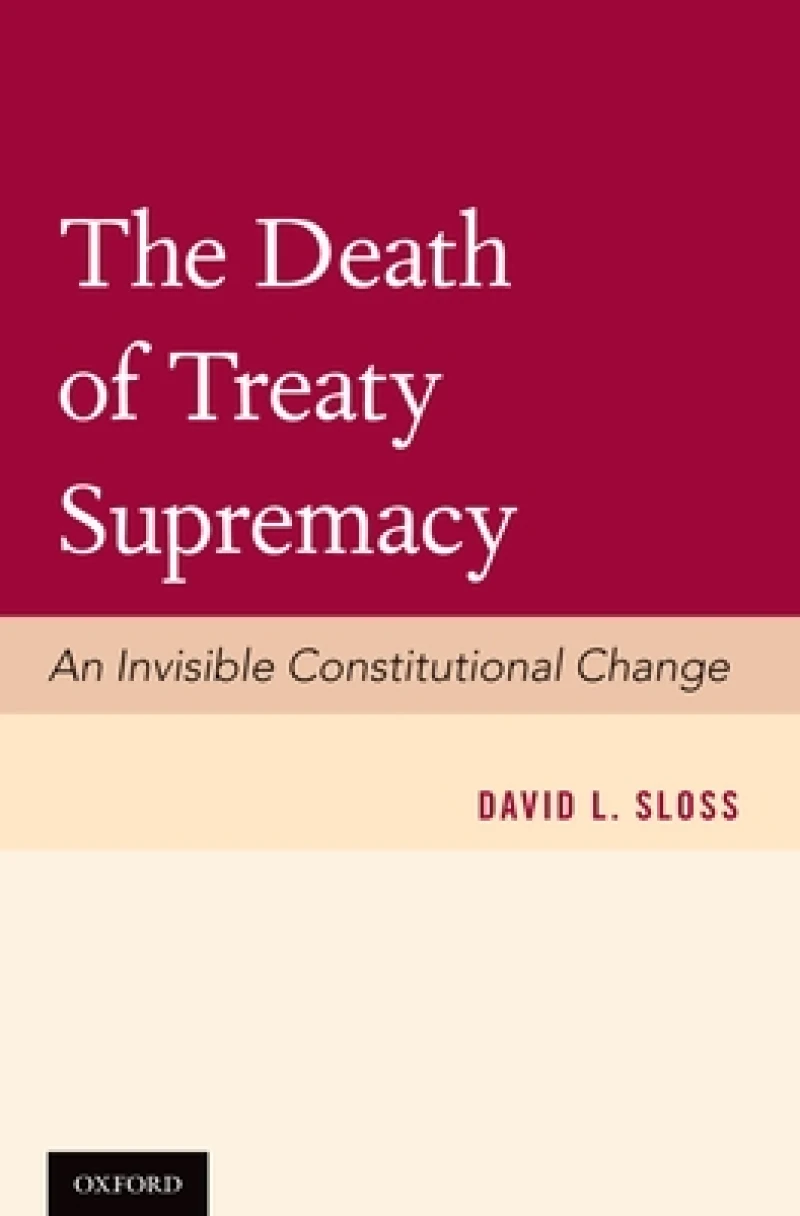
The Death of Treaty Supremacy : An Invisible Constitutional Change
Book Details
Format
Hardback or Cased Book
ISBN-10
0199364028
ISBN-13
9780199364022
Publisher
Oxford University Press Inc
Imprint
Oxford University Press Inc
Country of Manufacture
US
Country of Publication
GB
Publication Date
Oct 27th, 2016
Print length
472 Pages
Weight
953 grams
Dimensions
16.50 x 23.60 x 3.30 cms
Product Classification:
International relationsLegal historyPublic international lawConstitutional & administrative law
Ksh 24,050.00
Werezi Extended Catalogue
0 in stock
Delivery Location
Delivery fee: Select location
Secure
Quality
Fast
This book provides the first detailed history of the Constitution''s treaty supremacy rule, describing a process of invisible constitutional change. The traditional supremacy rule provided that all treaties supersede conflicting state laws, and precluded state governments from violating U.S. treaty obligations. The author discusses the implications of the U.S. ratified UN Charter that obligates nations to promote human rights "for all without distinction as to race" and covers the Bricker Amendment created to abolish the treaty supremacy rule.
This book provides the first detailed history of the Constitution''s treaty supremacy rule. It describes a process of invisible constitutional change. The treaty supremacy rule was a bedrock principle of constitutional law for more than 150 years. It provided that treaties are supreme over state law and that courts have a constitutional duty to apply treaties that conflict with state laws. The rule ensured that state governments did not violate U.S. treaty obligations without authorization from the federal political branches. In 1945, the United States ratified the UN Charter, which obligates nations to promote human rights for all without distinction as to race. In 1950, a California court applied the Charters human rights provisions along with the traditional supremacy rule to invalidate a state law that discriminated against Japanese nationals. The implications were shocking: the decision implied that the United States had abrogated Jim Crow laws throughout the South by ratifying the UN Charter. Conservatives reacted by lobbying for a constitutional amendment, known as the Bricker Amendment, to abolish the treaty supremacy rule. The amendment never passed, but Bricker''s supporters achieved their goals through de facto constitutional change. Before 1945, the treaty supremacy rule was a mandatory constitutional rule that applied to all treaties. The de facto Bricker Amendment converted the rule into an optional rule that applies only to self-executing treaties. Under the modern rule, state governments are allowed to violate national treaty obligationsincluding international human rights obligationsthat are embodied in non-self-executing treaties.
Get The Death of Treaty Supremacy by at the best price and quality guaranteed only at Werezi Africa's largest book ecommerce store. The book was published by Oxford University Press Inc and it has pages.

