
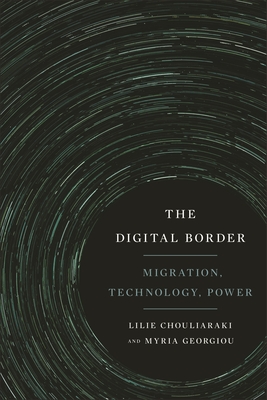
The Digital Border : Migration, Technology, Power
Book Details
Delivery Location
Delivery fee: Select location
Delivery in 12 days
How do digital technologies shape the experiences and meanings of migration?
As the numbers of people fleeing war, poverty, and environmental disaster reach unprecedented levels worldwide, states also step up their mechanisms of border control. In this, they rely on digital technologies, big data, artificial intelligence, social media platforms, and institutional journalism to manage not only the flow of people at crossing-points, but also the flow of stories and images of human mobility that circulate among their publics.
What is the role of digital technologies is shaping migration today? How do digital infrastructures, platforms, and institutions control the flow of people at the border? And how do they also control the public narratives of migration as a "crisis"? Finally, how do migrants themselves use these same platforms to speak back and make themselves heard in the face of hardship and hostility?
Taking their case studies from the biggest migration event of the twenty-first century in the West, the 2015 European migration "crisis" and its aftermath up to 2020, Lilie Chouliaraki and Myria Georgiou offer a holistic account of the digital border as an expansive assemblage of technological infrastructures (from surveillance cameras to smartphones) and media imaginaries (stories, images, social media posts) to tell the story of migration as it unfolds in Europe''s outer islands as much as its most vibrant cities.
This is a story of exclusion, marginalization, and violence, but also of care, conviviality, and solidarity. Through it, the border emerges neither as strictly digital nor as totally controlling. Rather, the authors argue, the digital border is both digital and pre-digital; datafied and embodied; automated and self-reflexive; undercut by competing emotions, desires, and judgments; and traversed by fluid and fragile social relationships—relationships that entail both the despair of inhumanity and the promise of a better future.
Get The Digital Border by Lilie Chouliaraki, Myria Georgiou at the best price and quality guaranteed only at Werezi Africa's largest book ecommerce store. The book was published by New York University Press and it has 256 pages.
Customers Who Bought This Also Bought
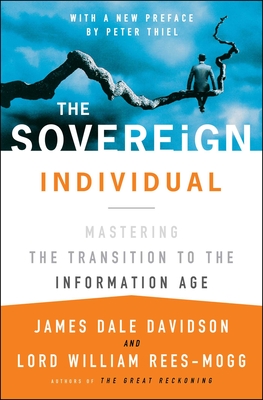
The Sovereign Individual
KSh 3,600.00
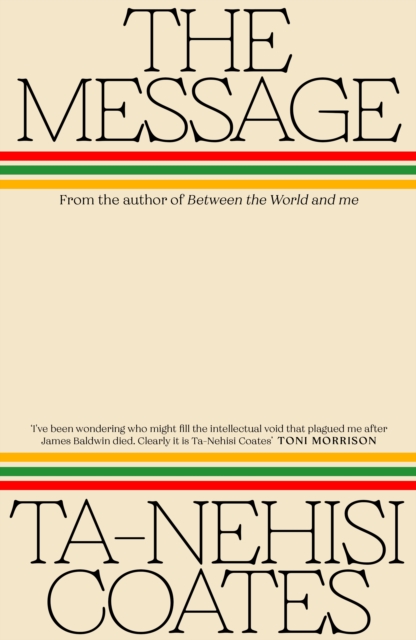
Message
KSh 3,400.00

Covering Islam
KSh 2,350.00
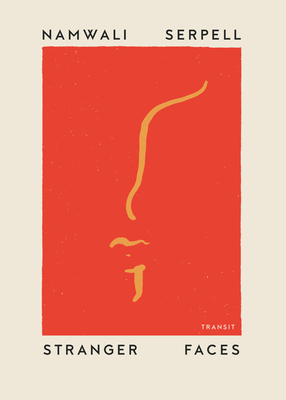
Stranger Faces
KSh 2,500.00

Careless People
KSh 2,000.00

Careless People
KSh 3,950.00

Medium is the Massage
KSh 2,000.00

Let Me Tell You What I Mean
KSh 2,000.00

Manufacturing Consent
KSh 2,350.00
A Web of Our Own Making
KSh 4,650.00
Understanding Media
KSh 5,750.00

Chokepoint Capitalism
KSh 2,000.00
More by Lilie Chouliaraki, Myria Georgiou
Media, Organizations and Identity
KSh 8,100.00

Being Human in Digital Cities
KSh 3,250.00

The Spectatorship of Suffering
KSh 30,950.00

The Ironic Spectator
KSh 9,900.00

Ironic Spectator
KSh 3,350.00

Wronged – The Weaponization of Victimhood
KSh 4,500.00
Media and the City – Cosmopolitanism and Difference
KSh 2,950.00

Being Human in Digital Cities
KSh 9,900.00

Diaspora, Identity and the Media
KSh 3,650.00
Media and the City – Cosmopolitanism and Difference
KSh 9,000.00

Politics of Public Space - Volume 2
KSh 3,250.00
The Spectatorship of Suffering
KSh 11,150.00
