
Book Details
Format
Paperback / Softback
Book Series
Linguistic Insights
ISBN-10
3039112414
ISBN-13
9783039112418
Edition
New
Publisher
Verlag Peter Lang
Imprint
Verlag Peter Lang
Country of Manufacture
CH
Country of Publication
GB
Publication Date
Oct 16th, 2007
Print length
276 Pages
Weight
394 grams
Dimensions
15.10 x 22.50 x 1.60 cms
Product Classification:
EnglishLexicographyLiterary studies: c 1900 to c 2000Literary studies: from c 1900 -
Ksh 14,950.00
Manufactured on Demand
0 in stock
Delivery Location
Delivery fee: Select location
Secure
Quality
Fast
This book received the Leocadio Martín Mingorance award
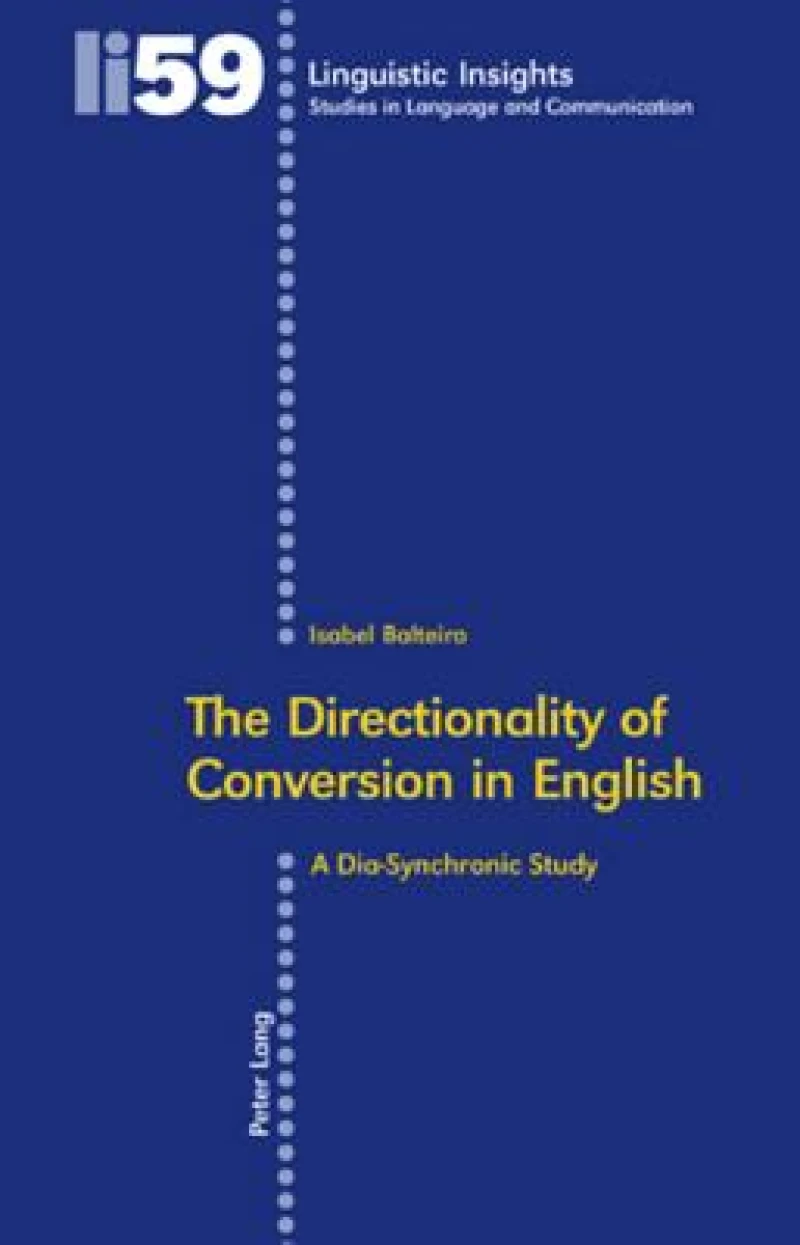
This book describes three of the main problems that the word-formation process known as conversion presents, namely those related to its definition, its delimitation, and its directionality. The latter constitutes, however, the main focus of the study, which is based on a corpus of over seven hundred lexical units and, more specifically, on 231 actual noun-verb conversion pairs. Considering that directionality is intrinsic to conversion, the main question is whether it is always possible to establish the direction of conversion or whether it is possible to do so only in some cases. Moreover, the study reveals what ‘type’ of directionality is involved, that is, whether the process is unidirectional, bidirectional or multi-directional. In order to answer these questions, both diachronic (etymology and dates of first records) and synchronic criteria (semantic dependence, restriction of usage, semantic range, semantic pattern, phonetic shape, morphologic type, stress, and the principle of relative markedness) are analysed and assessed.
This book describes three of the main problems that the word-formation process known as conversion presents, namely those related to its definition, its delimitation, and its directionality. The latter constitutes, however, the main focus of the study, which is based on a corpus of over seven hundred lexical units and, more specifically, on 231 actual noun-verb conversion pairs. Considering that directionality is intrinsic to conversion, the main question is whether it is always possible to establish the direction of conversion or whether it is possible to do so only in some cases. Moreover, the study reveals what ‘type’ of directionality is involved, that is, whether the process is unidirectional, bidirectional or multi-directional. In order to answer these questions, both diachronic (etymology and dates of first records) and synchronic criteria (semantic dependence, restriction of usage, semantic range, semantic pattern, phonetic shape, morphologic type, stress, and the principle of relative markedness) are analysed and assessed.
Get The Directionality of Conversion in English by at the best price and quality guaranteed only at Werezi Africa's largest book ecommerce store. The book was published by Verlag Peter Lang and it has pages.

