
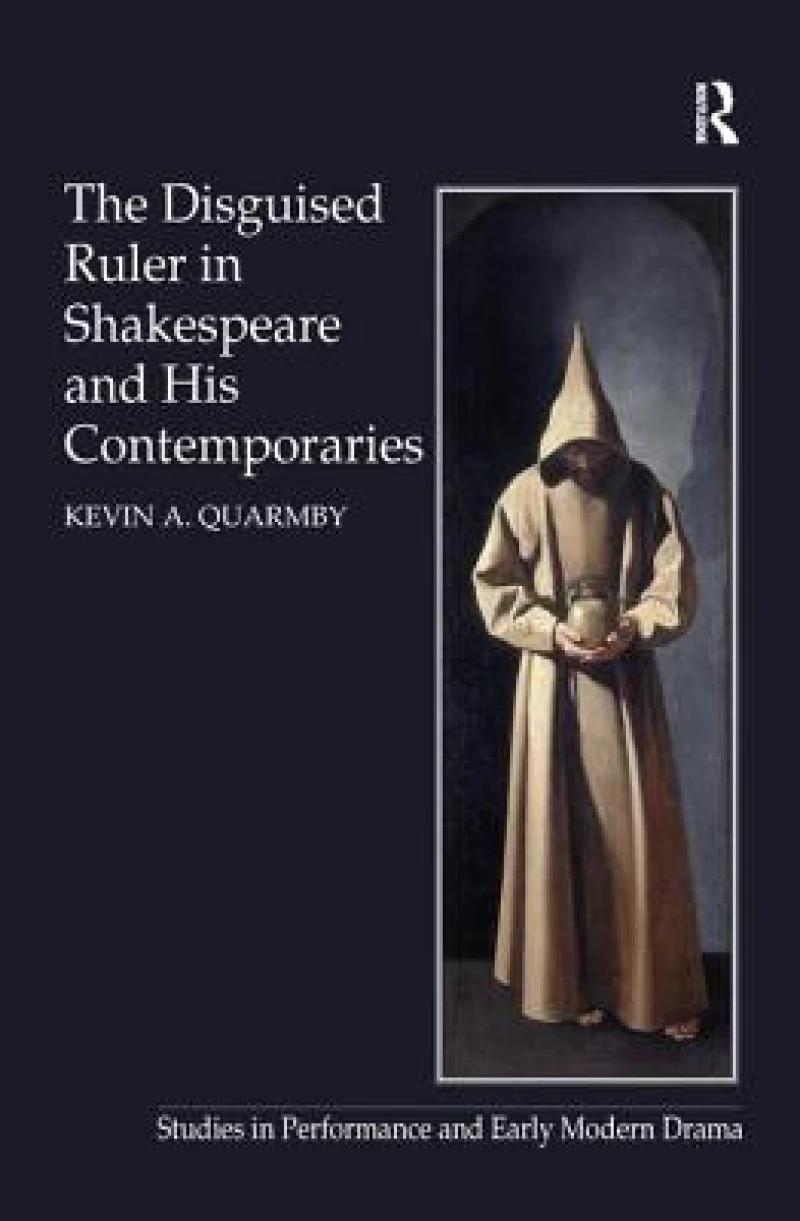
The Disguised Ruler in Shakespeare and his Contemporaries
Book Details
Format
Paperback / Softback
Book Series
Studies in Performance and Early Modern Drama
ISBN-10
1138277045
ISBN-13
9781138277045
Publisher
Taylor & Francis Ltd
Imprint
Routledge
Country of Manufacture
GB
Country of Publication
GB
Publication Date
Nov 16th, 2016
Print length
280 Pages
Weight
428 grams
Dimensions
15.50 x 23.50 x 2.00 cms
Product Classification:
Plays, playscriptsLiterary studies: generalLiterary studies: plays & playwrights
Ksh 10,800.00
Werezi Extended Catalogue
0 in stock
Delivery Location
Delivery fee: Select location
Secure
Quality
Fast
Measure for Measure, Malcontent and other disguised ruler plays are typically interpreted as synchronic political commentaries about King James. Quarmby, by contrast, traces the disguised ruler''s medieval origins and marks its presence on the Elizabethan stage. Influenced by European tragicomedy, the motif had by Jacobean times transformed romantic images of royal disguise into more sinister instances of politicized voyeurism. Market forces in London''s vibrant repertory system fuelled this dramatic evolution.
In the early seventeenth century, the London stage often portrayed a ruler covertly spying on his subjects. Traditionally deemed ''Jacobean disguised ruler plays'', these works include Shakespeare''s Measure for Measure, Marston''s The Malcontent and The Fawn, Middleton''s The Phoenix, and Sharpham''s The Fleer. Commonly dated to the arrival of James I, these plays are typically viewed as synchronic commentaries on the Jacobean regime. Kevin A. Quarmby demonstrates that the disguised ruler motif actually evolved in the 1580s. It emerged from medieval folklore and balladry, Tudor Chronicle history and European tragicomedy. Familiar on the Elizabethan stage, these incognito rulers initially offered light-hearted, romantic entertainment, only to suffer a sinister transformation as England awaited its ageing queen''s demise. The disguised royal had become a dangerously voyeuristic political entity by the time James assumed the throne. Traditional critical perspectives also disregard contemporary theatrical competition. Market demands shaped the repertories. Rivalry among playing companies guaranteed the motif''s ongoing vitality. The disguised ruler''s presence in a play reassured audiences; it also facilitated a subversive exploration of contemporary social and political issues. Gradually, the disguised ruler''s dramatic currency faded, but the figure remained vibrant as an object of parody until the playhouses closed in the 1640s.
Get The Disguised Ruler in Shakespeare and his Contemporaries by at the best price and quality guaranteed only at Werezi Africa's largest book ecommerce store. The book was published by Taylor & Francis Ltd and it has pages.

