
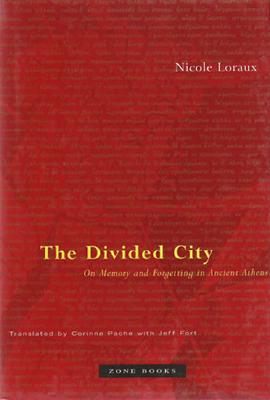
The Divided City : On Memory and Forgetting in Ancient Athens
Book Details
Delivery Location
Delivery fee: Select location
Athens, 403 BCE. The end of the bloody oligarchic dictatorship of the Thirty. The democrats return to the city victorious. Renouncing vengeance, in an act of amnesia, citizens call for — if not invent — amnesty. They agree to forget the unforgettable, the “past misfortunes” of civil strife, stasis. More precisely, what must be denied is that stasis — simultaneously partisanship, faction, and sedition — is at the heart of Greek politics.
This crucial moment of Athenian political history, Nicole Loraux argues in The Divided City, must be interpreted as constitutive of, not a threat to, politics and political life. Divided from within and against itself, the city is formed by that which it refuses. Conflict, the calamity of civil war, is the other, dark side of the beautiful, unitary city of Athens. Beneath the Greek city erected in totality and ideality, Loraux rediscovers the discord affecting the entire city, the stasis manifesting the fundamental conflictual ambivalence of the civic order. The city, by definition, “is doomed to divide itself in two.”
In a brilliant analysis of the Greek word for voting, diaphora, Loraux underscores the conflictual and dynamic motion of democratic life: voting appears as the process of dividing up, of disagreement, in short, of agreeing to divide up and choose between. Not only does Loraux reconceptualize the definition of ancient Greek democracy, but she ultimately allows the contemporary reader to rethink the functioning of modern democracies in its critical moments of dissension and divide, of internal stasis.
Get The Divided City by Nicole Loraux at the best price and quality guaranteed only at Werezi Africa's largest book ecommerce store. The book was published by Zone Books and it has 360 pages.
Customers Who Bought This Also Bought
Age of Revolutions
KSh 2,350.00
Eichmann in Jerusalem
KSh 2,350.00

Trouble With Being Born
KSh 2,000.00

Hiroshima
KSh 2,000.00

Freedom
KSh 6,300.00
Holocaust
KSh 2,700.00
The History of the Peloponnesian War
KSh 2,700.00
Annals
KSh 2,350.00
Greek Lives
KSh 2,150.00
Sleepwalkers
KSh 3,400.00

Napoleon The Great
KSh 3,600.00
Diary of a Young Girl
KSh 1,800.00
More by Nicole Loraux
The Mourning Voice
KSh 9,550.00
The Children of Athena
KSh 10,450.00
Tragic Ways of Killing a Woman
KSh 5,050.00
The Experiences of Tiresias – The Feminine and the Greek Man
KSh 9,900.00
Mothers in Mourning
KSh 4,300.00
The Experiences of Tiresias
KSh 25,550.00
Mothers in Mourning
KSh 18,700.00
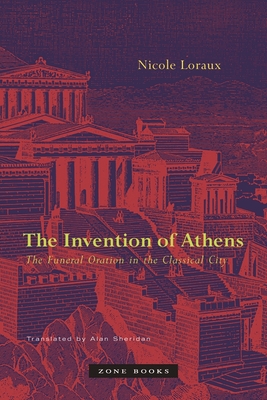
The Invention of Athens
KSh 5,400.00
