
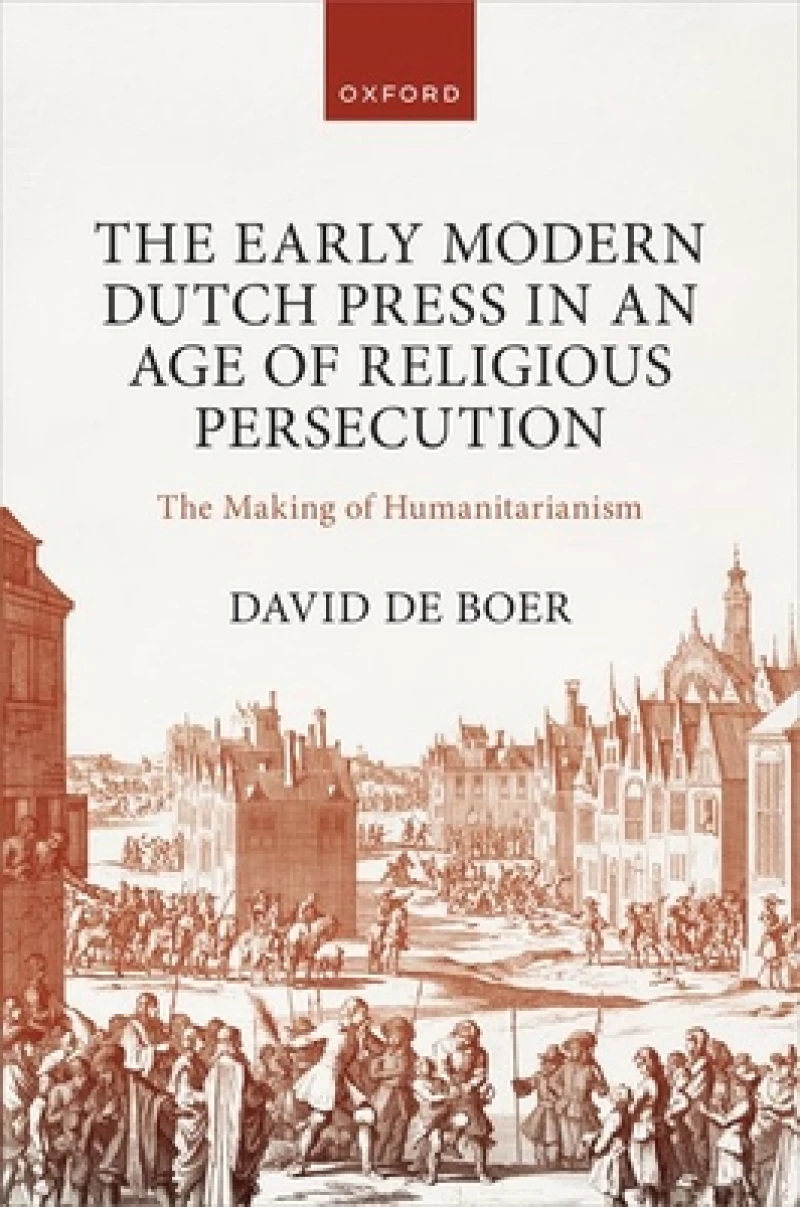
The Early Modern Dutch Press in an Age of Religious Persecution : The Making of Humanitarianism
Book Details
Format
Hardback or Cased Book
ISBN-10
0198876807
ISBN-13
9780198876809
Publisher
Oxford University Press
Imprint
Oxford University Press
Country of Manufacture
GB
Country of Publication
GB
Publication Date
Sep 28th, 2023
Print length
226 Pages
Weight
498 grams
Dimensions
16.50 x 24.10 x 2.10 cms
Ksh 15,250.00
Temporarily out of stock, due soon
0 in stock
Delivery Location
Delivery fee: Select location
Secure
Quality
Fast
This book traces the emergence of European humanitarian culture through the seventeenth- and eighteenth-centuries. Drawing on an exceptionally rich body of pamphlets, periodicals, and newspapers, it uncovers how victims of persecution first learned how to employ the printing presses in the Dutch Republic to raise transnational solidarity.
This is an open access title available under the terms of a CC BY-NC-ND 4.0 International licence. It is free to read at Oxford Scholarship Online and offered as a free PDF download from OUP and selected open access locations.For victims of persecution around the world, attracting international media attention for their plight is often a matter of life and death. This study takes us back to the news revolution of seventeenth-century Europe, when people first discovered in the press a powerful new weapon to combat religiously inspired maltreatments, executions, and massacres. To affect and mobilize foreign audiences, confessional minorities and their advocates faced an acute dilemma, one that we still grapple with today: how to make people care about distant suffering? David de Boer argues that by answering this question, they laid the foundations of a humanitarian culture in Europe.As consuming news became an everyday practice for many Europeans, the Dutch Republic emerged as an international hub of printed protest against religious violence. De Boer traces how a diverse group of people, including Waldensians refugees, Huguenot ministers, Savoyard office holders, and many others, all sought access to the Dutch printing presses in their efforts to raise transnational solidarity for their cause. By generating public outrage, calling out rulers, and pressuring others to intervene, producers of printed opinion could have a profound impact on international relations. But crying out against persecution also meant navigating a fraught and dangerous political landscape, marked by confessional tension, volatile alliances, and incessant warfare. Opinion makers had to think carefully about the audiences they hoped to reach through pamphlets, periodicals, and newspapers. But they also had to reckon with the risk of reaching less sympathetic readers outside their target groups.By examining early modern publicity strategies, de Boer deepens our understanding of how people tried to shake off the spectre of religious violence that had haunted them for generations, and create more tolerant societies, governed by the rule of law, reason, and a sense of common humanity.
Get The Early Modern Dutch Press in an Age of Religious Persecution by at the best price and quality guaranteed only at Werezi Africa's largest book ecommerce store. The book was published by Oxford University Press and it has pages.

