
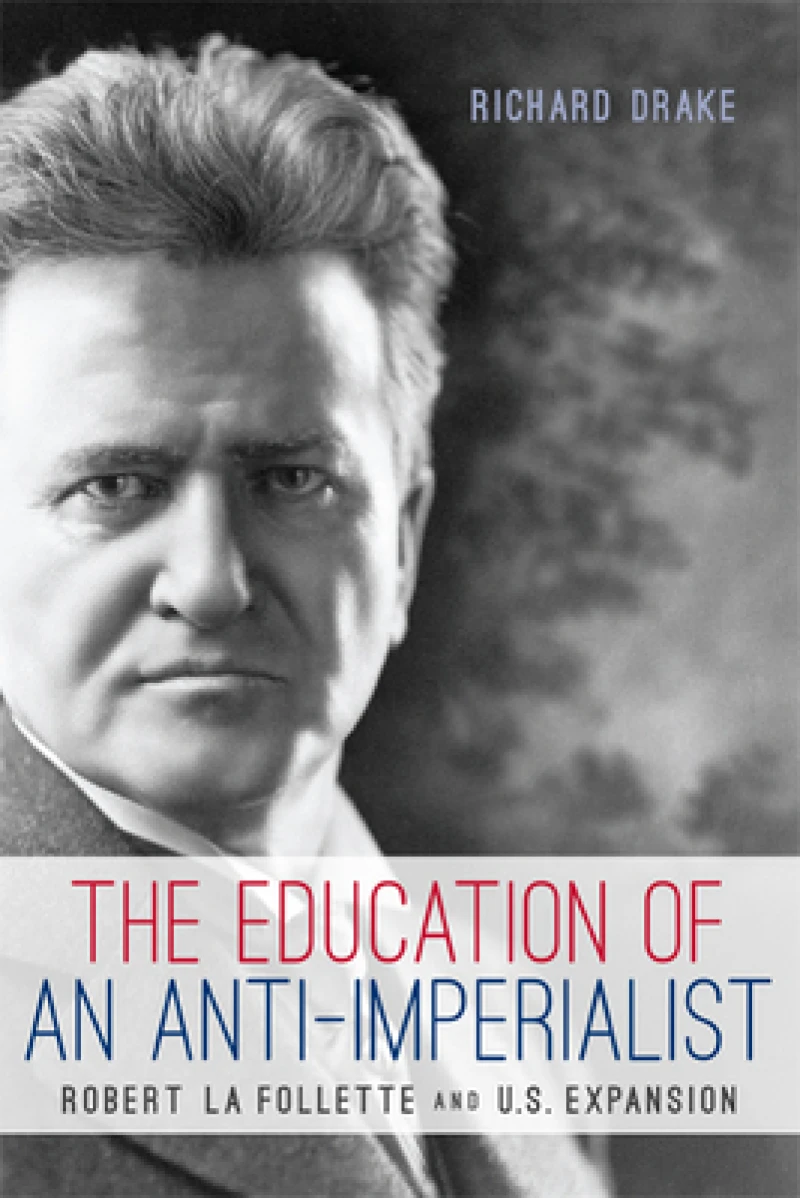
The Education of an Anti-Imperialist : Robert La Follette and U.S. Expansion
Book Details
Format
Paperback / Softback
Book Series
Studies in American Thought and Culture
ISBN-10
0299295249
ISBN-13
9780299295240
Publisher
University of Wisconsin Press
Imprint
University of Wisconsin Press
Country of Manufacture
US
Country of Publication
GB
Publication Date
Dec 30th, 2013
Print length
512 Pages
Weight
456 grams
Dimensions
22.70 x 15.50 x 2.80 cms
Ksh 5,150.00
Temporarily out of stock, due soon
0 in stock
Delivery Location
Delivery fee: Select location
Secure
Quality
Fast
Robert M. La Follette (1855–1925), the Republican senator from Wisconsin, is best known as a key architect of American Progressivism and as a fiery advocate for liberal politics in the domestic sphere. But ""Fighting Bob"" did not immediately come to a progressive stance on foreign affairs.
In The Education of an Anti-Imperialist, Richard Drake follows La Follette''s growth as a critic of America''s wars and the policies that led to them. He began his political career with conventional Republican views of the era on foreign policy, avidly supporting the Spanish-American and Philippine-American Wars. La Follette''s critique of empire emerged in 1910, during the first year of the Mexican Revolution, as he began to perceive a Washington–Wall Street alliance in the United States'' dealings with Mexico. La Follette subsequently became Congress''s foremost critic of Woodrow Wilson, fiercely opposing United States involvement in World War I. Denounced in the American press as the most dangerous man in the country, he became hated and vilified by many but beloved and admired by others.
La Follette believed that financial imperialism and its necessary instrument, militarism, caused modern wars. He contended they were twin evils that would have ruinous consequences for the United States and its citizens in the twentieth century and beyond.
In The Education of an Anti-Imperialist, Richard Drake follows La Follette''s growth as a critic of America''s wars and the policies that led to them. He began his political career with conventional Republican views of the era on foreign policy, avidly supporting the Spanish-American and Philippine-American Wars. La Follette''s critique of empire emerged in 1910, during the first year of the Mexican Revolution, as he began to perceive a Washington–Wall Street alliance in the United States'' dealings with Mexico. La Follette subsequently became Congress''s foremost critic of Woodrow Wilson, fiercely opposing United States involvement in World War I. Denounced in the American press as the most dangerous man in the country, he became hated and vilified by many but beloved and admired by others.
La Follette believed that financial imperialism and its necessary instrument, militarism, caused modern wars. He contended they were twin evils that would have ruinous consequences for the United States and its citizens in the twentieth century and beyond.
Get The Education of an Anti-Imperialist by at the best price and quality guaranteed only at Werezi Africa's largest book ecommerce store. The book was published by University of Wisconsin Press and it has pages.

