
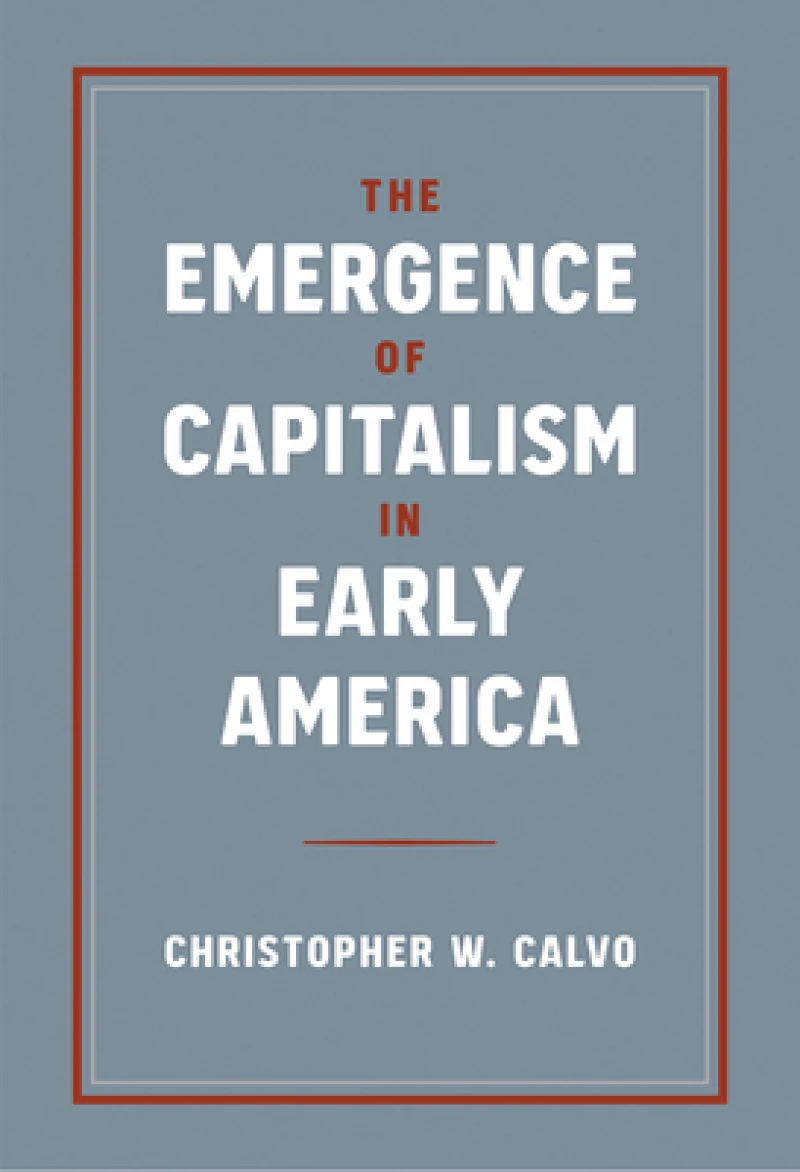
The Emergence of Capitalism in Early America
Book Details
Format
Hardback or Cased Book
ISBN-10
0813066336
ISBN-13
9780813066332
Publisher
University Press of Florida
Imprint
University Press of Florida
Country of Manufacture
GB
Country of Publication
GB
Publication Date
Feb 25th, 2020
Print length
336 Pages
Weight
592 grams
Dimensions
22.80 x 15.20 x 2.00 cms
Product Classification:
History of the AmericasEconomic historyHistory of the Americas
Ksh 12,950.00
Temporarily out of stock, due soon
0 in stock
Delivery Location
Delivery fee: Select location
Secure
Quality
Fast
Provides a comprehensive history of America's economic thought from 1790 to 1860, tracing the development of a uniquely American understanding of capitalism. The Emergence of Capitalism in Early America shows how American economists challenged, adjusted, and adopted the ideas of European to suit their particular interests.
Due to the enormous influence of Adam Smith's The Wealth of Nations on Western liberal economics, a tradition closely linked to the United States, many scholars assume that early American economists were committed to Smith's ideas of free trade and small government. Debunking this belief, Christopher W. Calvo provides a comprehensive history of the nation's economic thought from 1790 to 1860, tracing the development of a uniquely American understanding of capitalism. The Emergence of Capitalism in Early America shows how American economists challenged, adjusted, and adopted the ideas of European thinkers such as Adam Smith, David Ricardo, and Thomas Malthus to suit their particular interests. Calvo not only explains the divisions between American free trade and the version put forward by Smith, but he also discusses the sharp differences between northern and southern liberal economists. Emergent capitalism fostered a dynamic discourse in early America, including a homegrown version of socialism burgeoning in antebellum industrial quarters, as well as a reactionary brand of conservative economic thought circulating on slave plantations across the Old South. This volume also traces the origins and rise of nineteenth-century protectionism, a system that Calvo views as the most authentic expression of American political economy. Finally, Calvo examines early Americans' awkward relationship with capitalism's most complex institution—finance. Grounded in the economic debates, Atlantic conversations, political milieu, and material realities of the antebellum era, this book demonstrates that American thinkers fused different economic models, assumptions, and interests into a unique hybrid-capitalist system that shaped the trajectory of the nation's economy.
Get The Emergence of Capitalism in Early America by at the best price and quality guaranteed only at Werezi Africa's largest book ecommerce store. The book was published by University Press of Florida and it has pages.

