
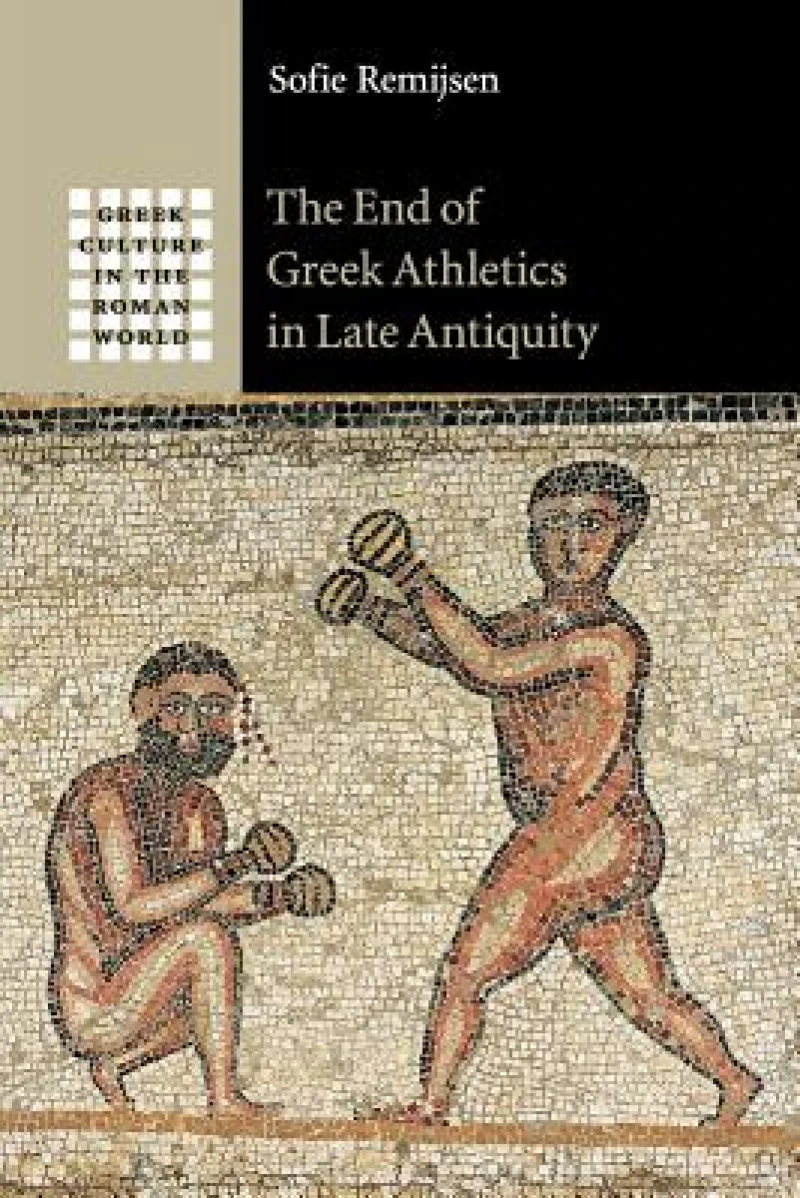
The End of Greek Athletics in Late Antiquity
Book Details
Format
Paperback / Softback
Book Series
Greek Culture in the Roman World
ISBN-10
1107644704
ISBN-13
9781107644700
Publisher
Cambridge University Press
Imprint
Cambridge University Press
Country of Manufacture
GB
Country of Publication
GB
Publication Date
Mar 29th, 2018
Print length
408 Pages
Weight
624 grams
Dimensions
15.50 x 22.90 x 2.70 cms
Product Classification:
European historyClassical history / classical civilisationAncient historyEuropean history
Ksh 7,550.00
Werezi Extended Catalogue
0 in stock
Delivery Location
Delivery fee: Select location
Secure
Quality
Fast
The demise of the ancient Olympics has commonly been blamed on a ban imposed by the Christian emperor Theodosius I. Sofie Remijsen challenges this conventional view, and traces instead the collapse of the entire professional circuit of Greek athletics under the pressure of changing institutions and perceptions in late antiquity.
This book presents the first comprehensive study of how and why athletic contests, a characteristic aspect of Greek culture for over a millennium, disappeared in late antiquity. In contrast to previous discussions, which focus on the ancient Olympics, the end of the most famous games is analyzed here in the context of the collapse of the entire international agonistic circuit, which encompassed several hundred contests. The first part of the book describes this collapse by means of a detailed analysis of the fourth- and fifth-century history of the athletic games in each region of the Mediterranean: Greece, Asia Minor, Syria, Egypt, Italy, Gaul and northern Africa. The second half continues by explaining these developments, challenging traditional theories (especially the ban by the Christian emperor Theodosius I) and discussing in detail both the late antique socio-economic context and the late antique perceptions of athletics.
Get The End of Greek Athletics in Late Antiquity by at the best price and quality guaranteed only at Werezi Africa's largest book ecommerce store. The book was published by Cambridge University Press and it has pages.

