
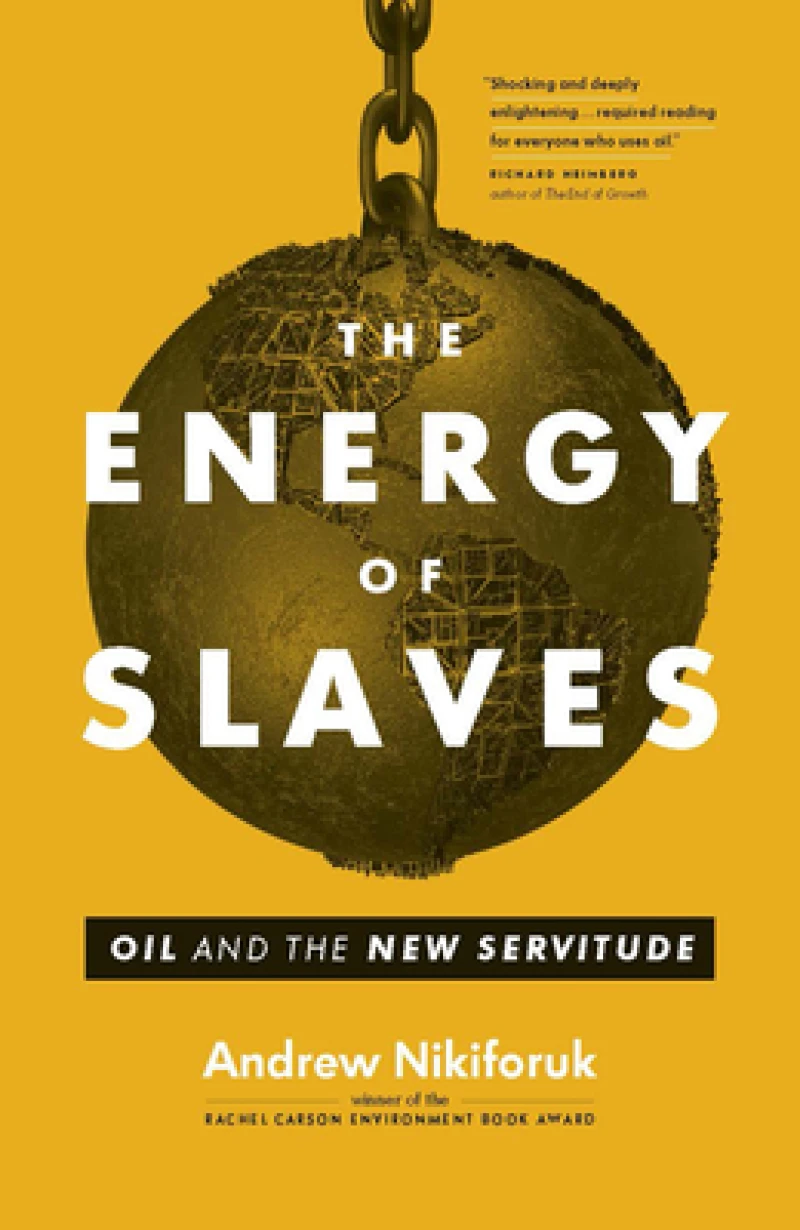
The Energy of Slaves : Oil and the New Servitude
Book Details
Format
Hardback or Cased Book
Book Series
David Suzuki Institute
ISBN-10
1553659783
ISBN-13
9781553659785
Publisher
Greystone Books,Canada
Imprint
Greystone Books,Canada
Country of Manufacture
GB
Country of Publication
GB
Publication Date
Oct 4th, 2012
Print length
272 Pages
Weight
510 grams
Ksh 3,400.00
Re-Printing
0 in stock
Delivery Location
Delivery fee: Select location
Secure
Quality
Fast
Cheap oil transformed the United States from a resilient republic into a global petroleum evangelical, then a sickly addict. Modern economics owes its unrealistic models to fossil fuels. On the global stage, petroleum has fueled a demographic explosion, turning 1 billion people into 7 billion in just a hundred years.
By the winner of the Rachel Carson Environment Book Award
Ancient civilizations relied on shackled human muscle. It took the energy of slaves to plant crops, clothe emperors, and build cities. Nineteenth-century slaveholders viewed critics as hostilely as oil companies and governments now regard environmentalists. Yet the abolition movement had an invisible ally: coal and oil. As the world''s most versatile workers, fossil fuels replenished slavery''s ranks with combustion engines and other labor-saving tools. Since then, cheap oil has transformed politics, economics, science, agriculture, and even our concept of happiness. Many North Americans today live as extravagantly as Caribbean plantation owners. We feel entitled to surplus energy and rationalize inequality, even barbarity, to get it. But endless growth is an illusion.
What we need, Andrew Nikiforuk argues in this provocative new book, is a radical emancipation movement that ends our master-and-slave approach to energy. We must learn to use energy on a moral, just, and truly human scale.
Ancient civilizations relied on shackled human muscle. It took the energy of slaves to plant crops, clothe emperors, and build cities. Nineteenth-century slaveholders viewed critics as hostilely as oil companies and governments now regard environmentalists. Yet the abolition movement had an invisible ally: coal and oil. As the world''s most versatile workers, fossil fuels replenished slavery''s ranks with combustion engines and other labor-saving tools. Since then, cheap oil has transformed politics, economics, science, agriculture, and even our concept of happiness. Many North Americans today live as extravagantly as Caribbean plantation owners. We feel entitled to surplus energy and rationalize inequality, even barbarity, to get it. But endless growth is an illusion.
What we need, Andrew Nikiforuk argues in this provocative new book, is a radical emancipation movement that ends our master-and-slave approach to energy. We must learn to use energy on a moral, just, and truly human scale.
Published in Partnership with the David Suzuki Institute.
Get The Energy of Slaves by at the best price and quality guaranteed only at Werezi Africa's largest book ecommerce store. The book was published by Greystone Books,Canada and it has pages.

