
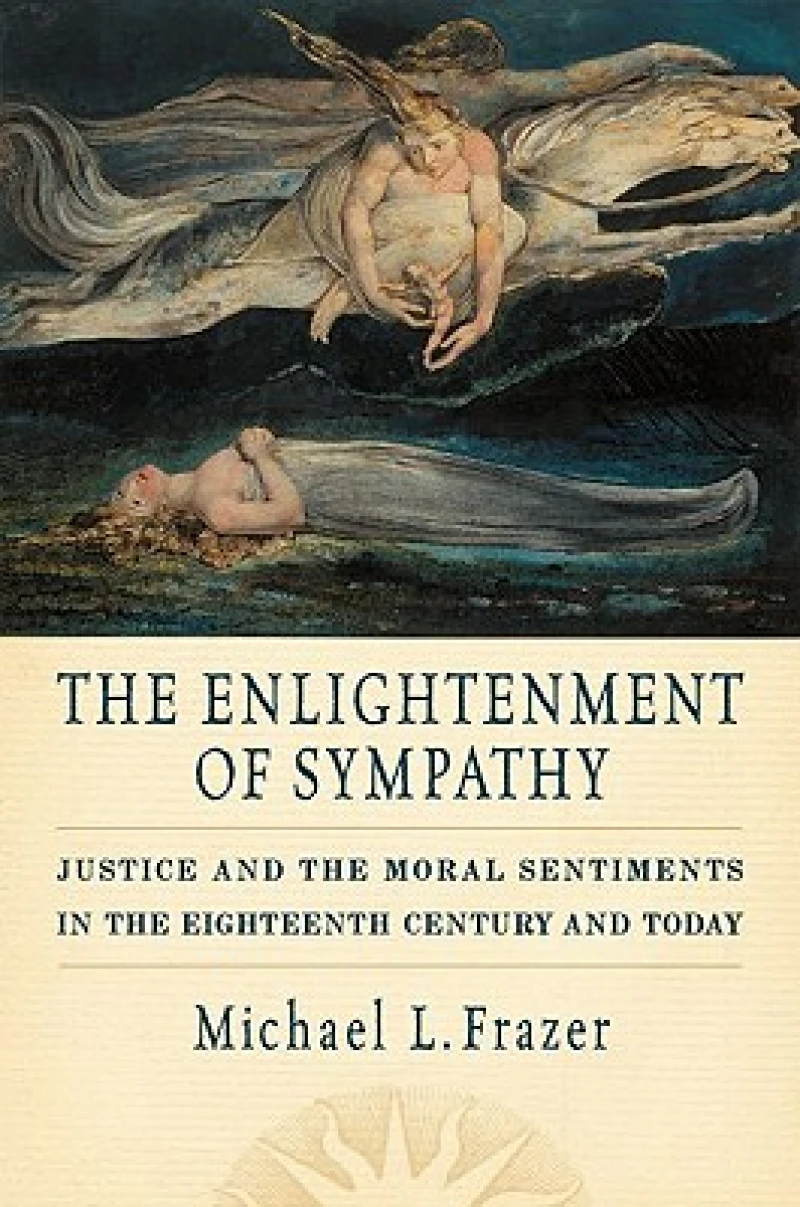
The Enlightenment of Sympathy : Justice and the Moral Sentiments in the Eighteenth Century and Today
Book Details
Format
Hardback or Cased Book
ISBN-10
0195390660
ISBN-13
9780195390667
Publisher
Oxford University Press Inc
Imprint
Oxford University Press Inc
Country of Manufacture
US
Country of Publication
GB
Publication Date
Aug 26th, 2010
Print length
248 Pages
Weight
510 grams
Dimensions
24.20 x 15.60 x 1.90 cms
Product Classification:
Ethics & moral philosophySocial & political philosophyPolitical science & theoryNeurosciences
Ksh 11,550.00
Manufactured on Demand
0 in stock
Delivery Location
Delivery fee: Select location
Secure
Quality
Fast
The Enlightenment is commonly referred to as ''The Age of Reason.'' The term signifies the triumph of rationalism over emotionalism and sentiment in the late eighteenth century. Rationalists, the most famous of whom was Kant, posited a mind that was hierarchically arranged, with reason sitting atop of the passions. Yet as Michael Frazer argues, there were in fact two enlightenments--the sentimentalist enlightenment and the rationalist one--and the Enlightenment of Sympathy reclaims the importance of the former. As he explains, enlightened sentimentalism encompassed more than ''mere feeling'' (as its critics claimed) and in fact harnessed the human mind in full to offer a positive account of the sentiments'' centrality to moral and political reflection. Rather than treating the mind as a hierarchy, sentimentalists offered a more egalitarian theory of it. The mind, in their view, was integrated, and its various compartments were equals. Many of the most famous Enlightenment thinkers can rightly be called sentimentalists--Hume, Smith, and Herder, to name a few--yet the rationalist vision of politics has proven to be more influential. In fact, the most important political philosopher of liberalism of the past half century, John Rawls, relied on the rationalist enlightenment for his most important work. By reclaiming this equally important strand of enlightenment thought, Frazer not only offers a corrective to the dominant narrative of the Enlightenment political thought. His argument will also enrich contemporary political theory by integrating a more behaviorally-oriented and psychologically complex account of the mind into the corpus of liberal philosophy.
The Enlightenment is commonly referred to as ''The Age of Reason.'' The term signifies the triumph of rationalism over emotionalism and sentiment in the late eighteenth century. Rationalists, the most famous of whom was Kant, posited a mind that was hierarchically arranged, with reason sitting atop of the passions. Yet as Michael Frazer argues, there were in fact two enlightenments--the sentimentalist enlightenment and the rationalist one--and the Enlightenment of Sympathy reclaims the importance of the former. As he explains, enlightened sentimentalism encompassed more than ''mere feeling'' (as its critics claimed) and in fact harnessed the human mind in full to offer a positive account of the sentiments'' centrality to moral and political reflection. Rather than treating the mind as a hierarchy, sentimentalists offered a more egalitarian theory of it. The mind, in their view, was integrated, and its various compartments were equals. Many of the most famous Enlightenment thinkers can rightly be called sentimentalists-- Hume, Smith, and Herder, to name a few--yet the rationalist vision of politics has proven to be more influential. In fact, the most important political philosopher of liberalism of the past half century, John Rawls, relied on the rationalist enlightenment for his most important work. By reclaiming this equally important strand of enlightenment thought, Frazer not only offers a corrective to the dominant narrative of the Enlightenment political thought. His argument will also enrich contemporary political theory by integrating a more behaviorally-oriented and psychologically complex account of the mind into the corpus of liberal philosophy.
Get The Enlightenment of Sympathy by at the best price and quality guaranteed only at Werezi Africa's largest book ecommerce store. The book was published by Oxford University Press Inc and it has pages.

