
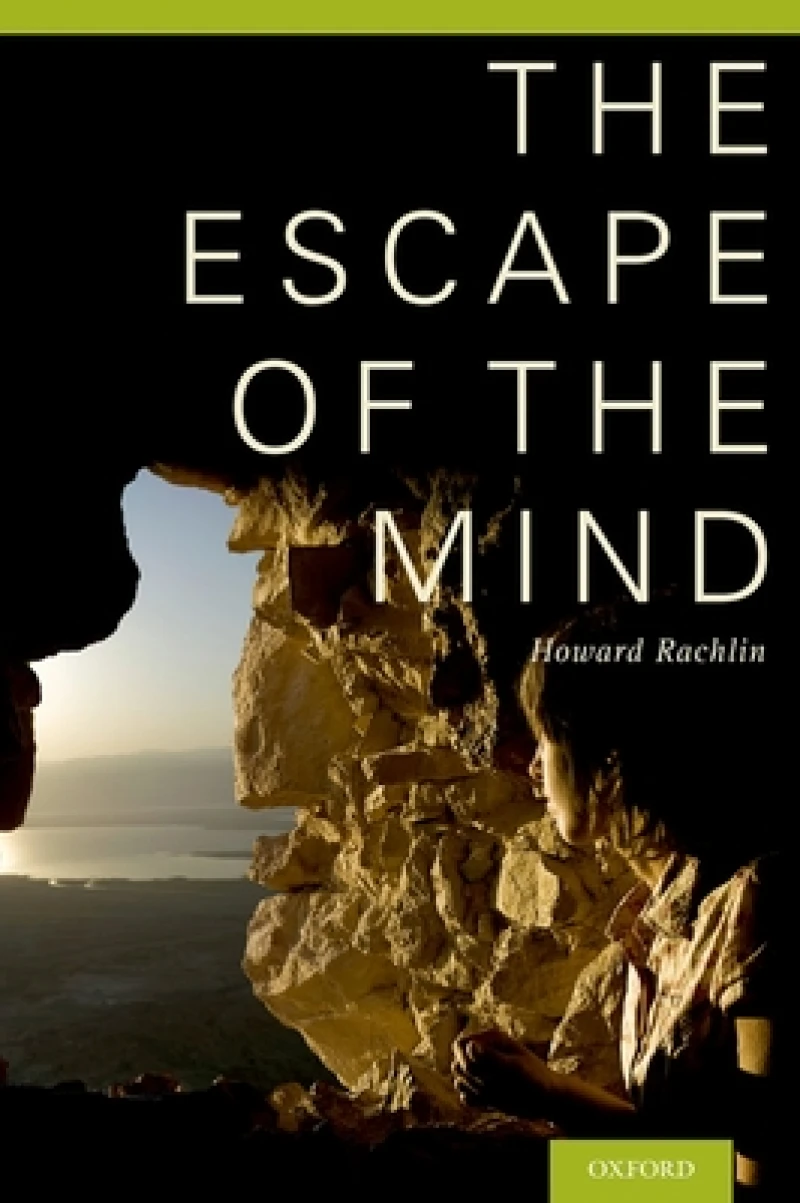
The Escape of the Mind
Book Details
Format
Hardback or Cased Book
ISBN-10
019932235X
ISBN-13
9780199322350
Publisher
Oxford University Press Inc
Imprint
Oxford University Press Inc
Country of Manufacture
GB
Country of Publication
GB
Publication Date
Jul 31st, 2014
Print length
240 Pages
Weight
450 grams
Dimensions
23.60 x 16.40 x 2.20 cms
Product Classification:
Philosophy of mindPsychologySocial, group or collective psychology
Ksh 16,150.00
Manufactured on Demand
0 in stock
Delivery Location
Delivery fee: Select location
Secure
Quality
Fast
The Escape of the Mind argues that, in developing techniques of self-control and social cooperation, it is useful to question the almost universally accepted belief that our minds exist inside our bodies. We should look for our minds neither in our introspections nor in our brains, but in our long-term behavioral patterns.
The Escape of the Mind is part of a current movement in psychology and philosophy of mind that calls into question what is perhaps our most basic, most cherished, and universally accepted belief--that our minds are inside of our bodies. Howard Rachlin adopts the counterintuitive position that our minds, conscious and unconscious, lie not where our firmest (yet unsupported) introspections tell us they are, but in how we actually behave over the long run. Perhaps paradoxically, the book argues that our introspections, no matter how positive we are about them, tell us absolutely nothing about our minds. The name of the present version of this approach to the mind is "teleological behaviorism."The approaches of teleological behaviorism will be useful in the science of individual behavior for developing methods of self-control and in the science of social behavior for developing social cooperation. Without in any way denigrating the many contributions of neuroscience to human welfare, The Escape of the Mind argues that neuroscience, like introspection, is not a royal road to the understanding of the mind. Where then should we look to explain a present act that is clearly caused by the mind? Teleological behaviorism says to look not in the spatial recesses of the nervous system (not to the mechanism underlying the act) but in the temporal recesses of past and future overt behavior (to the pattern of which the act is a part). But scientific usefulness is not the only reason for adopting teleological behaviorism. The final two chapters on IBM''s computer, Watson (how it deviates from humanity and how it would have to be altered to make it human), and on shaping a coherent self, provide a framework for a secular morality based on teleological behaviorism.
Get The Escape of the Mind by at the best price and quality guaranteed only at Werezi Africa's largest book ecommerce store. The book was published by Oxford University Press Inc and it has pages.

