
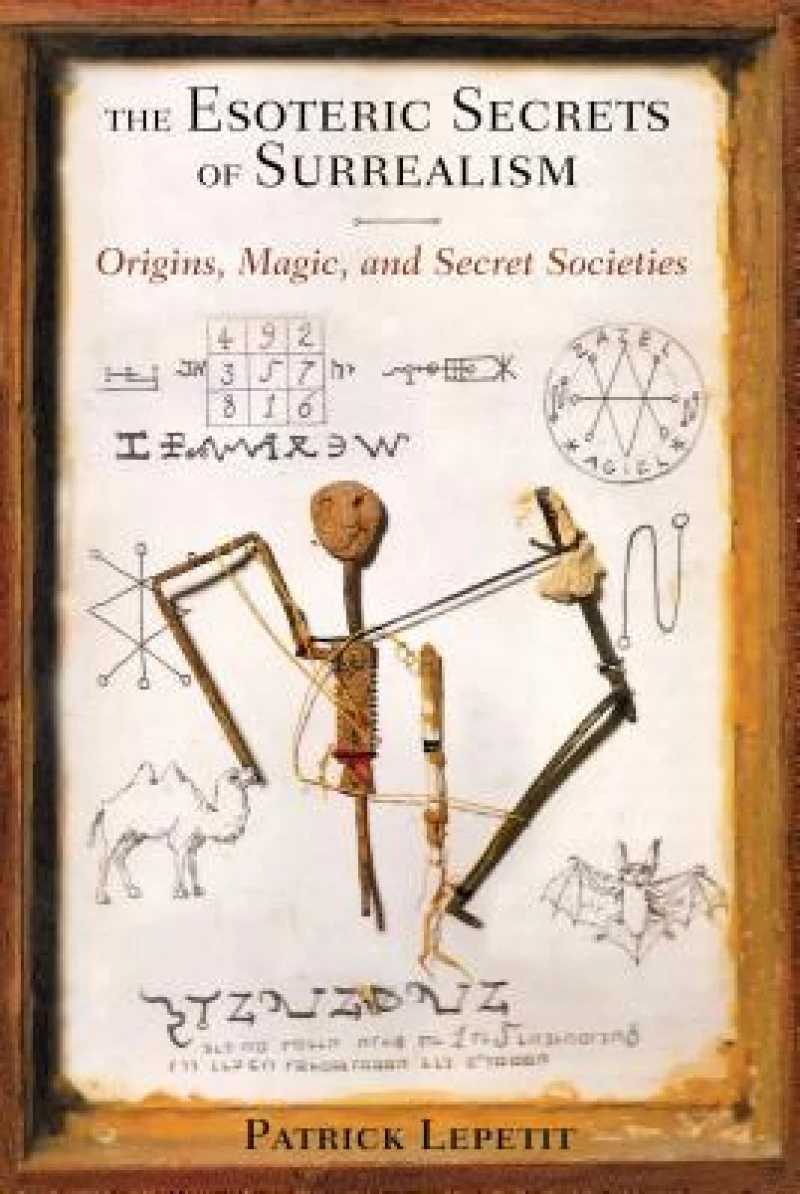
The Esoteric Secrets of Surrealism : Origins, Magic, and Secret Societies
Book Details
Format
Paperback / Softback
ISBN-10
1620551756
ISBN-13
9781620551752
Publisher
Inner Traditions Bear and Company
Imprint
Inner Traditions Bear and Company
Country of Manufacture
US
Country of Publication
GB
Publication Date
May 22nd, 2014
Print length
544 Pages
Weight
736 grams
Dimensions
23.00 x 15.20 x 2.70 cms
Product Classification:
Mysticism, magic & ritual
Ksh 3,800.00
Re-Printing
0 in stock
Delivery Location
Delivery fee: Select location
Secure
Quality
Fast
A profound understanding of the surrealists' connections with alchemists and secret societies and the hermetic aspirations revealed in their works.
A profound understanding of the surrealists’ connections with alchemists and secret societies and the hermetic aspirations revealed in their works
• Explains how surrealist paintings and poems employed mythology, gnostic principles, tarot, voodoo, alchemy, and other hermetic sciences to seek out unexplored regions of the mind and recover lost “psychic” and magical powers
• Provides many examples of esoteric influence in surrealism, such as how Picasso’s Demoiselles d’Avignon was originally titled The Bath of the Philosophers
Not merely an artistic or literary movement as many believe, the surrealists rejected the labels of artist and author bestowed upon them by outsiders, accepting instead the titles of magician, alchemist, or--in the case of Leonora Carrington and Remedios Varo--witch. Their paintings, poems, and other works were created to seek out unexplored regions of the mind and recover lost “psychic” and magical powers. They used creative expression as the vehicle to attain what André Breton called the “supreme point,” the point at which all opposites cease to be perceived as contradictions. This supreme point is found at the heart of all esoteric doctrines, including the Great Work of alchemy, and enables communication with higher states of being.
Drawing on an extensive range of writings by the surrealists and those in their circle of influence, Patrick Lepetit shows how the surrealists employed mythology, gnostic principles, tarot, voodoo, and alchemy not simply as reference points but as significant elements of their ongoing investigations into the fundamental nature of consciousness. He provides many specific examples of esoteric influence among the surrealists, such as how Picasso’s famous Demoiselles d’Avignon was originally titled The Bath of the Philosophers, how painter Victor Brauner drew from his father’s spiritualist vocation as well as the Kabbalah and tarot, and how doctor and surrealist author Pierre Mabille was a Freemason focused on finding initiatory paths where “it is possible to feel a new system connecting man with the universe.”
Lepetit casts new light on the connection between key figures of the movement and the circle of adepts gathered around Fulcanelli. He also explores the relationship between surrealists and Freemasonry, Martinists, and the Elect Cohen as well as the Grail mythos and the Arthurian brotherhood.
• Explains how surrealist paintings and poems employed mythology, gnostic principles, tarot, voodoo, alchemy, and other hermetic sciences to seek out unexplored regions of the mind and recover lost “psychic” and magical powers
• Provides many examples of esoteric influence in surrealism, such as how Picasso’s Demoiselles d’Avignon was originally titled The Bath of the Philosophers
Not merely an artistic or literary movement as many believe, the surrealists rejected the labels of artist and author bestowed upon them by outsiders, accepting instead the titles of magician, alchemist, or--in the case of Leonora Carrington and Remedios Varo--witch. Their paintings, poems, and other works were created to seek out unexplored regions of the mind and recover lost “psychic” and magical powers. They used creative expression as the vehicle to attain what André Breton called the “supreme point,” the point at which all opposites cease to be perceived as contradictions. This supreme point is found at the heart of all esoteric doctrines, including the Great Work of alchemy, and enables communication with higher states of being.
Drawing on an extensive range of writings by the surrealists and those in their circle of influence, Patrick Lepetit shows how the surrealists employed mythology, gnostic principles, tarot, voodoo, and alchemy not simply as reference points but as significant elements of their ongoing investigations into the fundamental nature of consciousness. He provides many specific examples of esoteric influence among the surrealists, such as how Picasso’s famous Demoiselles d’Avignon was originally titled The Bath of the Philosophers, how painter Victor Brauner drew from his father’s spiritualist vocation as well as the Kabbalah and tarot, and how doctor and surrealist author Pierre Mabille was a Freemason focused on finding initiatory paths where “it is possible to feel a new system connecting man with the universe.”
Lepetit casts new light on the connection between key figures of the movement and the circle of adepts gathered around Fulcanelli. He also explores the relationship between surrealists and Freemasonry, Martinists, and the Elect Cohen as well as the Grail mythos and the Arthurian brotherhood.
Get The Esoteric Secrets of Surrealism by at the best price and quality guaranteed only at Werezi Africa's largest book ecommerce store. The book was published by Inner Traditions Bear and Company and it has pages.

