
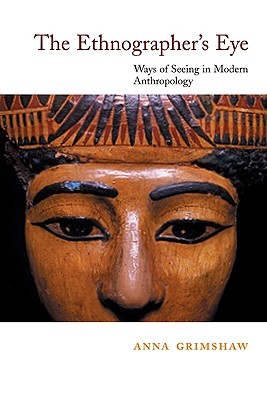
The Ethnographer''s Eye : Ways of Seeing in Anthropology
Book Details
Format
Paperback / softback
ISBN-10
0521774756
ISBN-13
9780521774758
Publisher
Cambridge University Press
Imprint
Cambridge University Press
Country of Manufacture
GB
Country of Publication
GB
Publication Date
Apr 30th, 2001
Print length
240 Pages
Weight
368 grams
Dimensions
24.10 x 16.20 x 1.40 cms
KSh 5,050.00
Currently unavailable
0 in stock
Delivery Location
Delivery fee: Select location
Secure
Quality
Fast
The old division between image and text-based ethnography is dissolved as vision is considered as a critical tool. Grimshaw discusses the work of Rivers, Malinowski and Radcliffe-Brown in the context of early twentieth-century art and cinema; and she explores the more recent anthropological films of Rouch, MacDougall and Llewelyn-Davies.
Grimshaw's exploration of the role of vision within modern anthropology engages with current debates about ocularcentism, investigating the relationship between vision and knowledge in ethnographic enquiry. Using John Berger's notion of 'ways of seeing', the author argues that vision operates differently as a technique and theory of knowledge within the discipline. In the first part of the book she examines contrasting visions at work in the so-called classical British school, reassessing the legacy of Rivers, Malinowski and Radcliffe-Brown through the lens of early modern art and cinema. In the second part of the book, the changing relationship between vision and knowledge is explored through the anthropology of Jean Rouch, David and Judith MacDougall, and Melissa Llewelyn-Davies. Vision is foregrounded in the work of these contemporary ethnographers, focusing more general questions about technique and epistemology whether image-based media are used or not in ethnographic enquiry.
Get The Ethnographer''s Eye by Anna Grimshaw at the best price and quality guaranteed only at Werezi Africa's largest book ecommerce store. The book was published by Cambridge University Press and it has 240 pages.
Customers Who Bought This Also Bought

Use of Photography
KSh 2,350.00

Photography
KSh 7,350.00

Mind Over Matter
KSh 6,500.00

What Is It That Will Last?
KSh 8,500.00
Orhan Pamuk: Balkon
KSh 5,400.00

Foster + Partners Portfolio
KSh 8,100.00

Golfing the British Isles
KSh 5,600.00
Growing
KSh 4,300.00
Allowed to Grow Old – Portraits of Elderly Animals from Farm Sanctuaries
KSh 7,850.00
Medea
KSh 11,150.00
The Photograph As Contemporary Art
KSh 2,900.00

Lewis Carroll`s Photography and Modern Childhood
KSh 12,250.00