
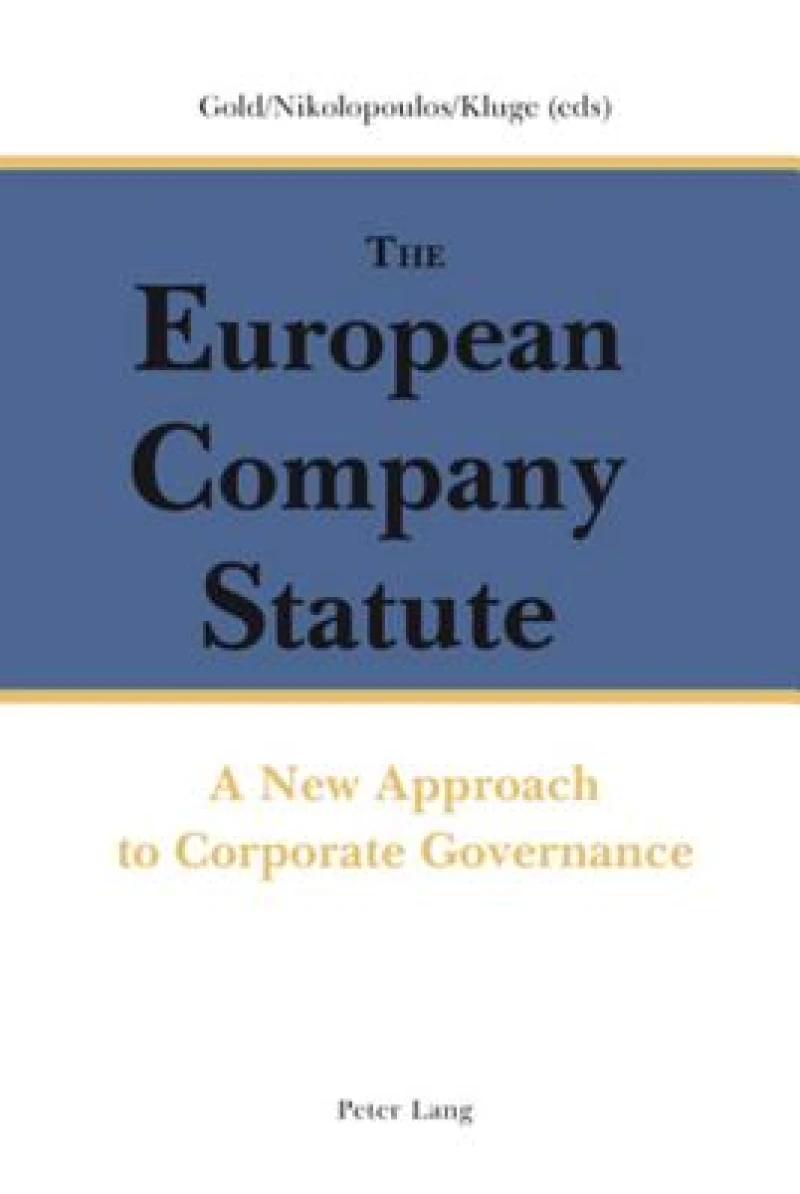
The European Company Statute : A New Approach to Corporate Governance
New
Book Details
Format
Paperback / Softback
ISBN-10
303911560X
ISBN-13
9783039115600
Edition
New
Publisher
Verlag Peter Lang
Imprint
Verlag Peter Lang
Country of Manufacture
CH
Country of Publication
GB
Publication Date
Dec 2nd, 2008
Print length
374 Pages
Weight
528 grams
Dimensions
15.30 x 22.50 x 2.10 cms
Ksh 13,000.00
Manufactured on Demand
0 in stock
Delivery Location
Delivery fee: Select location
Secure
Quality
Fast
The European Company Statute (ECS) is one of the most important pieces of company legislation adopted so far by the European Union. Its aim is to regulate, on a voluntary basis, the internal functions of a business operating in more than two European countries at the same time. However, its implementation by companies requires the negotiation of agreements between employers and employees principally on the choice between a one-tier or two-tier system of board structure. While the ECS thereby promotes flexible solutions tailor-made to company requirements, it has failed to achieve full harmonisation of EU company law.
This book provides a comprehensive analysis of the history, structure, legal basis and likely impact of the ECS, examining its evolution over some 30 years of development and its chances for integrating diverse models of corporate governance across the European Economic Area. The book explores the implications of the ECS for employee participation at various levels in the European company, with country case studies drawn from Greece, Slovenia and the UK. It also analyses certain legal issues, including taxation and the position of companies located in countries without existing systems of employee board-level participation.
This book provides a comprehensive analysis of the history, structure, legal basis and likely impact of the ECS, examining its evolution over some 30 years of development and its chances for integrating diverse models of corporate governance across the European Economic Area. The book explores the implications of the ECS for employee participation at various levels in the European company, with country case studies drawn from Greece, Slovenia and the UK. It also analyses certain legal issues, including taxation and the position of companies located in countries without existing systems of employee board-level participation.
Get The European Company Statute by at the best price and quality guaranteed only at Werezi Africa's largest book ecommerce store. The book was published by Verlag Peter Lang and it has pages.

