
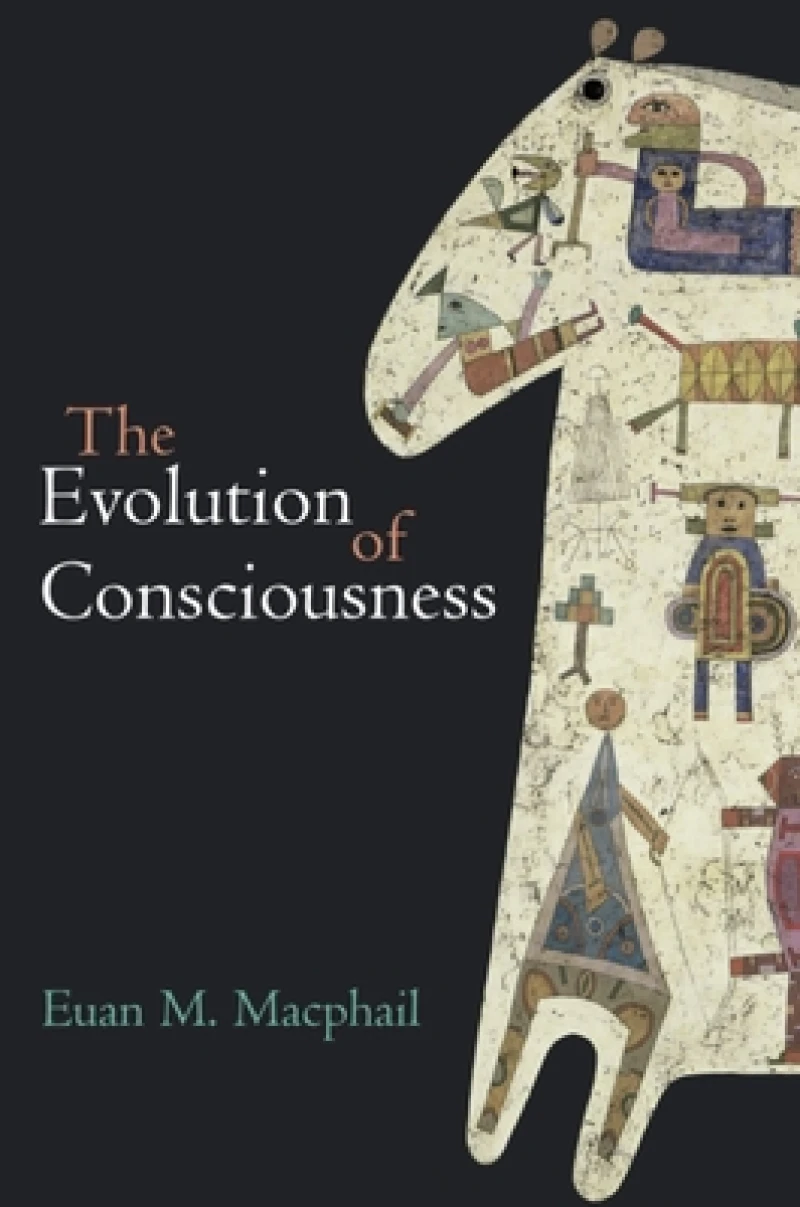
The Evolution of Consciousness
Book Details
Format
Paperback / Softback
ISBN-10
0198503245
ISBN-13
9780198503248
Publisher
Oxford University Press
Imprint
Oxford University Press
Country of Manufacture
GB
Country of Publication
GB
Publication Date
Oct 15th, 1998
Print length
272 Pages
Weight
413 grams
Dimensions
23.50 x 15.60 x 1.60 cms
Ksh 11,800.00
Manufactured on Demand
0 in stock
Delivery Location
Delivery fee: Select location
Secure
Quality
Fast
This book explores the psychology of consciousness and questions the assumption that nonverbal organisms - animals and babies - are conscious. Topics include: animal cognition; unconscious learning and perception; infantile amnesia; nature of pleasure and pain. The philosophical background is expounded, and a novel proposal, that language is necessary for consciousness, is advanced.
Are nonhuman animals conscious? When do babies begin to feel pain? What function is served by consciousness? What evidence could resolve these issues? These questions are tackled by exploring psychologists'' findings on topics as diverse as: animal cognition, unconscious learning and perception in humans, infantile amnesia, theory of mind in primates, and the nature of pleasure and pain. Experimental results are placed in theoretical context by tracing the development of concepts of consciousness in animals and humans (from Plato to Penrose). Two themes emerge: first, the capacity for language marks a fundamental difference between humans and nonhumans; second, there is neither proof that any nonhuman species is conscious, nor any convincing function to be found for consciousness. Finally, a sketch is offered of a novel functionalist theory according to which the developing capacity for language allows the creation by infants of a ''self'', which may be a precondition for consciousness.
Get The Evolution of Consciousness by at the best price and quality guaranteed only at Werezi Africa's largest book ecommerce store. The book was published by Oxford University Press and it has pages.

