
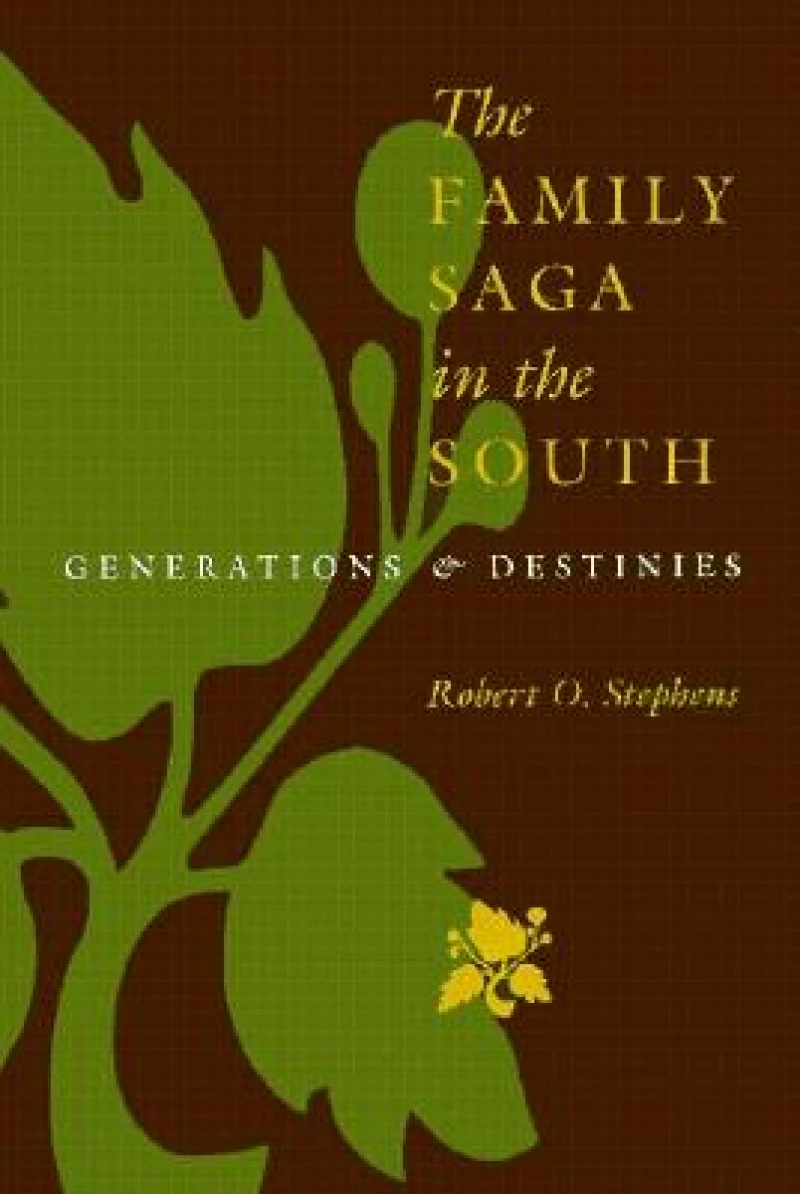
The Family Saga in the South : Generations and Destinies
Book Details
Format
Hardback or Cased Book
Book Series
Southern Literary Studies
ISBN-10
0807119881
ISBN-13
9780807119884
Publisher
Louisiana State University Press
Imprint
Louisiana State University Press
Country of Manufacture
US
Country of Publication
GB
Publication Date
Jun 1st, 1995
Print length
264 Pages
Weight
333 grams
Dimensions
23.40 x 15.80 x 2.20 cms
Ksh 6,500.00
Temporarily out of stock, due soon
0 in stock
Delivery Location
Delivery fee: Select location
Secure
Quality
Fast
The family saga is a literary form much practiced in southern writing but little analysed in scholarship and criticism. The Family Saga in the South, Robert O. Stephens' lively, absorbing study, examines at last and in depth this genre whose roots extend to the Old Testament.
The development of the family saga is analogous to that of an actual family; in both, traditions and characteristics emerge, evolve, and are handed on over time. According to Stephens, the prototypal family saga of Abraham, Sarah, and their descendants in Genesis 12:50 established twelve key conventions of the form.
The first full realisation of the family saga in the southern tradition, Stephens says, was George Washington Cable's The Grandissimes (1880). Since that time many southern authors have used the form to convey their vision of the forces at work in southern culture. These writers have built on the recognition that, in the South especially, the family, the extended, consanguine connection of kin, typically represents the individual's picture of the world, his link with the past, his notion of values, his views of what is comic or tragic, his sense of destiny. The basic elements of the saga are oral family stories, enlarged upon and transformed in the novels and nonfictional chronicles.
Stephens gives an extensive tour of twentieth-century authors who have used and further developed the southern family saga. He examines the works of writers such as T. S. Stribling and William Faulkner, who after the First World War reinterpreted the Civil War and its consequences in terms of a displaced inheritance; Caroline Gordon, Allen Tate, and Andrew Lytle, who built on the displacement motif to show family decline; Katherine Anne Porter, Eudora Welty, and Shirley Ann Grau, who in focusing on family stories transmitted by women explored implications of the matriarchal-patriarchal conflict resonating through generations; and Margaret Walker, Alex Haley, Ernest Gaines, and Toni Morrison, who showed the black family's struggle to find a place in history and later in memories of legendary Africa. Authors whom Stephens identifies as third-generation writers, such as Reynolds Price and Lee Smith, reached beyond history in their sagas to find moments of mythic vision, or they reduced family and public history to the pastless present of popular culture.
The literary tradition of the family saga thrives in the South today, Stephens says, because there exists an operative context in which to read the saga: namely, some version of providential order, which affords glimpses of purpose beyond the daily struggles of generations. The Family Saga in the South will make an inestimable contribution to understanding this vital tradition in southern letters while pointing the way for study of the genre in other cultures.
The development of the family saga is analogous to that of an actual family; in both, traditions and characteristics emerge, evolve, and are handed on over time. According to Stephens, the prototypal family saga of Abraham, Sarah, and their descendants in Genesis 12:50 established twelve key conventions of the form.
The first full realisation of the family saga in the southern tradition, Stephens says, was George Washington Cable's The Grandissimes (1880). Since that time many southern authors have used the form to convey their vision of the forces at work in southern culture. These writers have built on the recognition that, in the South especially, the family, the extended, consanguine connection of kin, typically represents the individual's picture of the world, his link with the past, his notion of values, his views of what is comic or tragic, his sense of destiny. The basic elements of the saga are oral family stories, enlarged upon and transformed in the novels and nonfictional chronicles.
Stephens gives an extensive tour of twentieth-century authors who have used and further developed the southern family saga. He examines the works of writers such as T. S. Stribling and William Faulkner, who after the First World War reinterpreted the Civil War and its consequences in terms of a displaced inheritance; Caroline Gordon, Allen Tate, and Andrew Lytle, who built on the displacement motif to show family decline; Katherine Anne Porter, Eudora Welty, and Shirley Ann Grau, who in focusing on family stories transmitted by women explored implications of the matriarchal-patriarchal conflict resonating through generations; and Margaret Walker, Alex Haley, Ernest Gaines, and Toni Morrison, who showed the black family's struggle to find a place in history and later in memories of legendary Africa. Authors whom Stephens identifies as third-generation writers, such as Reynolds Price and Lee Smith, reached beyond history in their sagas to find moments of mythic vision, or they reduced family and public history to the pastless present of popular culture.
The literary tradition of the family saga thrives in the South today, Stephens says, because there exists an operative context in which to read the saga: namely, some version of providential order, which affords glimpses of purpose beyond the daily struggles of generations. The Family Saga in the South will make an inestimable contribution to understanding this vital tradition in southern letters while pointing the way for study of the genre in other cultures.
Get The Family Saga in the South by at the best price and quality guaranteed only at Werezi Africa's largest book ecommerce store. The book was published by Louisiana State University Press and it has pages.

