
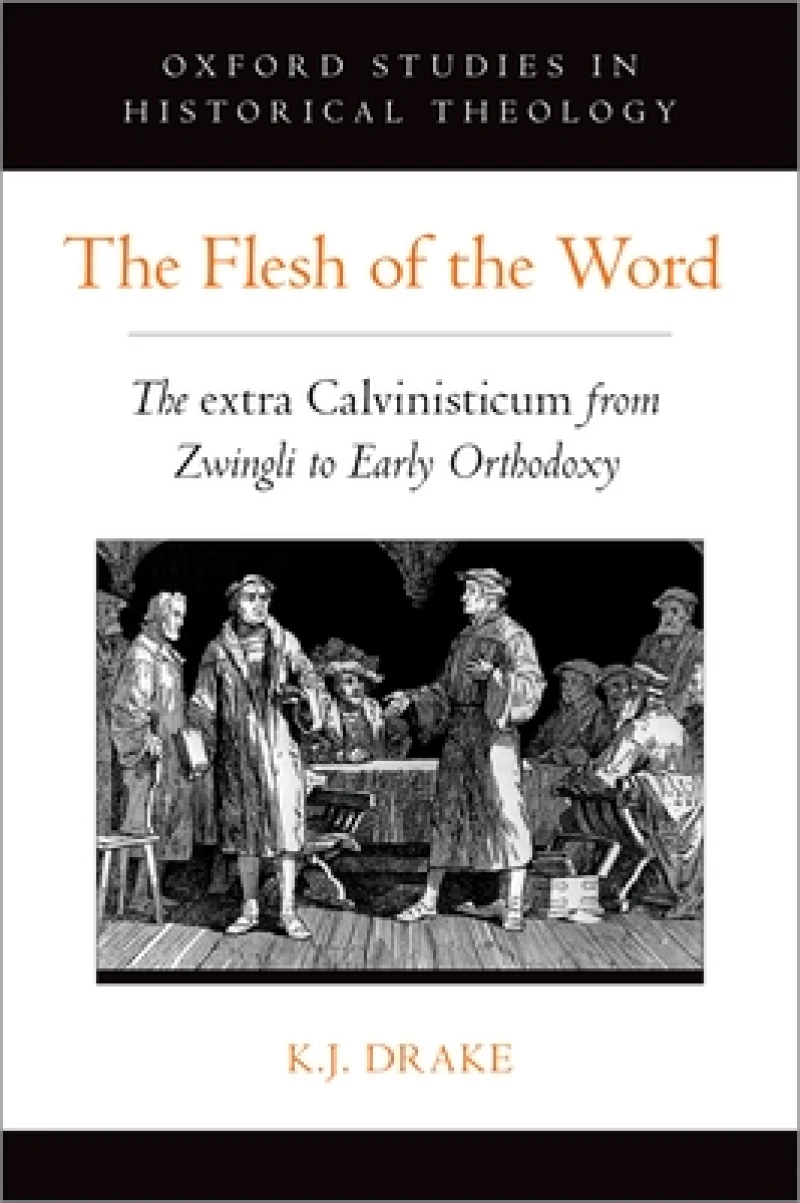
The Flesh of the Word : The extra Calvinisticum from Zwingli to Early Orthodoxy
by
K. J. Drake
Book Details
Format
Hardback or Cased Book
Book Series
Oxford Studies in Historical Theology
ISBN-10
0197567940
ISBN-13
9780197567944
Publisher
Oxford University Press Inc
Imprint
Oxford University Press Inc
Country of Manufacture
US
Country of Publication
GB
Publication Date
Aug 11th, 2021
Print length
336 Pages
Weight
642 grams
Dimensions
16.60 x 24.30 x 3.10 cms
Product Classification:
History of religionChristianityProtestantism & Protestant ChurchesChristian theology
Ksh 18,400.00
Manufactured on Demand
0 in stock
Delivery Location
Delivery fee: Select location
Secure
Quality
Fast
The Flesh of the Word explores how disputes between Ulrich Zwingli and Martin Luther over the nature of Christ''s body crystalized into a lasting distinction between the Lutheran and Reformed branches of Protestantism. Reformed theologians articulated a view, called the extra Calvinisticum, that the eternal Son maintains his existence beyond the flesh during his earthly ministry and perpetually. The book investigates how this doctrine that Christ exist both wholly within and wholly beyond his human flesh developed from its first articulation by Zwingli to the end of the sixteenth century and how this affected the Reformed understanding of Christ.
The Flesh of the Word explores how disputes between Ulrich Zwingli and Martin Luther over the nature of Christ''s body crystalized into a lasting distinction between the Lutheran and Reformed branches of Protestantism. Reformed theologians articulated a view, called the extra Calvinisticum, that the eternal Son maintains his existence beyond the flesh during his earthly ministry and perpetually. The book investigates how this doctrine that Christ exist both wholly within and wholly beyond his human flesh developed from its first articulation by Zwingli to the end of the sixteenth century and how this affected the Reformed understanding of Christ.
The extra Calvinisticum, the doctrine that the eternal Son maintains his existence beyond the flesh both during his earthly ministry and perpetually, divided the Lutheran and Reformed traditions during the Reformation. This book explores the emergence and development of the extra Calvinisticum in the Reformed tradition by tracing its first exposition from Ulrich Zwingli to early Reformed orthodoxy. Rather than being an ancillary issue, the questions surrounding the extra Calvinisticum were a determinative factor in the differentiation of Magisterial Protestantism into rival confessions. Reformed theologians maintained this doctrine in order to preserve the integrity of both Christ''s divine and human natures as the mediator between God and humanity. This rationale remained consistent across this period with increasing elaboration and sophistication to meet the challenges leveled against the doctrine in Lutheran polemics.
The study begins with Zwingli''s early use of the extra Calvinisticum in the Eucharistic controversy with Martin Luther and especially as the alternative to Luther''s doctrine of the ubiquity of Christ''s human body. Over time, Reformed theologians, such as Peter Martyr Vermigli and Antione de Chandieu, articulated the extra Calvinisticum with increasing rigor by incorporating conciliar christology, the church fathers, and scholastic methodology to address the polemical needs of engagement with Lutheranism. The Flesh of the Word illustrates the development of christological doctrine by Reformed theologians offering a coherent historical narrative of Reformed christology from its emergence into the period of confessionalization. The extra Calvinisticum was interconnected to broader concerns affecting concepts of the union of Christ''s natures, the communication of attributes, and the understanding of heaven.
The study begins with Zwingli''s early use of the extra Calvinisticum in the Eucharistic controversy with Martin Luther and especially as the alternative to Luther''s doctrine of the ubiquity of Christ''s human body. Over time, Reformed theologians, such as Peter Martyr Vermigli and Antione de Chandieu, articulated the extra Calvinisticum with increasing rigor by incorporating conciliar christology, the church fathers, and scholastic methodology to address the polemical needs of engagement with Lutheranism. The Flesh of the Word illustrates the development of christological doctrine by Reformed theologians offering a coherent historical narrative of Reformed christology from its emergence into the period of confessionalization. The extra Calvinisticum was interconnected to broader concerns affecting concepts of the union of Christ''s natures, the communication of attributes, and the understanding of heaven.
The extra Calvinisticum, the doctrine that the eternal Son maintains his existence beyond the flesh both during his earthly ministry and perpetually, divided the Lutheran and Reformed traditions during the Reformation. This book explores the emergence and development of the extra Calvinisticum in the Reformed tradition by tracing its first exposition from Ulrich Zwingli to early Reformed orthodoxy. Rather than being an ancillary issue, the questions surrounding the extra Calvinisticum were a determinative factor in the differentiation of Magisterial Protestantism into rival confessions. Reformed theologians maintained this doctrine in order to preserve the integrity of both Christ''s divine and human natures as the mediator between God and humanity. This rationale remained consistent across this period with increasing elaboration and sophistication to meet the challenges leveled against the doctrine in Lutheran polemics. The study begins with Zwingli''s early use of the extra Calvinisticum in the Eucharistic controversy with Martin Luther and especially as the alternative to Luther''s doctrine of the ubiquity of Christ''s human body. Over time, Reformed theologians, such as Peter Martyr Vermigli and Antione de Chandieu, articulated the extra Calvinisticum with increasing rigor by incorporating conciliar christology, the church fathers, and scholastic methodology to address the polemical needs of engagement with Lutheranism. The Flesh of the Word illustrates the development of christological doctrine by Reformed theologians offering a coherent historical narrative of Reformed christology from its emergence into the period of confessionalization. The extra Calvinisticum was interconnected to broader concerns affecting concepts of the union of Christ''s natures, the communication of attributes, and the understanding of heaven.
Get The Flesh of the Word by at the best price and quality guaranteed only at Werezi Africa's largest book ecommerce store. The book was published by Oxford University Press Inc and it has pages.

