
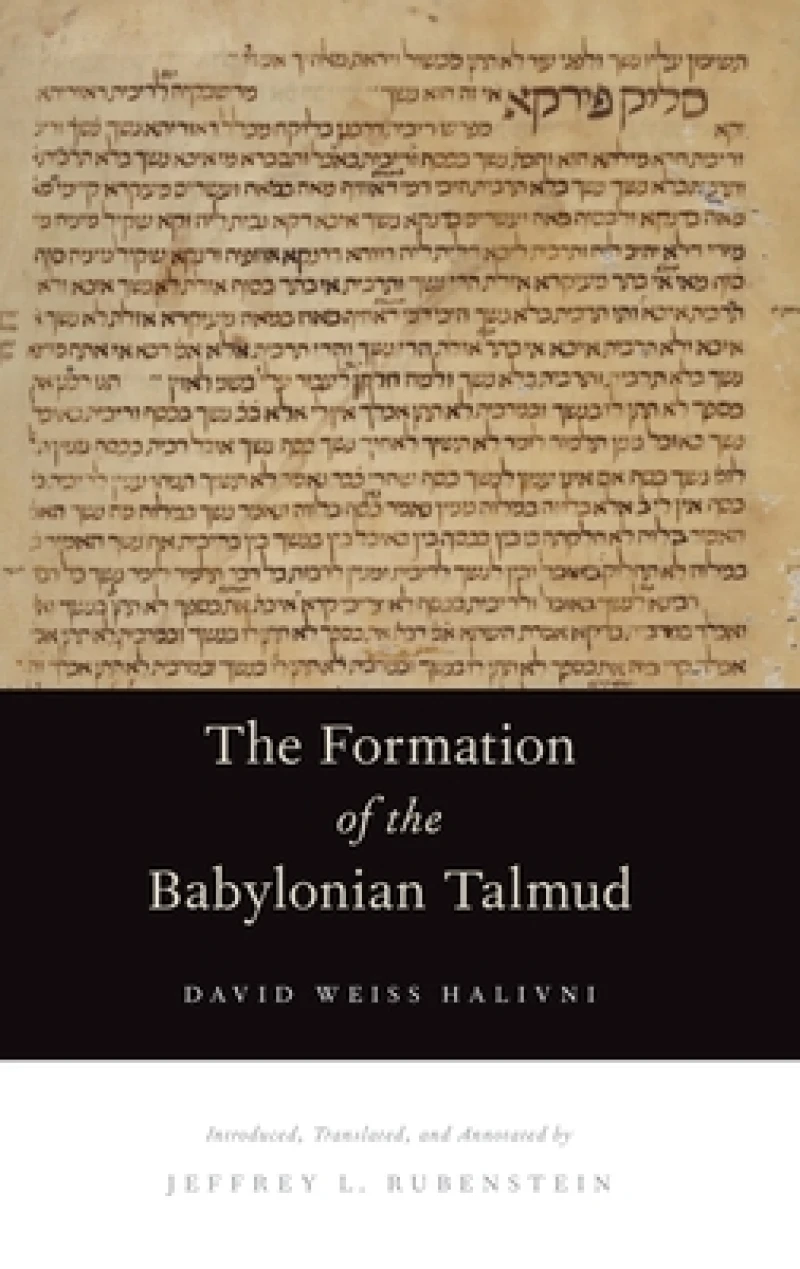
The Formation of the Babylonian Talmud
Book Details
Format
Hardback or Cased Book
ISBN-10
0199739889
ISBN-13
9780199739882
Publisher
Oxford University Press Inc
Imprint
Oxford University Press Inc
Country of Manufacture
US
Country of Publication
GB
Publication Date
Sep 19th, 2013
Print length
350 Pages
Weight
606 grams
Dimensions
24.50 x 15.40 x 2.70 cms
Product Classification:
History of religionJudaism: sacred texts
Ksh 13,550.00
Manufactured on Demand
0 in stock
Delivery Location
Delivery fee: Select location
Secure
Quality
Fast
Jeffrey L. Rubenstein offers a translation from the Hebrew of The Formation of the Babylonian Talmud by David Weiss Halivni. Halivni's work is widely regarded as the most comprehensive scholarly examination of the processes of composition and editing of the Babylonian Talmud.
Jeffrey L. Rubenstein offers a translation from the Hebrew of The Formation of the Babylonian Talmud by David Weiss Halivni. Halivni''s work is widely regarded as the most comprehensive scholarly examination of the processes of composition and editing of the Babylonian Talmud. Halivni presents the summation of a lifetime of scholarship and the conclusions of his multivolume Talmudic commentary, Sources and Traditions (Meqorot umesorot). Arguing against the traditional view that the Talmud was composed c. 450 CE by the last of the named sages in the Talmud, the Amoraim, Halivni proposes that its formation took place over a much longer period of time, not reaching its final form until about 750 CE. The Talmud consists of many literary strata or layers, with later layers constantly commenting upon and reinterpreting earlier layers. The later layers differ qualitatively from the earlier layers, and were composed by anonymous sages whom Halivni calls Stammaim. These sages were the true author-editors of the Talmud, who reconstructed the reasons underpinning earlier rulings, created the dialectical argumentation characteristic of the Talmud, and formulated the literary units that make up the Talmudic text. Halivni also discusses the history and development of rabbinic tradition from the Mishnah through the post-Talmud legal codes, the types of dialectical analysis found in the different rabbinic works, and the roles of reciters, transmitters, compilers, and editors in the composition of the Talmud. This volume contains an introduction and annotations by Jeffrey Rubenstein.
Get The Formation of the Babylonian Talmud by at the best price and quality guaranteed only at Werezi Africa's largest book ecommerce store. The book was published by Oxford University Press Inc and it has pages.

