
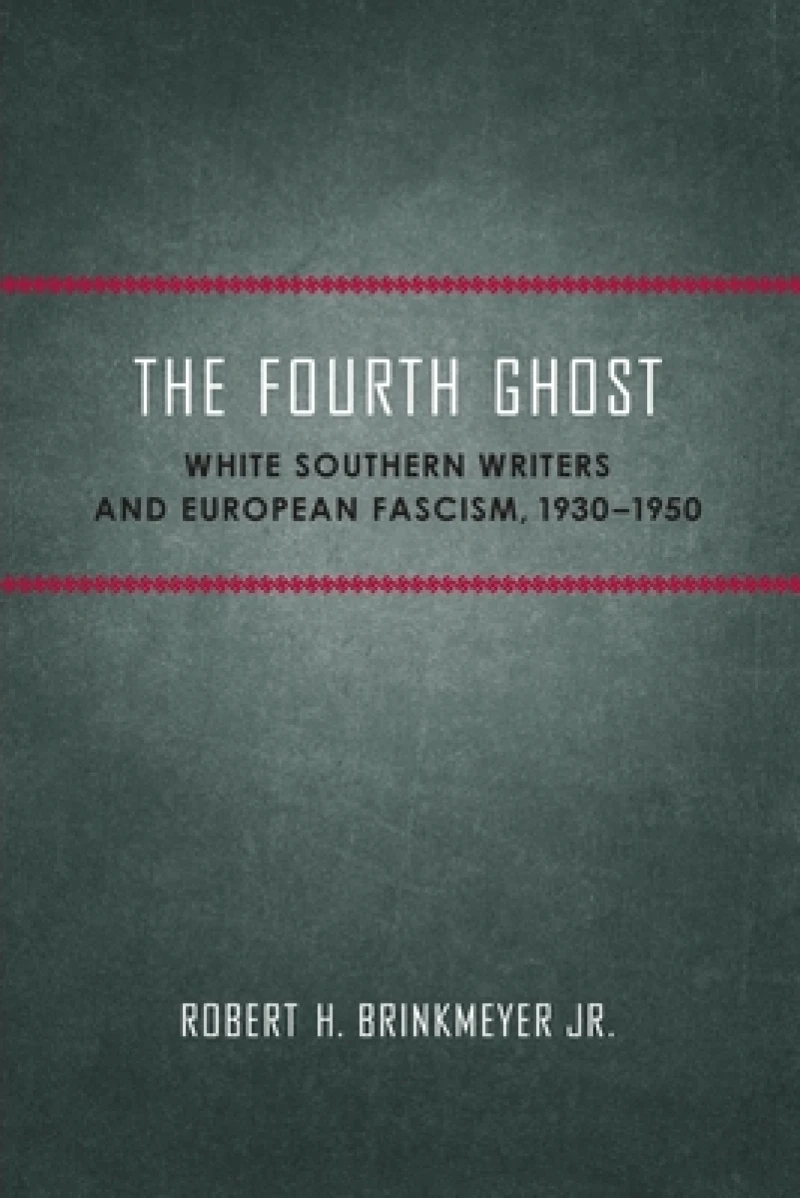
The Fourth Ghost : White Southern Writers and European Fascism, 1930-1950
Book Details
Format
Paperback / Softback
Book Series
Southern Literary Studies
ISBN-10
0807176230
ISBN-13
9780807176238
Publisher
Louisiana State University Press
Imprint
Louisiana State University Press
Country of Manufacture
GB
Country of Publication
GB
Publication Date
Aug 2nd, 2021
Print length
432 Pages
Weight
646 grams
Dimensions
15.00 x 23.00 x 3.00 cms
Product Classification:
Literary studies: c 1900 to c 2000Literary studies: from c 1900 -Literary studies: fiction, novelists & prose writersLiterary studies: fiction, novelists and prose writersLiterary companions, book reviews & guidesLiterary companions, book reviews and guidesFar-right political ideologies and movementsFascism & Nazism
Ksh 7,600.00
Werezi Extended Catalogue
0 in stock
Delivery Location
Delivery fee: Select location
Secure
Quality
Fast
Explores how southern writers of the 1930s and 1940s responded to Fascism, and most tellingly to the suggestion that the racial politics of Nazi Germany had a special, problematic relevance to the South and its segregated social system.
In the 1949 classic Killers of the Dream, Lillian Smith described three racial "ghosts" haunting the mind of the white South: the black woman with whom the white man often had sexual relations, the rejected child from a mixed-race coupling, and the black mammy whom the white southern child first loves but then must reject. In this groundbreaking work, Robert H. Brinkmeyer, Jr., extends Smith's work by adding a fourth "ghost" lurking in the psyche of the white South -- the specter of European Fascism. He explores how southern writers of the 1930s and 1940s responded to Fascism, and most tellingly to the suggestion that the racial politics of Nazi Germany had a special, problematic relevance to the South and its segregated social system.
As Brinkmeyer shows, nearly all white southern writers in these decades felt impelled to deal with this specter and with the implications for southern identity of the issues raised by Nazism and Fascism. Their responses varied widely, ranging from repression and denial to the repulsion of self-recognition. With penetrating insight, Brinkmeyer examines the work of writers who contemplated the connection between the authoritarianism and racial politics of Nazi Germany and southern culture. He shows how white southern writers -- both those writing cultural criticism and those writing imaginative literature -- turned to Fascist Europe for images, analogies, and metaphors for representing and understanding the conflict between traditional and modern cultures that they were witnessing in Dixie.
Brinkmeyer considers the works of a wide range of authors of varying political stripes: the Nashville Agrarians, W. J. Cash, Lillian Smith, William Alexander Percy, Thomas Wolfe, William Faulkner, Katherine Anne Porter, Carson McCullers, Robert Penn Warren, and Lillian Hellman. He argues persuasively that by engaging in their works the vital contemporary debates about totalitarianism and democracy, these writers reconfigured their understanding not only of the South but also of themselves as southerners, and of the nature and significance of their art.
The magnum opus of a distinguished scholar, The Fourth Ghost offers a stunning reassessment of the cultural and political orientation of southern literature by examining a major and heretofore unexplored influence on its development.
As Brinkmeyer shows, nearly all white southern writers in these decades felt impelled to deal with this specter and with the implications for southern identity of the issues raised by Nazism and Fascism. Their responses varied widely, ranging from repression and denial to the repulsion of self-recognition. With penetrating insight, Brinkmeyer examines the work of writers who contemplated the connection between the authoritarianism and racial politics of Nazi Germany and southern culture. He shows how white southern writers -- both those writing cultural criticism and those writing imaginative literature -- turned to Fascist Europe for images, analogies, and metaphors for representing and understanding the conflict between traditional and modern cultures that they were witnessing in Dixie.
Brinkmeyer considers the works of a wide range of authors of varying political stripes: the Nashville Agrarians, W. J. Cash, Lillian Smith, William Alexander Percy, Thomas Wolfe, William Faulkner, Katherine Anne Porter, Carson McCullers, Robert Penn Warren, and Lillian Hellman. He argues persuasively that by engaging in their works the vital contemporary debates about totalitarianism and democracy, these writers reconfigured their understanding not only of the South but also of themselves as southerners, and of the nature and significance of their art.
The magnum opus of a distinguished scholar, The Fourth Ghost offers a stunning reassessment of the cultural and political orientation of southern literature by examining a major and heretofore unexplored influence on its development.
Get The Fourth Ghost by at the best price and quality guaranteed only at Werezi Africa's largest book ecommerce store. The book was published by Louisiana State University Press and it has pages.

