
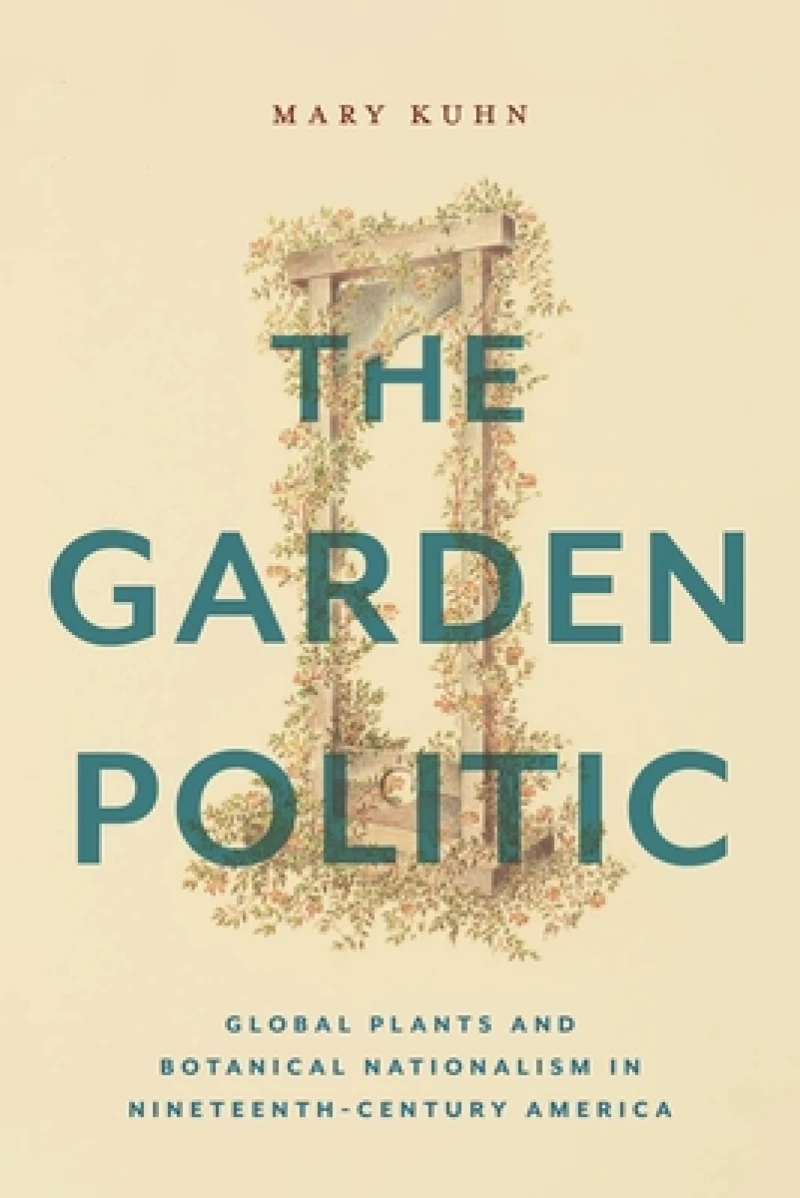
The Garden Politic : Global Plants and Botanical Nationalism in Nineteenth-Century America
by
Mary Kuhn
Book Details
Format
Paperback / Softback
Book Series
America and the Long 19th Century
ISBN-10
1479820156
ISBN-13
9781479820153
Publisher
New York University Press
Imprint
New York University Press
Country of Manufacture
US
Country of Publication
GB
Publication Date
Feb 7th, 2023
Print length
277 Pages
Weight
426 grams
Dimensions
15.30 x 22.90 x 2.20 cms
Product Classification:
Literary studies: c 1800 to c 1900 History of the AmericasBotany & plant sciences
Ksh 4,300.00
Werezi Extended Catalogue
0 in stock
Delivery Location
Delivery fee: Select location
Secure
Quality
Fast
How worldwide plant circulation and new botanical ideas enabled Americans to radically re-envision politics and society The Garden Politic argues that botanical practices and discourses helped nineteenth-century Americans engage pressing questions of race, gender, settler colonialism, and liberal subjectivity. In the early republic, ideas of biotic distinctiveness helped fuel narratives of American exceptionalism. By the nineteenth century, however, these ideas and narratives were unsettled by the unprecedented scale at which the United States and European empires prospected for valuable plants and exchanged them across the globe. Drawing on ecocriticism, New Materialism, environmental history, and the history of science—and crossing disciplinary and national boundaries—The Garden Politic shows how new ideas about cultivation and plant life could be mobilized to divergent political and social ends. Reading the work of influential nineteenth-century authors from a botanical perspective, Mary Kuhn recovers how domestic political issues were entangled with the global circulation and science of plants. The diversity of Harriet Beecher Stowe's own gardens contributed to the evolution of her racial politics and abolitionist strategies. Nathaniel Hawthorne's struggles in his garden inspired him to write stories in which plants defy human efforts to impose order. Radical scientific ideas about plant intelligence and sociality prompted Emily Dickinson to imagine a human polity that embraces kinship with the natural world. Yet other writers, including Frederick Douglass, cautioned that the most prominent political context for plants remained plantation slavery. The Garden Politic reveals how the nineteenth century's extractive political economy of plants contains both the roots of our contemporary environmental crisis and the seeds of alternative political visions.
Get The Garden Politic by at the best price and quality guaranteed only at Werezi Africa's largest book ecommerce store. The book was published by New York University Press and it has pages.

