
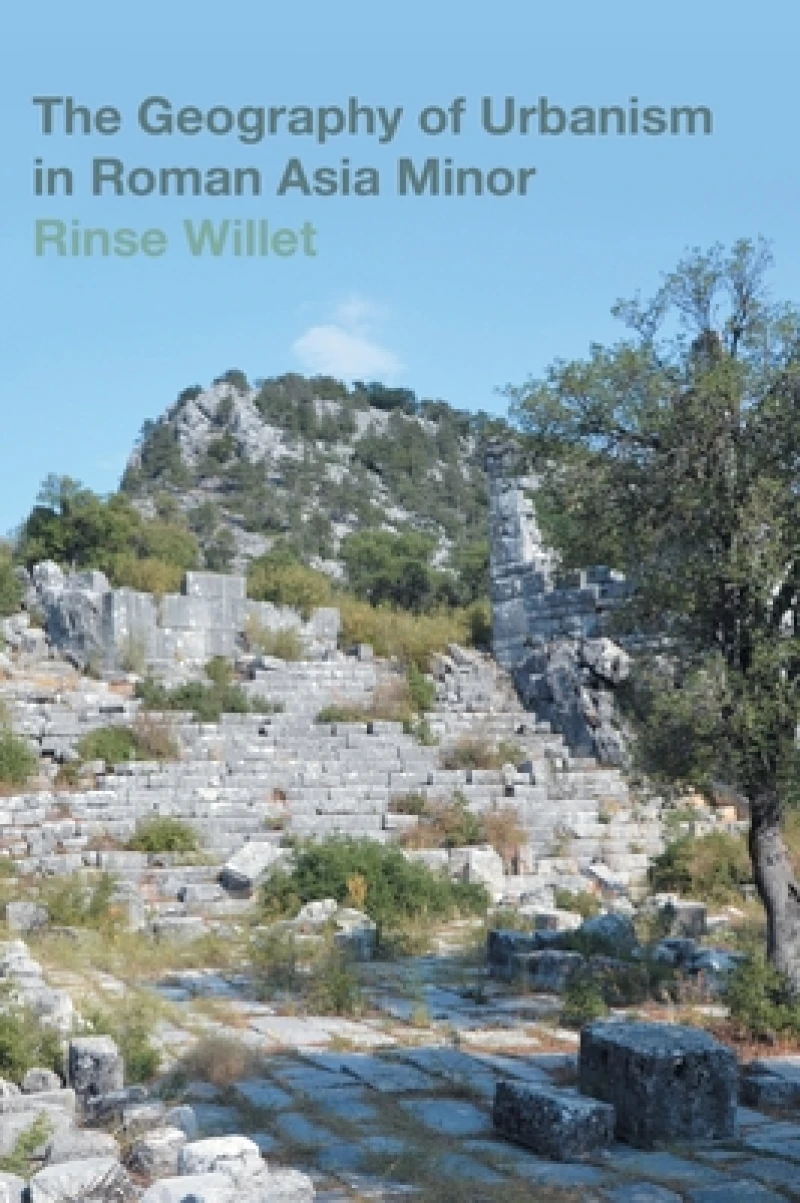
The Geography of Urbanism in Roman Asia Minor
by
Rinse Willet
Book Details
Format
Hardback or Cased Book
ISBN-10
1781798435
ISBN-13
9781781798430
Publisher
Equinox Publishing Ltd
Imprint
Equinox Publishing Ltd
Country of Manufacture
GB
Country of Publication
GB
Publication Date
Jan 1st, 2020
Print length
418 Pages
Weight
1,158 grams
Dimensions
18.60 x 26.20 x 4.00 cms
Product Classification:
Ancient history: to c 500 CEMiddle & Near Eastern archaeologyUrban communitiesHuman geography
Ksh 18,000.00
Publisher Out of Stock
0 in stock
Delivery Location
Delivery fee: Select location
Secure
Quality
Fast
The Geography of Urbanism in Roman Asia Minor investigates how Roman urbanism manifested itself in Asia Minor during the first three centuries CE, particularly with regards to its spatial patterning over the landscape and the administrative, economic and cultural functions cities fulfilled, and how cities developed in terms of size and monumentality. It also addresses to what extent this was a result of political and socio-cultural and economic context and to what extent 'structural determinants', such as the physical topography, agricultural potential and climate (including the shifts/changes therein) influenced the observed patterns. As Asia Minor was already dotted by cities long before the Romans got a hold on this area during the second century BCE, this work compares urbanism of the first three centuries CE with the patterns of cities during the first millennium BCE (Classical and Hellenistic period particularly) and the Byzantine and Ottoman patterns, creating a long term perspective. The book contains an appendix with the information for the 500 cities and 1000 villages in Asia Minor.
The Geography of Urbanism in Roman Asia Minor investigates how Roman urbanism manifested itself in Asia Minor during the first three centuries CE, particularly with regards to its spatial patterning over the landscape and the administrative, economic and cultural functions cities fulfilled, and how cities developed in terms of size and monumentality. It also addresses to what extent this was a result of political and socio-cultural and economic context and to what extent ''structural determinants'', such as the physical topography, agricultural potential and climate (including the shifts/changes therein) influenced the observed patterns. As Asia Minor was already dotted by cities long before the Romans got a hold on this area during the second century BCE, this work compares urbanism of the first three centuries CE with the patterns of cities during the first millennium BCE (Classical and Hellenistic period particularly) and the Byzantine and Ottoman patterns, creating a long term perspective. The book contains an appendix with the information for the 500 cities and 1000 villages in Asia Minor.
Get The Geography of Urbanism in Roman Asia Minor by at the best price and quality guaranteed only at Werezi Africa's largest book ecommerce store. The book was published by Equinox Publishing Ltd and it has pages.

