
Book Details
Format
Paperback / Softback
Book Series
German Life & Civilization
ISBN-10
303431888X
ISBN-13
9783034318884
Edition
New
Publisher
Peter Lang AG, Internationaler Verlag der Wissenschaften
Imprint
Peter Lang AG, Internationaler Verlag der Wissensc
Country of Manufacture
CH
Country of Publication
GB
Publication Date
Jun 29th, 2015
Print length
295 Pages
Weight
452 grams
Dimensions
15.30 x 22.50 x 1.80 cms
Ksh 11,600.00
Manufactured on Demand
0 in stock
Delivery Location
Delivery fee: Select location
Secure
Quality
Fast
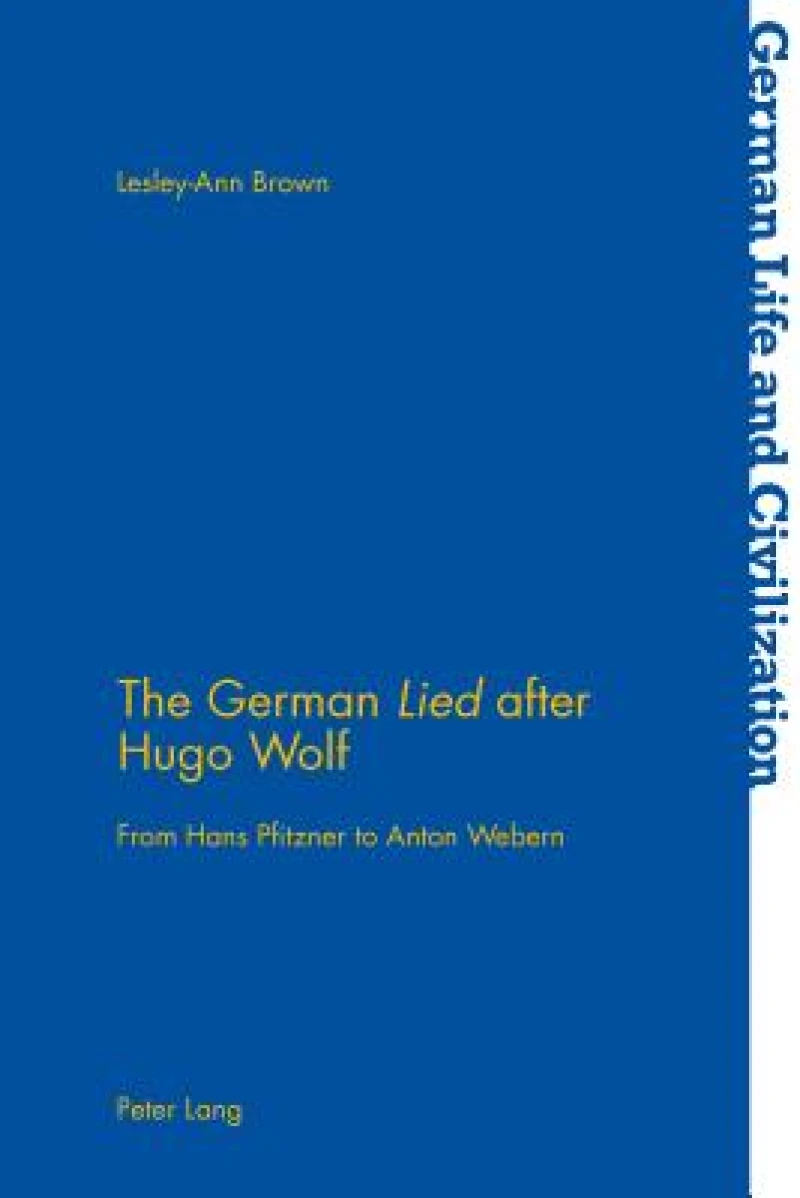
This volume traces the development of the German Lied across the first part of the twentieth century, as new directions in songwriting and social and economic changes threatened the future of the genre. Works by Pfitzner, Hindemith, Eisler, Schönberg, Berg and Webern are considered in this groundbreaking study.
Following the development of the German Lied after the nineteenth century – when it was widely known as the setting of Romantic poetry to music – this book explores the changing artistic scene in the early twentieth century, as rapid social, economic and environmental changes affected German cultural production. The Lied then faced not only a crisis of identity, but also a threat to its survival. This book considers the literary and musical ideas that both challenged and complemented each other as new directions in songwriting were developed across the modern period.
The composers selected for their relevance in Lieder composition during this time illustrate not only the diversity of their musical thought but also a changing approach to the relationship between the poetic text and its musical counterpart. Hans Pfitzner represents the determination to maintain established tradition; subsequently, a chronological progression through the individuality of Paul Hindemith and social integrity of Hanns Eisler leads to the point where transformation of the genre can be said to have begun, with Arnold Schönberg. With the Lieder of Alban Berg and Anton Webern, the genre arrived at a point of convergence with the ideals of German modernism. This study offers new insights into the cultural significance of German songwriting in the first part of the twentieth century.
The composers selected for their relevance in Lieder composition during this time illustrate not only the diversity of their musical thought but also a changing approach to the relationship between the poetic text and its musical counterpart. Hans Pfitzner represents the determination to maintain established tradition; subsequently, a chronological progression through the individuality of Paul Hindemith and social integrity of Hanns Eisler leads to the point where transformation of the genre can be said to have begun, with Arnold Schönberg. With the Lieder of Alban Berg and Anton Webern, the genre arrived at a point of convergence with the ideals of German modernism. This study offers new insights into the cultural significance of German songwriting in the first part of the twentieth century.
Get The German «Lied» after Hugo Wolf by at the best price and quality guaranteed only at Werezi Africa's largest book ecommerce store. The book was published by Peter Lang AG, Internationaler Verlag der Wissenschaften and it has pages.

