
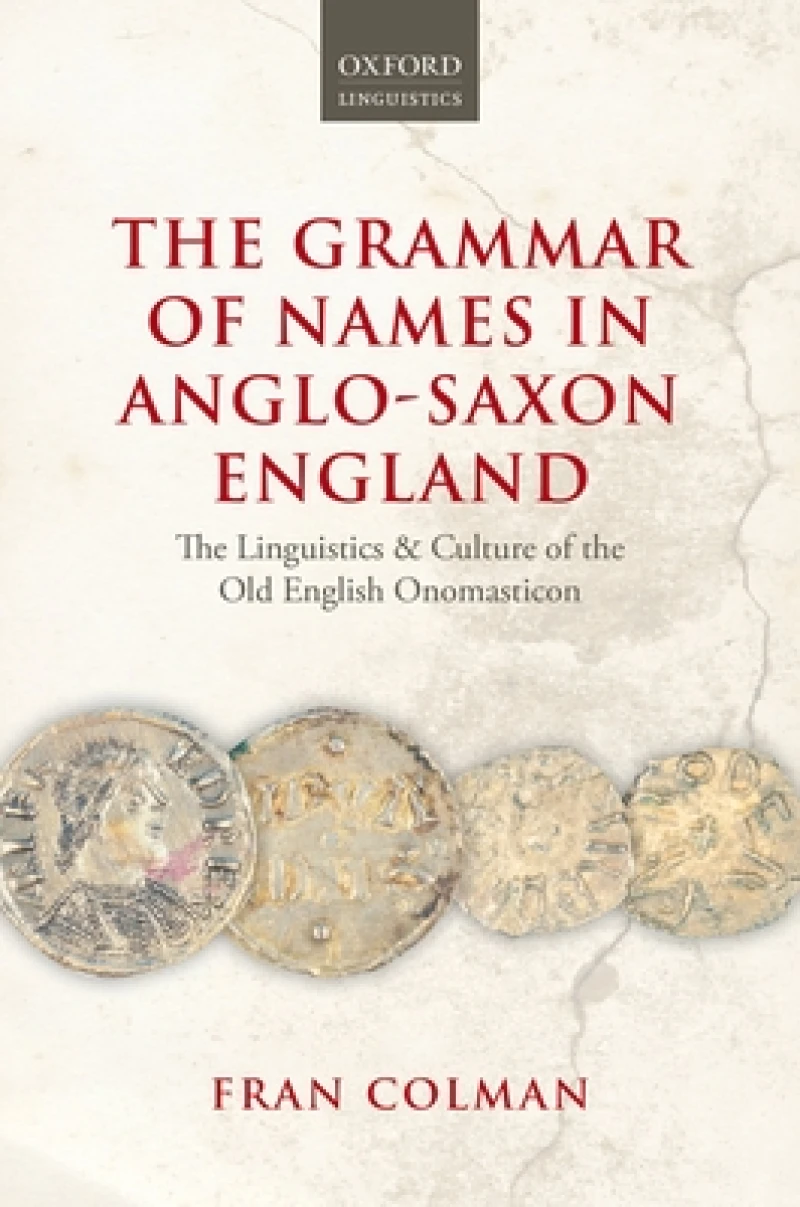
The Grammar of Names in Anglo-Saxon England : The Linguistics and Culture of the Old English Onomasticon
by
Fran Colman
Book Details
Format
Hardback or Cased Book
ISBN-10
0198701675
ISBN-13
9780198701675
Publisher
Oxford University Press
Imprint
Oxford University Press
Country of Manufacture
GB
Country of Publication
GB
Publication Date
Jul 24th, 2014
Print length
324 Pages
Weight
652 grams
Dimensions
15.80 x 24.00 x 2.40 cms
Ksh 26,300.00
Manufactured on Demand
0 in stock
Delivery Location
Delivery fee: Select location
Secure
Quality
Fast
This book examines the etymology, semantics, and grammatical behaviour of personal names in Anglo-Saxon England and considers their evolving place in Anglo-Saxon history and culture. The results of Dr Colman's wide-ranging investigation also have consequences for traditional analyses of linguistic structures.
This book examines personal names, including given and acquired (or nick-) names, and how they were used in Anglo-Saxon England. It discusses their etymologies, semantics, and grammatical behaviour, and considers their evolving place in Anglo-Saxon history and culture. From that culture survive thousands of names on coins, in manuscripts, on stone and other inscriptions. Names are important and their absence a stigma (Grendel''s parents have no names); they may have particular functions in ritual and magic; they mark individuals, generally people but also beings with close human contact such as dogs, cats, birds, and horses; and they may provide indications of rank and gender. Dr Colman explores the place of names within the structure of Old English, their derivation, formation, and other linguistic behaviour, and compares them with the products of other Germanic (e.g., Present-day German) and non-Germanic (e.g., Ancient and Present-day Greek) naming systems. Old English personal names typically followed the Germanic system of elements based on common words like leof (adjective ''beloved'') and wulf (noun ''wolf''), which give Leofa and Wulf, and often combined as in Wulfraed, (ræd noun, ''advice, counsel'') or as in Leofing (with the diminutive suffix -ing). The author looks at the combinatorial and sequencing possibilities of these elements in name formation, and assesses the extent to which, in origin, names may be selected to express qualities manifested by, or expected in, an individual. She examines their different modes of inflection and the variable behaviour of names classified as masculine or feminine. The results of her wide-ranging investigation are provocative and stimulating.
Get The Grammar of Names in Anglo-Saxon England by at the best price and quality guaranteed only at Werezi Africa's largest book ecommerce store. The book was published by Oxford University Press and it has pages.

