
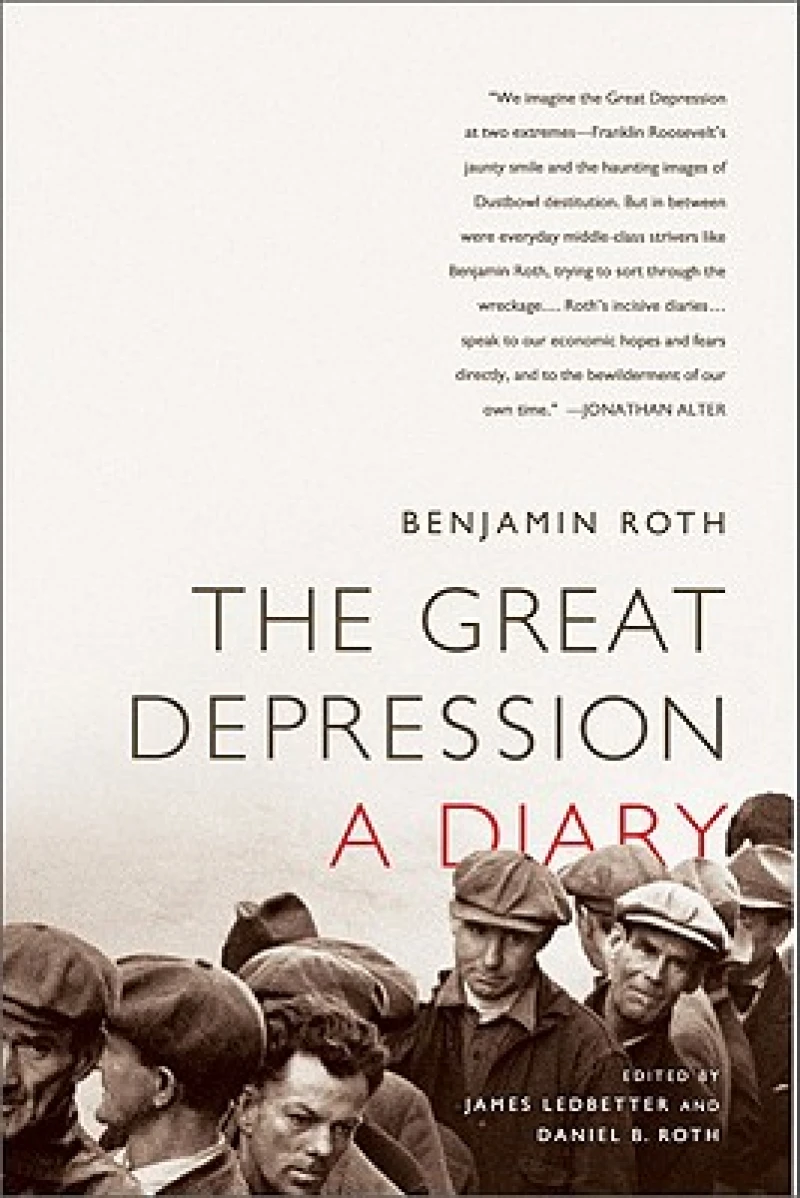
The Great Depression: A Diary
Book Details
Format
Paperback / Softback
ISBN-10
1586489011
ISBN-13
9781586489014
Publisher
PublicAffairs,U.S.
Imprint
PublicAffairs,U.S.
Country of Manufacture
US
Country of Publication
GB
Publication Date
Aug 31st, 2010
Print length
288 Pages
Weight
344 grams
Dimensions
22.50 x 15.30 x 2.00 cms
Product Classification:
Diaries, letters & journalsHistory of the Americas20th century history: c 1900 to c 2000
Ksh 3,600.00
Werezi Extended Catalogue
Delivery in 14 days
4 copies in stock
Delivery Location
Delivery fee: Select location
Delivery in 14 days
Secure
Quality
Fast
When the stock market crashed in 1929, Benjamin Roth was a young lawyer in Youngstown, Ohio. After he began to grasp the magnitude of what had happened to American economic life, he decided to set down his impressions in his diary. This collection of those entries reveals another side of the Great Depression,one lived through by ordinary, middle-class Americans, who on a daily basis grappled with a swiftly changing economy coupled with anxiety about the unknown future. Roth's depiction of life in time of widespread foreclosures, a schizophrenic stock market, political unrest and mass unemployment seem to speak directly to readers today.
A “compelling” (New York Times) and personal daily account of the experience of the Great Depression in the mid-west, full of anxieties about the economic future, with powerful echoes for today.
In the early 1920s, Benjamin Roth was a young lawyer fresh out of the army. He settled in Youngstown, Ohio, a booming Midwestern industrial town. Times were good—until the stock market crash of 1929. After nearly two years of economic crisis, it was clear that the heady prosperity of the Roaring Twenties would not return quickly.
As Roth began to grasp the magnitude of what had happened to American economic life, he set out to record his impressions in a diary—a document that would grow to span several volumes over more than a decade. Penning brief, clear-eyed notes on the crisis which unfolded around him, Roth struggled to understand the complex forces governing political and economic life, yet he remained eager to learn from the crisis. As he wrote of what is now known as the Great Depression, "To the man past middle life it spells tragedy and disaster, but to those of us in the middle thirties it may be a great school of experience out of which some worth while lesson may be salvaged."
Roth's words from that unique time seem to speak directly to readers today. His perceptions and experiences have a chilling similarity to those of our own era. Fearful of inflation and skeptical of big government, Roth yearned for signs of true recovery, and eventually formed his own theories of how a prudent person might survive hard times. The Great Depression: A Diary, edited by James Ledbetter, editor of Slate's "The Big Money," and Roth's son, Daniel B. Roth, reveals another side of the Great Depression—one lived through by ordinary, middle-class folks, who on a daily basis grappled with a swiftly changing economy coupled with anxiety about the unknown future.
In the early 1920s, Benjamin Roth was a young lawyer fresh out of the army. He settled in Youngstown, Ohio, a booming Midwestern industrial town. Times were good—until the stock market crash of 1929. After nearly two years of economic crisis, it was clear that the heady prosperity of the Roaring Twenties would not return quickly.
As Roth began to grasp the magnitude of what had happened to American economic life, he set out to record his impressions in a diary—a document that would grow to span several volumes over more than a decade. Penning brief, clear-eyed notes on the crisis which unfolded around him, Roth struggled to understand the complex forces governing political and economic life, yet he remained eager to learn from the crisis. As he wrote of what is now known as the Great Depression, "To the man past middle life it spells tragedy and disaster, but to those of us in the middle thirties it may be a great school of experience out of which some worth while lesson may be salvaged."
Roth's words from that unique time seem to speak directly to readers today. His perceptions and experiences have a chilling similarity to those of our own era. Fearful of inflation and skeptical of big government, Roth yearned for signs of true recovery, and eventually formed his own theories of how a prudent person might survive hard times. The Great Depression: A Diary, edited by James Ledbetter, editor of Slate's "The Big Money," and Roth's son, Daniel B. Roth, reveals another side of the Great Depression—one lived through by ordinary, middle-class folks, who on a daily basis grappled with a swiftly changing economy coupled with anxiety about the unknown future.
Get The Great Depression: A Diary by at the best price and quality guaranteed only at Werezi Africa's largest book ecommerce store. The book was published by PublicAffairs,U.S. and it has pages.

