
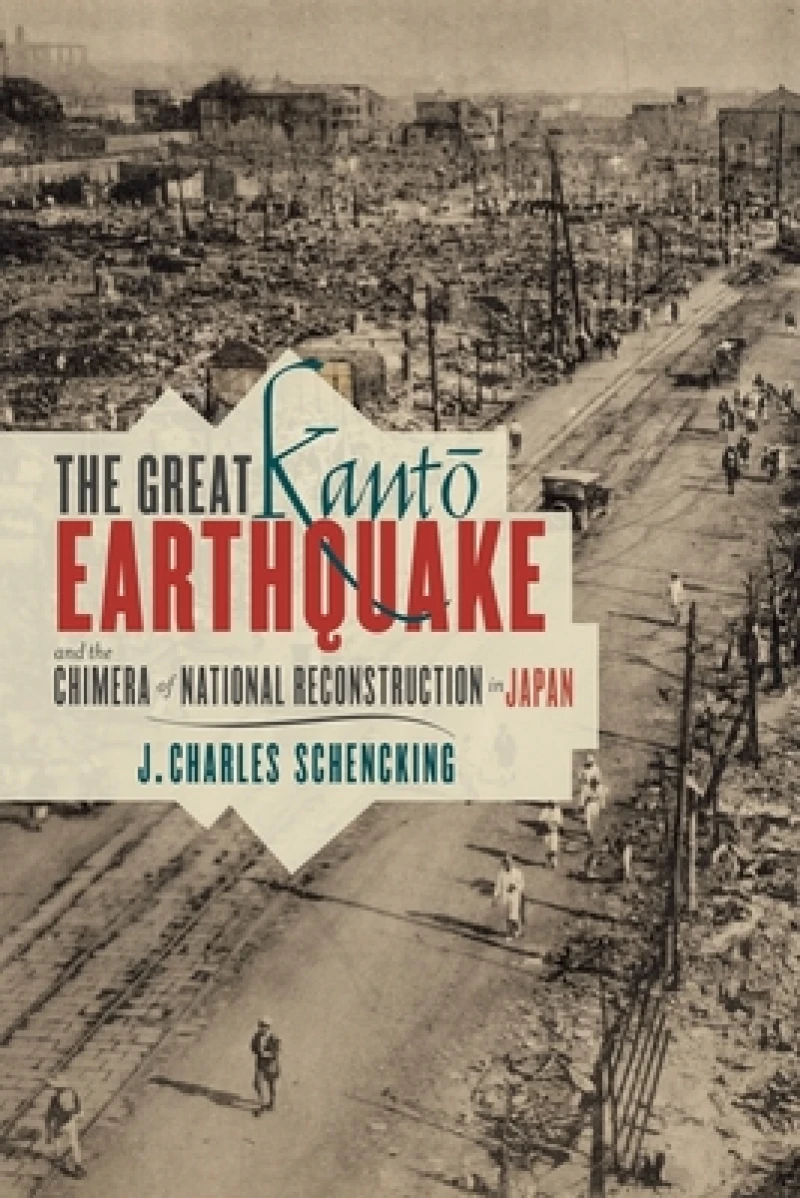
The Great Kanto Earthquake and the Chimera of National Reconstruction in Japan
Book Details
Format
Hardback or Cased Book
Book Series
Contemporary Asia in the World
ISBN-10
0231162189
ISBN-13
9780231162180
Publisher
Columbia University Press
Imprint
Columbia University Press
Country of Manufacture
US
Country of Publication
GB
Publication Date
Jul 2nd, 2013
Print length
400 Pages
Weight
690 grams
Dimensions
23.20 x 16.00 x 2.90 cms
Product Classification:
Asian history20th century history: c 1900 to c 2000Social & cultural historyNatural disasters
Ksh 9,900.00
Werezi Extended Catalogue
0 in stock
Delivery Location
Delivery fee: Select location
Secure
Quality
Fast
In September 1923, a magnitude 7.9 earthquake devastated eastern Japan, killing more than 120,000 people and leaving two million homeless. Using a rich array of source material, J. Charles Schencking tells for the first time the graphic tale of Tokyo's destruction and rebirth. In emotive prose, he documents how the citizens of Tokyo experienced this unprecedented calamity and explores the ways in which it rattled people's deep-seated anxieties about modernity. While explaining how and why the disaster compelled people to reflect on Japanese society, he also examines how reconstruction encouraged the capital's inhabitants to entertain new types of urbanism as they rebuilt their world. Some residents hoped that a grandiose metropolis, reflecting new values, would rise from the ashes of disaster-ravaged Tokyo. Many, however, desired a quick return of the city they once called home. Opportunistic elites advocated innovative state infrastructure to better manage the daily lives of Tokyo residents. Others focused on rejuvenating society-morally, economically, and spiritually-to combat the perceived degeneration of Japan. Schencking explores the inspiration behind these dreams and the extent to which they were realized. He investigates why Japanese citizens from all walks of life responded to overtures for renewal with varying degrees of acceptance, ambivalence, and resistance. His research not only sheds light on Japan's experience with and interpretation of the earthquake but challenges widespread assumptions that disasters unite stricken societies, creating a "blank slate" for radical transformation. National reconstruction in the wake of the Great Kanto Earthquake, Schencking demonstrates, proved to be illusive.
Get The Great Kanto Earthquake and the Chimera of National Reconstruction in Japan by at the best price and quality guaranteed only at Werezi Africa's largest book ecommerce store. The book was published by Columbia University Press and it has pages.

