
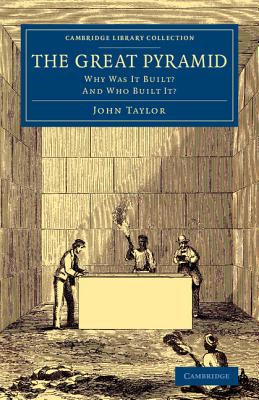
The Great Pyramid : Why Was It Built? And Who Built It?
by
John Taylor
Book Details
Format
Paperback / softback
Book Series
Cambridge Library Collection - Egyptology
ISBN-10
1108075789
ISBN-13
9781108075787
Publisher
Cambridge University Press
Imprint
Cambridge University Press
Country of Manufacture
GB
Country of Publication
GB
Publication Date
Aug 21st, 2014
Print length
340 Pages
Weight
446 grams
Dimensions
13.90 x 21.50 x 2.50 cms
Product Classification:
Egyptian archaeology / EgyptologyArchaeology by period / region
KSh 6,450.00
Currently unavailable
0 in stock
Delivery Location
Delivery fee: Select location
Secure
Quality
Fast
In this 1859 work, John Taylor claimed to have discovered the 'pyramid inch', which he argued was one twenty-fifth of the so-called 'sacred cubit' and was derived from ancient astronomical observations. His work was very influential, but was later debunked by the more accurate surveys and measurements of Flinders Petrie.
The publisher and author John Taylor (1781–1864), who took an interest in various antiquarian matters, published this work in 1859. Using the measurements taken by the seventeenth-century archaeologist John Greaves and by the French savants who had examined the Great Pyramid at Giza during Napoleon's Egyptian expedition, he deduced the existence of a 'pyramid inch' (fractionally longer than the British inch), which was one twenty-fifth of the so-called 'sacred cubit' and was derived from ancient astronomical and time-measurement observations; and as a convinced Christian, he concluded that the British inch was therefore divinely inspired. His work was very influential and had a considerable following (the astronomer Charles Piazzi Smyth's 1864 book on Our Inheritance in the Great Pyramid is also reissued in this series), but was later debunked by the more accurate surveys and measurements of Flinders Petrie, whose interest in Egypt was partly aroused by reading this book.
Get The Great Pyramid by John Taylor at the best price and quality guaranteed only at Werezi Africa's largest book ecommerce store. The book was published by Cambridge University Press and it has 340 pages.
Customers Who Bought This Also Bought
Alexandria
KSh 3,400.00

Last Dynasty
KSh 2,350.00

World Beneath the Sands
KSh 3,050.00

Tutankhamun''s Trumpet
KSh 3,100.00
Lives of the Ancient Egyptians
KSh 2,350.00

Tutankhamun''s Trumpet
KSh 2,350.00

Last Dynasty
KSh 3,050.00

Disability in Ptolemaic Egypt and the Hellenistic World
KSh 8,650.00
Discovering Tutankhamun
KSh 3,600.00
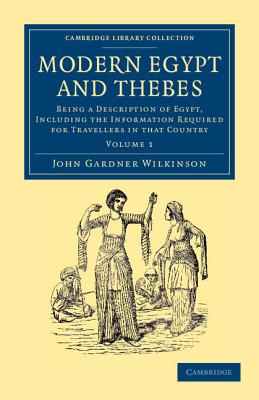
Modern Egypt and Thebes
KSh 8,350.00
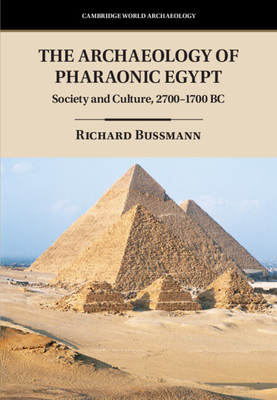
The Archaeology of Pharaonic Egypt
KSh 18,950.00

2010
KSh 161,350.00
More by John Taylor

The Acts of the Apostles
KSh 25,550.00

The Impact of the First World War on British Universities
KSh 23,400.00

The Historical Disruption of English Higher Education
KSh 23,400.00

50 Years Not Out (Hardback)
KSh 3,950.00

Auditing
KSh 10,750.00

Stantonbury and New Bradwell
KSh 2,750.00

Learn to Have Fun with Your Senses
KSh 3,200.00

The World of Sport Examined
KSh 9,850.00

Maneaters and Marauders
KSh 4,500.00

Paths to Contemporary French Literature
KSh 9,350.00

In The Pleasure Groove
KSh 2,500.00

The Presence of Things Past
KSh 2,700.00