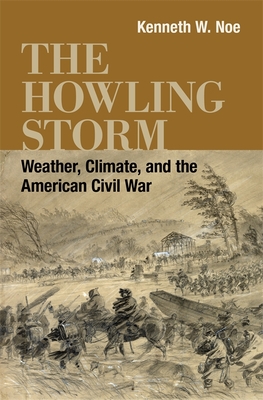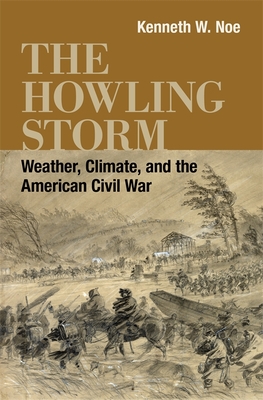
The Howling Storm : Weather, Climate, and the American Civil War
Book Details
Format
Paperback / softback
ISBN-10
0807180416
ISBN-13
9780807180419
Publisher
Louisiana State University Press
Imprint
Louisiana State University Press
Country of Manufacture
GB
Country of Publication
GB
Publication Date
Oct 18th, 2023
Print length
688 Pages
Weight
1,004 grams
Dimensions
23.30 x 15.70 x 4.30 cms
KSh 6,650.00
Temporarily out of stock, due soon
0 in stock
Delivery Location
Delivery fee: Select location
Secure
Quality
Fast
Traditional histories of the Civil War describe the conflict as a war between North and South. Kenneth Noe suggests it should instead be understood as a war between the North, the South, and the weather. He retells the history of the conflagration with a focus on the ways in which weather and climate shaped the outcomes of battles and campaigns.
Finalist for the Lincoln Prize!
Traditional histories of the Civil War describe the conflict as a war between North and South. Kenneth W. Noe suggests it should instead be understood as a war between the North, the South, and the weather. In The Howling Storm, Noe retells the history of the conflagration with a focus on the ways in which weather and climate shaped the outcomes of battles and campaigns. He further contends that events such as floods and droughts affecting the Confederate home front constricted soldiers' food supply, lowered morale, and undercut the government's efforts to boost nationalist sentiment. By contrast, the superior equipment and open supply lines enjoyed by Union soldiers enabled them to cope successfully with the South's extreme conditions and, ultimately, secure victory in 1865.
Climate conditions during the war proved unusual, as irregular phenomena such as El Niño, La Niña, and similar oscillations in the Atlantic Ocean disrupted weather patterns across southern states. Taking into account these meteorological events, Noe rethinks conventional explanations of battlefield victories and losses, compelling historians to reconsider long-held conclusions about the war. Unlike past studies that fault inflation, taxation, and logistical problems for the Confederate defeat, his work considers how soldiers and civilians dealt with floods and droughts that beset areas of the South in 1862, 1863, and 1864. In doing so, he addresses the foundational causes that forced Richmond to make difficult and sometimes disastrous decisions when prioritizing the feeding of the home front or the front lines.
The Howling Storm stands as the first comprehensive examination of weather and climate during the Civil War. Its approach, coverage, and conclusions are certain to reshape the field of Civil War studies.
Traditional histories of the Civil War describe the conflict as a war between North and South. Kenneth W. Noe suggests it should instead be understood as a war between the North, the South, and the weather. In The Howling Storm, Noe retells the history of the conflagration with a focus on the ways in which weather and climate shaped the outcomes of battles and campaigns. He further contends that events such as floods and droughts affecting the Confederate home front constricted soldiers' food supply, lowered morale, and undercut the government's efforts to boost nationalist sentiment. By contrast, the superior equipment and open supply lines enjoyed by Union soldiers enabled them to cope successfully with the South's extreme conditions and, ultimately, secure victory in 1865.
Climate conditions during the war proved unusual, as irregular phenomena such as El Niño, La Niña, and similar oscillations in the Atlantic Ocean disrupted weather patterns across southern states. Taking into account these meteorological events, Noe rethinks conventional explanations of battlefield victories and losses, compelling historians to reconsider long-held conclusions about the war. Unlike past studies that fault inflation, taxation, and logistical problems for the Confederate defeat, his work considers how soldiers and civilians dealt with floods and droughts that beset areas of the South in 1862, 1863, and 1864. In doing so, he addresses the foundational causes that forced Richmond to make difficult and sometimes disastrous decisions when prioritizing the feeding of the home front or the front lines.
The Howling Storm stands as the first comprehensive examination of weather and climate during the Civil War. Its approach, coverage, and conclusions are certain to reshape the field of Civil War studies.
Get The Howling Storm by Kenneth W. Noe at the best price and quality guaranteed only at Werezi Africa's largest book ecommerce store. The book was published by Louisiana State University Press and it has 688 pages.
Customers Who Bought This Also Bought

We Are Green and Trembling
KSh 1,800.00
Unruly
KSh 2,150.00

The Holy Roman Empire
KSh 3,600.00
The Heretic of Cacheu
KSh 4,500.00

Tudor Church Militant
KSh 2,350.00

All Things Made New
KSh 3,050.00
Thomas Cranmer – A Life
KSh 4,600.00

Letters on England
KSh 2,350.00

This Door of the Seas
KSh 2,150.00
We Are Green and Trembling
KSh 3,400.00
The Prince
KSh 1,450.00

Prince
KSh 2,000.00