
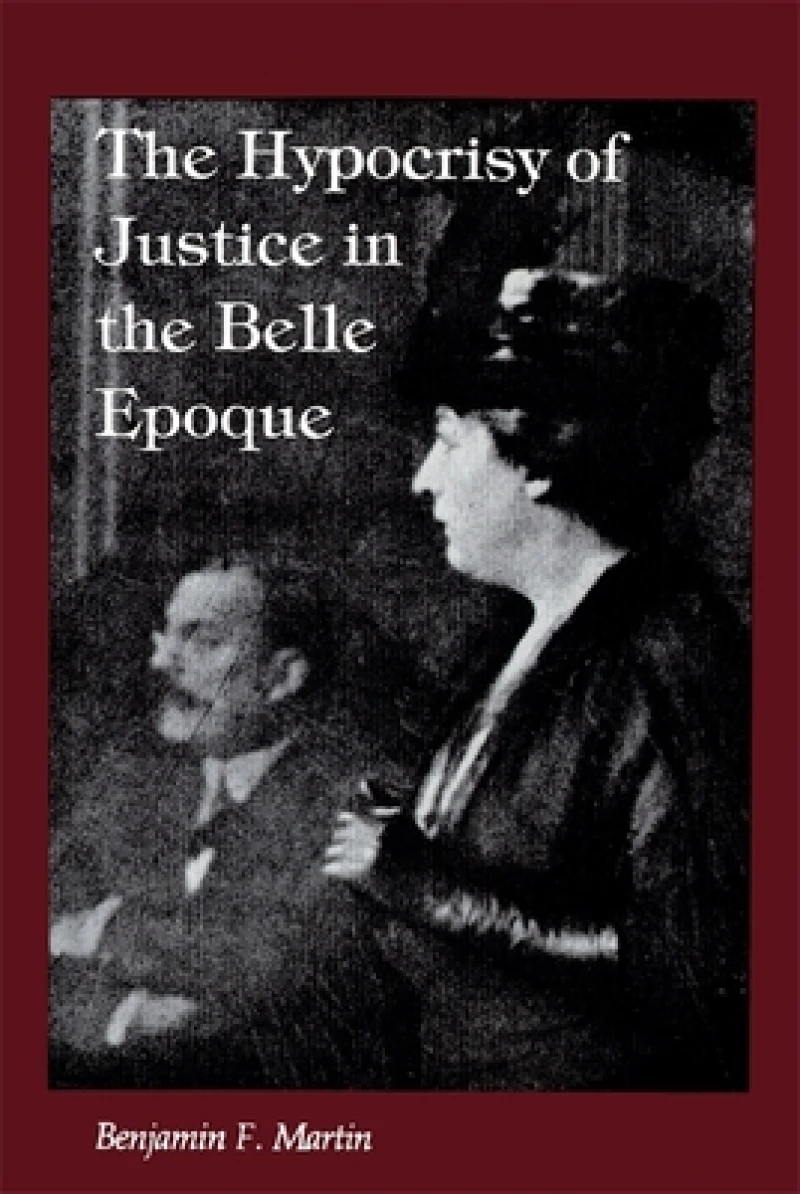
The Hypocrisy of Justice in the Belle Epoque
Book Details
Format
Paperback / Softback
ISBN-10
080712494X
ISBN-13
9780807124949
Publisher
Louisiana State University Press
Imprint
Louisiana State University Press
Country of Manufacture
US
Country of Publication
GB
Publication Date
Mar 1st, 1999
Print length
264 Pages
Weight
404 grams
Dimensions
22.80 x 15.20 x 1.50 cms
Product Classification:
European historyLegal historyEuropean history
Ksh 5,600.00
Werezi Extended Catalogue
0 in stock
Delivery Location
Delivery fee: Select location
Secure
Quality
Fast
The Dreyfus Affair of the 1890s and the violent controversies that surrounded it appeared to pass two very different judgments on the France of the Third Republic. The outcome o the trial- Captain Dreyfus convicted without guilt and the real traitor acquitted despite guilt- demonstrated without question the extraordinary hypocrisy of the military justice system. But the furor raised by Dreyfus' conviction and the agitation for his release suggested that the injustice of the courts' verdict was uncharacteristic of French society; that for France as a nation the rendering of justice was paramount, even at the expense of disgracing both the military and a conspiring government. In The Hypocrisy of Justice in the Belle Epoque, Benjamin Martin examines the events of three sensational criminal cases to reveal that the willful mangling of justice that occurred in the Dreyfus trial was far from rare in the Third Republic France. He finds, in fact, that justice in the Belle Epoque was ""hypocritical in the extreme,"" with the outcome of trials easily tainted by the power and influence of politics, money, and illicit sex. At times, justice deviated so far from the ideal that its goal was not the strict application of the law or even the discovery of the truth, but rather the imposition of a system of rewards and punishments meted out in accordance with a capricious vision of social utility. Martin begins with the case of Marguerite Steinheil, the wife of an artist of only middling talent. A strikingly beautiful woman, she presided over a famous salon and was the lover of influential politicians. When she was tried for the brutal murders of her husband and her mother, Marguerite defended herself with a flurry of extravagant stories and unlikely counter-accusations. Even so, she was found innocent of all charges, and the crimes were left unsolved. The second trial considered is that of Thérése Humbert, a young woman who used an apparently innate talent for elaborate deception in rising from poverty to the upper reaches of Parisian society. With the aid of her husband and her brothers, Thérése created a series of specious lawsuits over an illusory American legacy. Then, playing on the greed of dozens of investors, she skillfully manipulated the French courts to perpetrate a fraud that would last for twenty years, yield millions, and make her salon one of the most dazzling in Europe until the day when the ruse was finally found out. The third case is that of Henriette Caillaux, the wife of an important leader in the Radical party. She admitted shooting Gaston Calmette, the influential newspaper editor who had been carrying out a campaign of vilification against her husband. But when she was tried for the murder in 1914, Henriette was found innocent and allowed to go free. The sensational trials of Marguerit Steinheil, Thérése Humbert, and Henriette Caillaux mirrored in many the stalemate society of the Belle Epoque itself. By examining the hypocrisy of justice in the Third Republic, Benjamin Martin uncovers the vast extent of that society's corruption, the amorality and sordidness that were cloaked only partially by the mantle of respectability.
Get The Hypocrisy of Justice in the Belle Epoque by at the best price and quality guaranteed only at Werezi Africa's largest book ecommerce store. The book was published by Louisiana State University Press and it has pages.

