
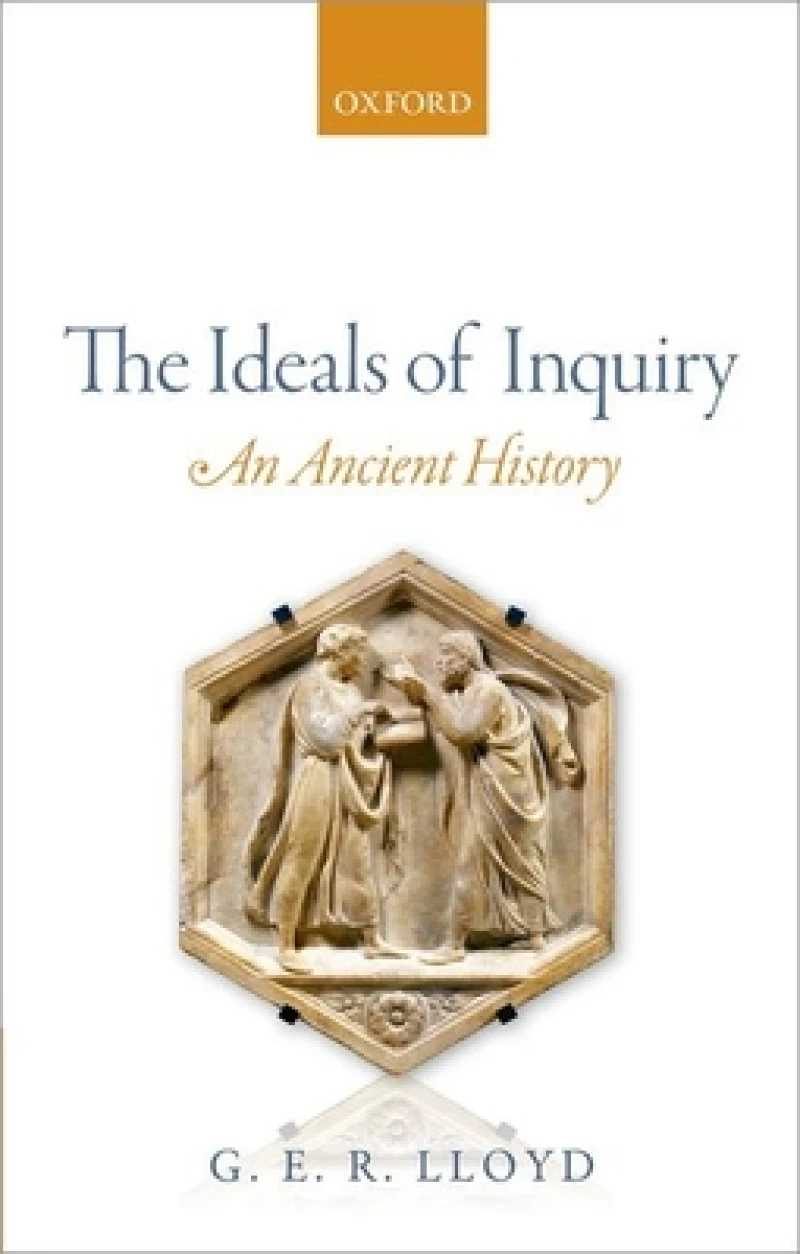
The Ideals of Inquiry : An Ancient History
Book Details
Format
Hardback or Cased Book
ISBN-10
0198705603
ISBN-13
9780198705604
Publisher
Oxford University Press
Imprint
Oxford University Press
Country of Manufacture
GB
Country of Publication
GB
Publication Date
May 29th, 2014
Print length
174 Pages
Weight
340 grams
Dimensions
14.50 x 21.70 x 1.60 cms
Product Classification:
General & world historyHistory of Western philosophyHistory of ideasPhilosophy of science
Ksh 13,000.00
Manufactured on Demand
0 in stock
Delivery Location
Delivery fee: Select location
Secure
Quality
Fast
Long before science as we know it existed, sophisticated studies of the physical world were undertaken-in Mesopotamia, India, China, and Greece. G. E. R. Lloyd explores the methods, subject-matter, and aims of those studies. He illuminates the origins of human intellectual inquiry, finding similarities and differences across cultures.
Long before science as we know it today existed, sophisticated studies of the external world were undertaken, notably in Mesopotamia, India, China, and Greece. G. E. R. Lloyd explores three interrelated issues concerning those investigations. This first issue is methods--how was it thought that they should be pursued? The second is subject-matter--what was assumed about what there is to be investigated? The third issue is aims and value--what were such investigations thought to be good for? Thus how did an ideal of demonstration that would yield incontrovertible conclusions come to arise and what did it owe to the political institutions of the society in which it first developed, namely ancient Greece? Debate has been widely practised and not just in literate societies: Lloyd''s second chapter draws up a taxonomy of ancient debates and discusses how the ideals of transparency and accountability were made explicit. Then how did ideas about the need to undertake systematic research come to be formulated and such research practised, and what obstacles did it face? Different equally valid assumptions have been made about what there is to be investigated, reflecting what is here called the multidimensionality of the phenomena, and different ancient investigators entertained different aims for their work, mirroring but sometimes going beyond the current values of their society. Taking stock of all this diversity, the final chapter spells out the implications for our understanding of the history of human reasoning in general, exploring its commonalities and where and why it has manifested and continues to manifest specificities across different populations.
Get The Ideals of Inquiry by at the best price and quality guaranteed only at Werezi Africa's largest book ecommerce store. The book was published by Oxford University Press and it has pages.

