
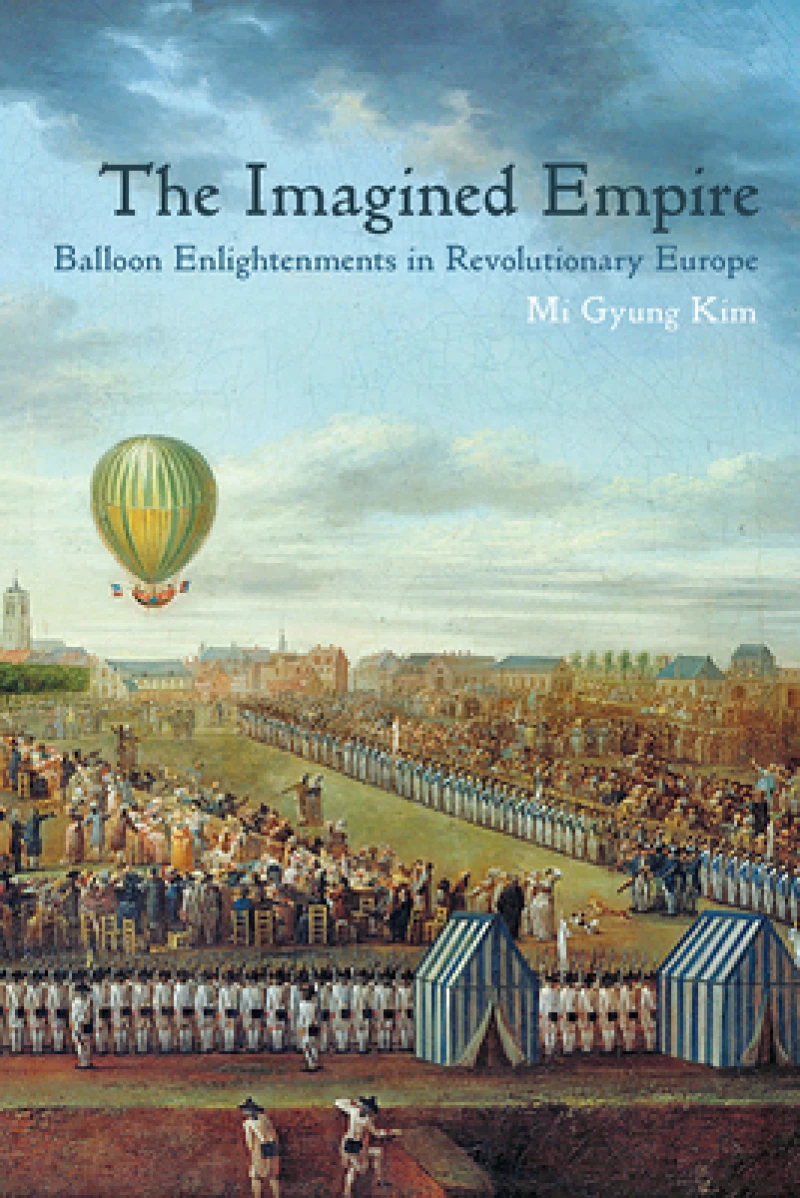
The Imagined Empire : Balloon Enlightenments in Revolutionary Europe
by
Mi Gyung Kim
Book Details
Format
Hardback or Cased Book
ISBN-10
0822944650
ISBN-13
9780822944652
Publisher
University of Pittsburgh Press
Imprint
University of Pittsburgh Press
Country of Manufacture
US
Country of Publication
GB
Publication Date
Nov 11th, 2016
Print length
472 Pages
Ksh 10,400.00
Temporarily out of stock, due soon
0 in stock
Delivery Location
Delivery fee: Select location
Secure
Quality
Fast
The hot-air balloon, invented by the Montgolfier brothers in 1783, launched for the second time just days before the Treaty of Paris would end the American Revolutionary War.
The hot-air balloon, invented by the Montgolfier brothers in 1783, launched for the second time just days before the Treaty of Paris would end the American Revolutionary War. The ascent in Paris—a technological marvel witnessed by a diverse crowd that included Benjamin Franklin—highlighted celebrations of French military victory against Britain and ignited a balloon mania that swept across Europe at the end of the Enlightenment. This popular frenzy for balloon experiments, which attracted hundreds of thousands of spectators, fundamentally altered the once elite audience for science by bringing aristocrats and commoners together. The Imagined Empire explores how this material artifact, the flying machine, not only expanded the public for science and spectacle but inspired utopian dreams of a republican monarchy that would obliterate social boundaries. The balloon, Mi Gyung Kim argues, was a people-machine, a cultural performance that unified and mobilized the people of France, who imagined an aerial empire that would bring glory to the French nation. This critical history of ballooning considers how a relatively simple mechanical gadget became an explosive cultural and political phenomenon on the eve of the French Revolution.
Get The Imagined Empire by at the best price and quality guaranteed only at Werezi Africa's largest book ecommerce store. The book was published by University of Pittsburgh Press and it has pages.

