
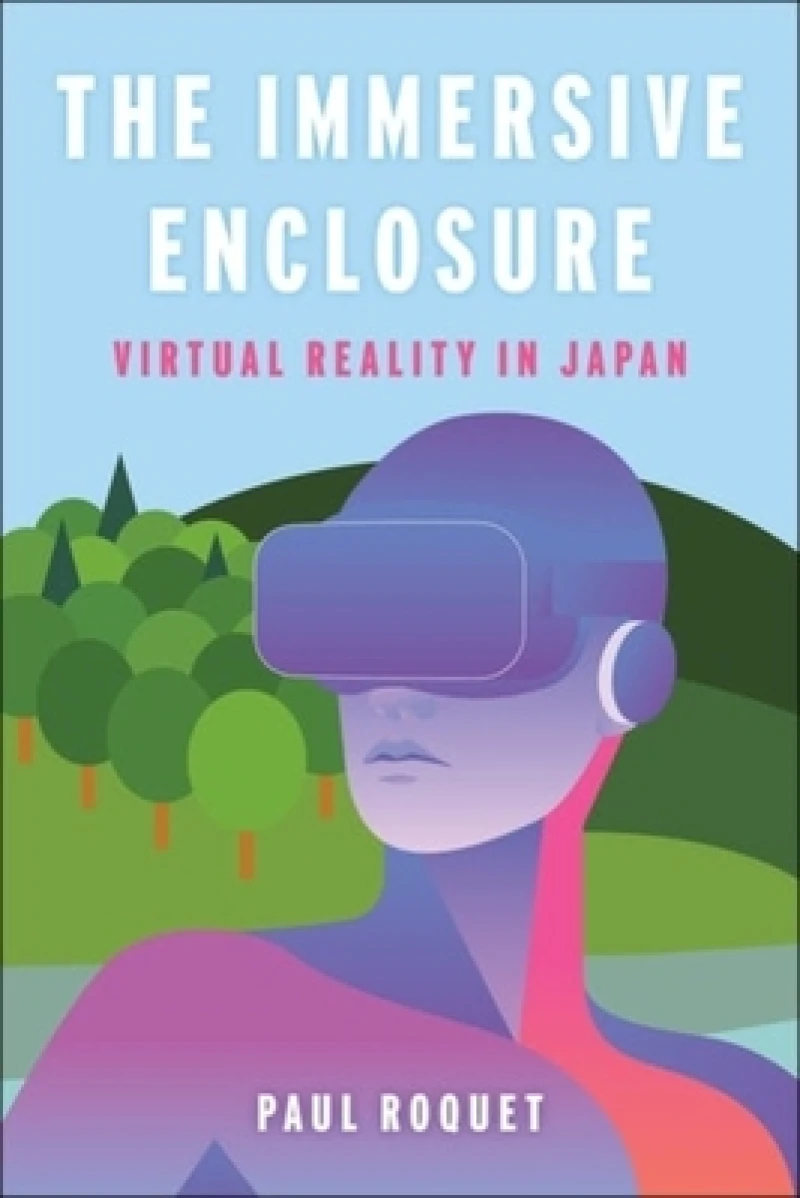
The Immersive Enclosure : Virtual Reality in Japan
by
Paul Roquet
Book Details
Format
Paperback / Softback
ISBN-10
023120535X
ISBN-13
9780231205351
Publisher
Columbia University Press
Imprint
Columbia University Press
Country of Manufacture
GB
Country of Publication
GB
Publication Date
May 24th, 2022
Print length
264 Pages
Weight
394 grams
Dimensions
22.60 x 15.20 x 1.80 cms
Product Classification:
Computer science
Ksh 5,400.00
Werezi Extended Catalogue
Delivery in 14 days
1 copies in stock
Delivery Location
Delivery fee: Select location
Delivery in 14 days
Secure
Quality
Fast
Is immersion just another name for enclosure? In this groundbreaking analysis of virtual reality in Japan, Paul Roquet uncovers how the technology is reshaping the politics of labor, gender, home, and nation.
Winner, 2023 Lewis Mumford Award for Outstanding Scholarship in the Ecology of Technics, Media Ecology Association
Although virtual reality promises to immerse a person in another world, its true power lies in its ability to sever a persons spatial situatedness in this one. This is especially clear in Japan, where the VR headset has been embraced as a way to block off existing social environments and reroute perception into more malleable virtual platforms. Is immersion just another name for enclosure?
In this groundbreaking analysis of virtual reality, Paul Roquet uncovers how the technology is reshaping the politics of labor, gender, home, and nation. He examines how VR in Japan diverged from American militarism and techno-utopian visions and became a tool for renegotiating personal space. Individuals turned to the VR headset to immerse themselves in three-dimensional worlds drawn from manga, video games, and genre literature. The Japanese government promised VR-operated robots would enable a new era of remote work, targeting those who could not otherwise leave home. Middle-aged men and corporate brands used VR to reimagine themselves through the virtual bodies of anime-styled teenage girls. At a time when digital platforms continue to encroach on everyday life, The Immersive Enclosure takes a critical look at these attempts to jettison existing social realities and offers a bold new approach for understanding the media environments to come.
Although virtual reality promises to immerse a person in another world, its true power lies in its ability to sever a persons spatial situatedness in this one. This is especially clear in Japan, where the VR headset has been embraced as a way to block off existing social environments and reroute perception into more malleable virtual platforms. Is immersion just another name for enclosure?
In this groundbreaking analysis of virtual reality, Paul Roquet uncovers how the technology is reshaping the politics of labor, gender, home, and nation. He examines how VR in Japan diverged from American militarism and techno-utopian visions and became a tool for renegotiating personal space. Individuals turned to the VR headset to immerse themselves in three-dimensional worlds drawn from manga, video games, and genre literature. The Japanese government promised VR-operated robots would enable a new era of remote work, targeting those who could not otherwise leave home. Middle-aged men and corporate brands used VR to reimagine themselves through the virtual bodies of anime-styled teenage girls. At a time when digital platforms continue to encroach on everyday life, The Immersive Enclosure takes a critical look at these attempts to jettison existing social realities and offers a bold new approach for understanding the media environments to come.
Get The Immersive Enclosure by at the best price and quality guaranteed only at Werezi Africa's largest book ecommerce store. The book was published by Columbia University Press and it has pages.

