
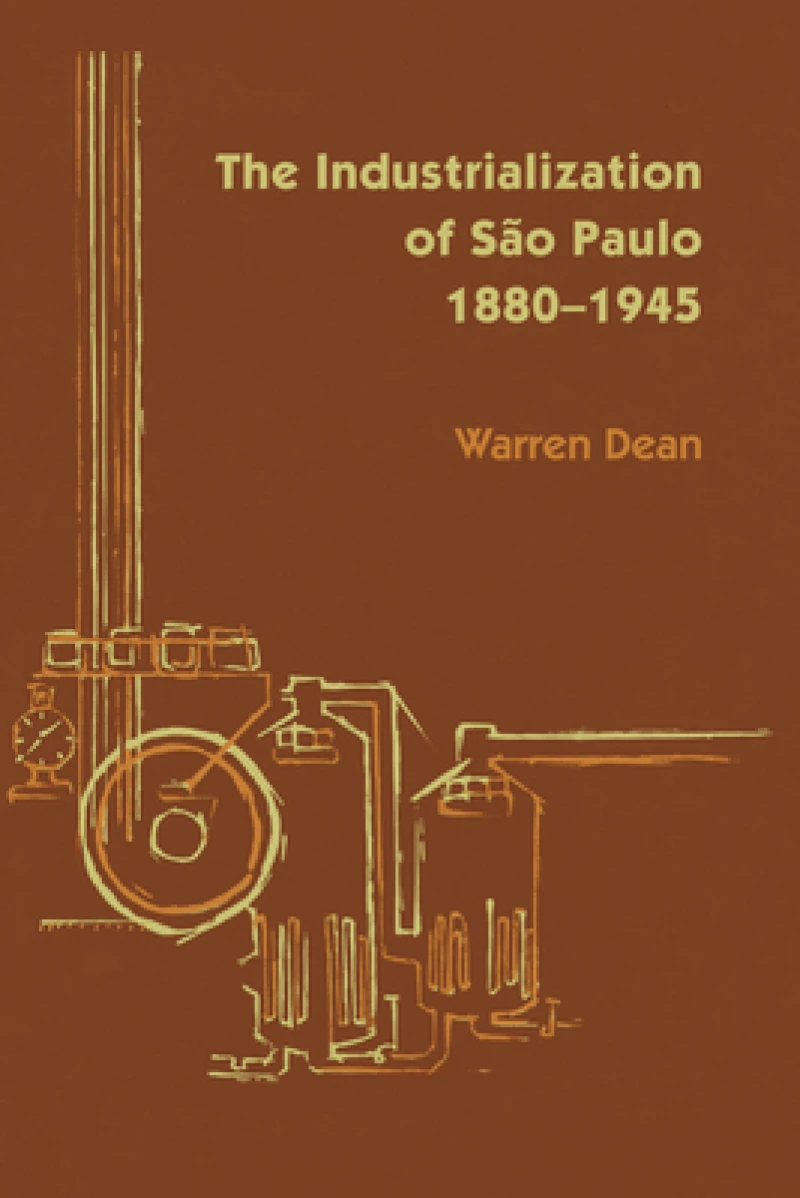
The Industrialization of Sao Paulo, 1800-1945
by
Warren Dean
Book Details
Format
Paperback / Softback
Book Series
LLILAS Latin American Monograph Series
ISBN-10
0292735626
ISBN-13
9780292735620
Publisher
University of Texas Press
Imprint
University of Texas Press
Country of Manufacture
US
Country of Publication
GB
Publication Date
Jan 1st, 1969
Print length
282 Pages
Weight
454 grams
Product Classification:
History of the AmericasEconomic history
Ksh 3,800.00
Werezi Extended Catalogue
0 in stock
Delivery Location
Delivery fee: Select location
Secure
Quality
Fast
SÃo Paulo is one of the few places in the underdeveloped world where an advanced industrial system has grown out of a tropical raw-material-exporting economy. By 1960 there were 830,000 industrial workers in the state, producing $3.3 billion worth of goods. It had become Latin America’s largest industrial center. This is a study of the early years of manufacturing in SÃo Paulo: how it was influenced by the growth and decline of the coffee trade; where it found its markets, its credit, and its labor force; and how it confronted the competition of imports. The principal focus, however, is on the manufacturers themselves, whose perceptions of their opportunities determined how industrialization was brought about. Warren Dean discusses their social origins, their connections with other sectors of the elite, their attitudes toward workers and consumers, and their view of the potentialities of economic development. He analyzes the political activities of the manufacturers, to discover both how they promoted their interests and how they confronted the larger challenge of social and political transformation. Paradoxically, the industrialization of SÃo Paulo is not a “success story” of private entrepreneurship. Until after World War II manufacturing grew quite slowly, and its hallmarks were always low productivity, technical backwardness, and consumer hostility. More than half of the state’s present large-scale factory production and nearly all of its heavy industry was built by foreign capital or state enterprise, not by privately owned firms. Dean shows that this outcome is partly a consequence of the historical experience of domestic manufacture. Throughout the book the author points out the “peculiar articulations” of the industrial system of SÃo Paulo-the significant social and political interests that determined what kinds of development were possible. The result is an exposition of an unusual case study in twentieth-century economic development.
Get The Industrialization of Sao Paulo, 1800-1945 by at the best price and quality guaranteed only at Werezi Africa's largest book ecommerce store. The book was published by University of Texas Press and it has pages.

