
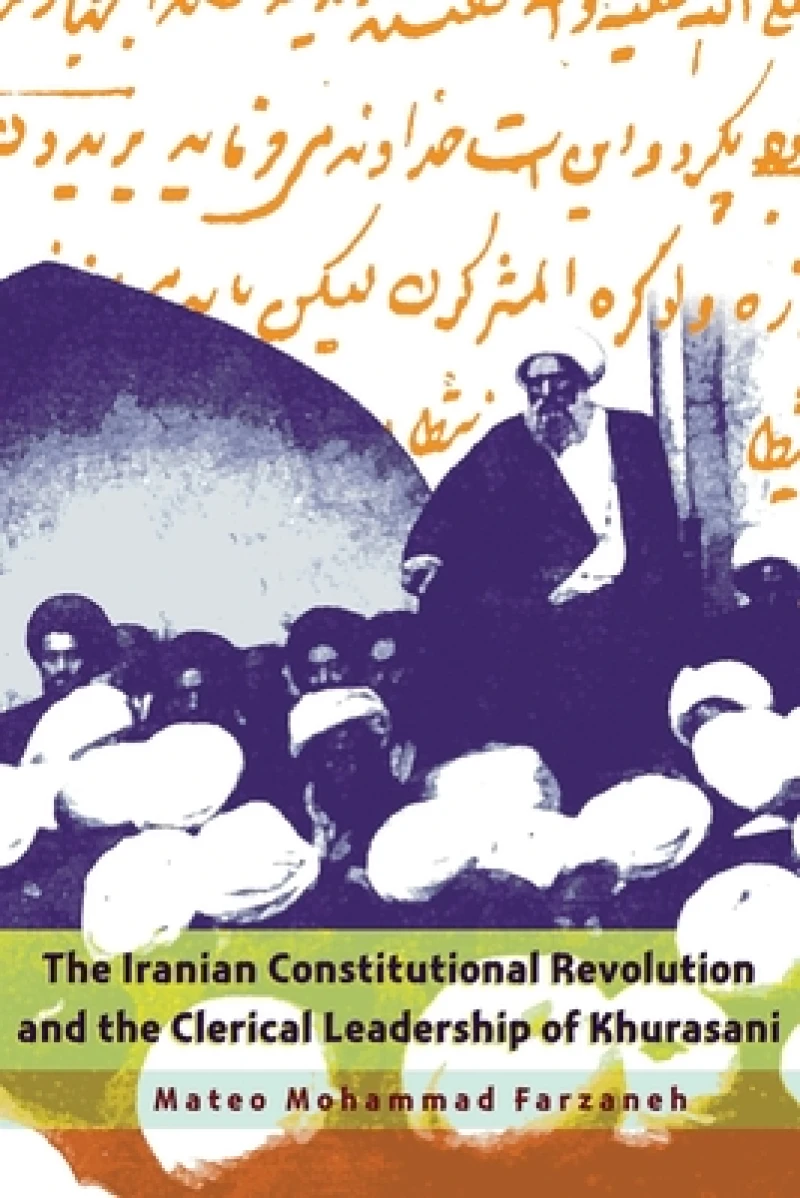
The Iranian Constitutional Revolution and the Clerical Leadership of Khurasani
Book Details
Format
Hardback or Cased Book
ISBN-10
0815633882
ISBN-13
9780815633884
Publisher
Syracuse University Press
Imprint
Syracuse University Press
Country of Manufacture
US
Country of Publication
GB
Publication Date
Mar 13th, 2015
Print length
360 Pages
Weight
625 grams
Dimensions
23.50 x 16.10 x 2.80 cms
Ksh 7,200.00
Werezi Extended Catalogue
0 in stock
Delivery Location
Delivery fee: Select location
Secure
Quality
Fast
The Iranian Constitutional Revolution was the twentieth century’s first such political movement in the Middle East. It represented a landmark in Iranian history because of the unlikely support it received from Shi‘ite clerics who historically viewed Western concepts with suspicion, some claiming constitutionalism to be anti-Islamic. Leading the support was Muhammad Kazim Khurasani, the renowned Shi‘ite jurist who conceived of a supporting role for the clergy in a modern Iranian political system.
Drawing on extensive analysis of religious texts, fatwas, and articles written by Khurasani an other pro- and anti-constitutionalists, Farzaneh provides a comprehensive and illuminating interpretation of Khurasani’s religious pragmatism. Despite some opposition from his peers, Khurasani used a form of jurisprudential reasoning when creating shari‘a that was based on human intellect to justify his support of not only the Iranian parliament but also the political powers of clerics. He had a reputation across the Shi‘ite community as a masterful religious scholar, a skillful teacher, and a committed humanitarian who heeded the people’s socioeconomic and political grievances and took action to address them. Khurasani’s push for progressive reforms helped to inaugurate a new era of clerical involvement in constitutionalism in the Middle East.
Drawing on extensive analysis of religious texts, fatwas, and articles written by Khurasani an other pro- and anti-constitutionalists, Farzaneh provides a comprehensive and illuminating interpretation of Khurasani’s religious pragmatism. Despite some opposition from his peers, Khurasani used a form of jurisprudential reasoning when creating shari‘a that was based on human intellect to justify his support of not only the Iranian parliament but also the political powers of clerics. He had a reputation across the Shi‘ite community as a masterful religious scholar, a skillful teacher, and a committed humanitarian who heeded the people’s socioeconomic and political grievances and took action to address them. Khurasani’s push for progressive reforms helped to inaugurate a new era of clerical involvement in constitutionalism in the Middle East.
Get The Iranian Constitutional Revolution and the Clerical Leadership of Khurasani by at the best price and quality guaranteed only at Werezi Africa's largest book ecommerce store. The book was published by Syracuse University Press and it has pages.

