
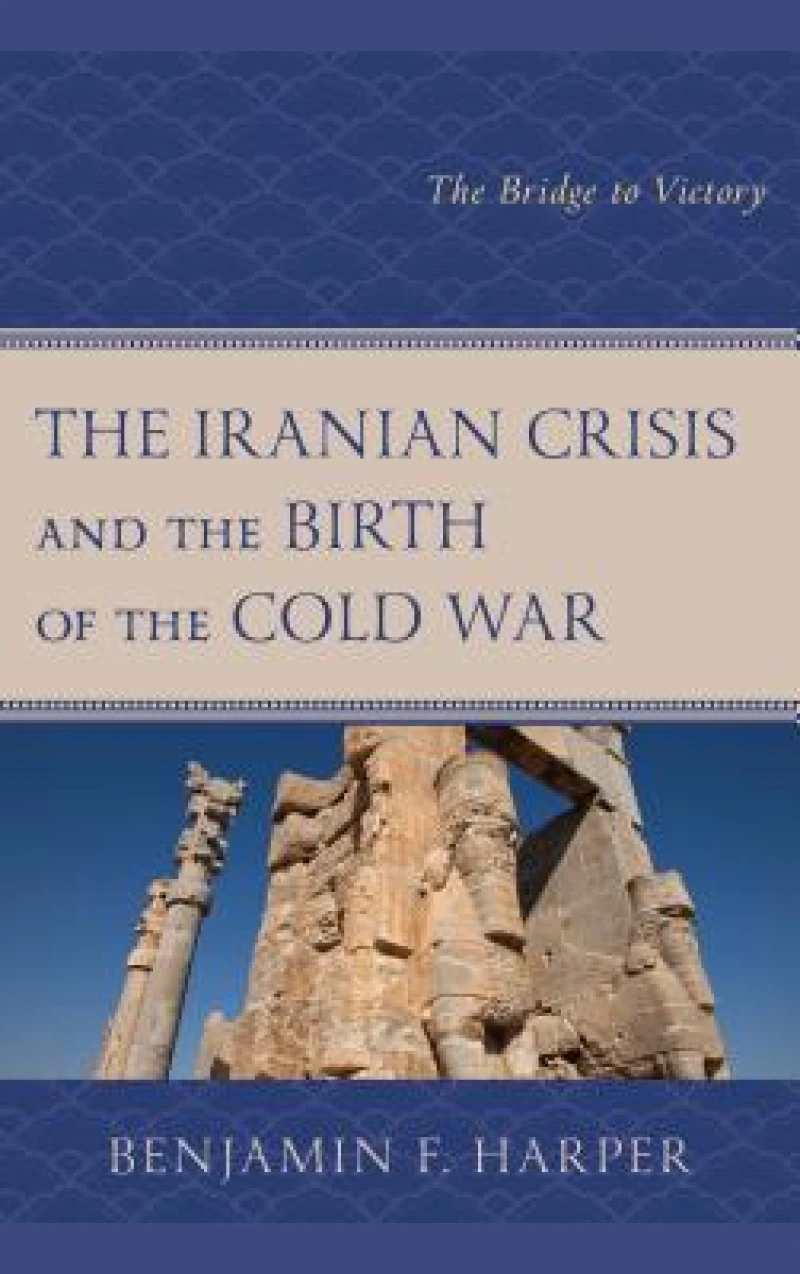
The Iranian Crisis and the Birth of the Cold War : The Bridge to Victory
Book Details
Format
Hardback or Cased Book
ISBN-10
1498576966
ISBN-13
9781498576963
Publisher
Bloomsbury Publishing Plc
Imprint
Lexington Books
Country of Manufacture
GB
Country of Publication
GB
Publication Date
Sep 15th, 2018
Print length
144 Pages
Weight
360 grams
Dimensions
16.10 x 23.70 x 1.60 cms
Product Classification:
Middle Eastern historyPolitics & governmentInternational relations
Ksh 16,350.00
Manufactured on Demand
0 in stock
Delivery Location
Delivery fee: Select location
Secure
Quality
Fast
This study examines the Iranian crisis of 1946 and its role in shaping the dynamics of the Cold War. The author uses the encounter as a case study to analyze how the United States used its atomic monopoly to achieve its international objectives in the early postwar era.
This work examines the Iranian Crisis of 1946 and its active role in shaping the Cold War that followed. It is intended to serve as a case study of how the United States was able to successfully flex its short-lived atomic monopoly and achieve its international objectives in the early postwar era. This writing engages with the robust academic field of U.S. foreign relations that over the past number of years revisited and reimagined the origins and driving forces of the Cold War. The Soviet Union’s violation of a troop withdrawal agreement at the conclusion of the Second World War, coupled with its active support of Kurdish and Azeri separatist movements, aggressively tested the new and evolving international order. The primary objective of this work is to understand how the international community achieved a relatively peaceful withdrawal of Soviet forces from Iranian territory. I contend that: 1) Iran possessed, due to its wartime role and latent economic potential, a degree of leverage in negotiations with the United States and Russia that other nations did not; 2) that the Iranian prime minister, Ahmad Qavām, shrewdly manipulated both superpowers with his own brand of masterful statecraft while pursuing his own “Iran-centric” objectives; 3) that the United States used its preponderance of military, economic, and diplomatic might to effectively achieve its postwar aims; and 4) the primary actors in the crisis solidified the legitimacy of the United Nations and its Security Council, which had previously been in jeopardy. While lesser known than the Berlin Airlift or the Korean War or the Cuban Missile Crisis, the Iranian Crisis revealed for the first time what a superpower clash might look like. This event provides a stunning example of crisis management by the primary participants. The Iranian Crisis was indeed the birth of the Cold War, and it established a model for state actions during and after this long conflict. The Crisis also provides a powerful example of how third-party entities outside of Europe, despite possessing relatively meager military and economic might, had the ability to alter and occasionally manipulate superpower behavior.
Get The Iranian Crisis and the Birth of the Cold War by at the best price and quality guaranteed only at Werezi Africa's largest book ecommerce store. The book was published by Bloomsbury Publishing Plc and it has pages.

