
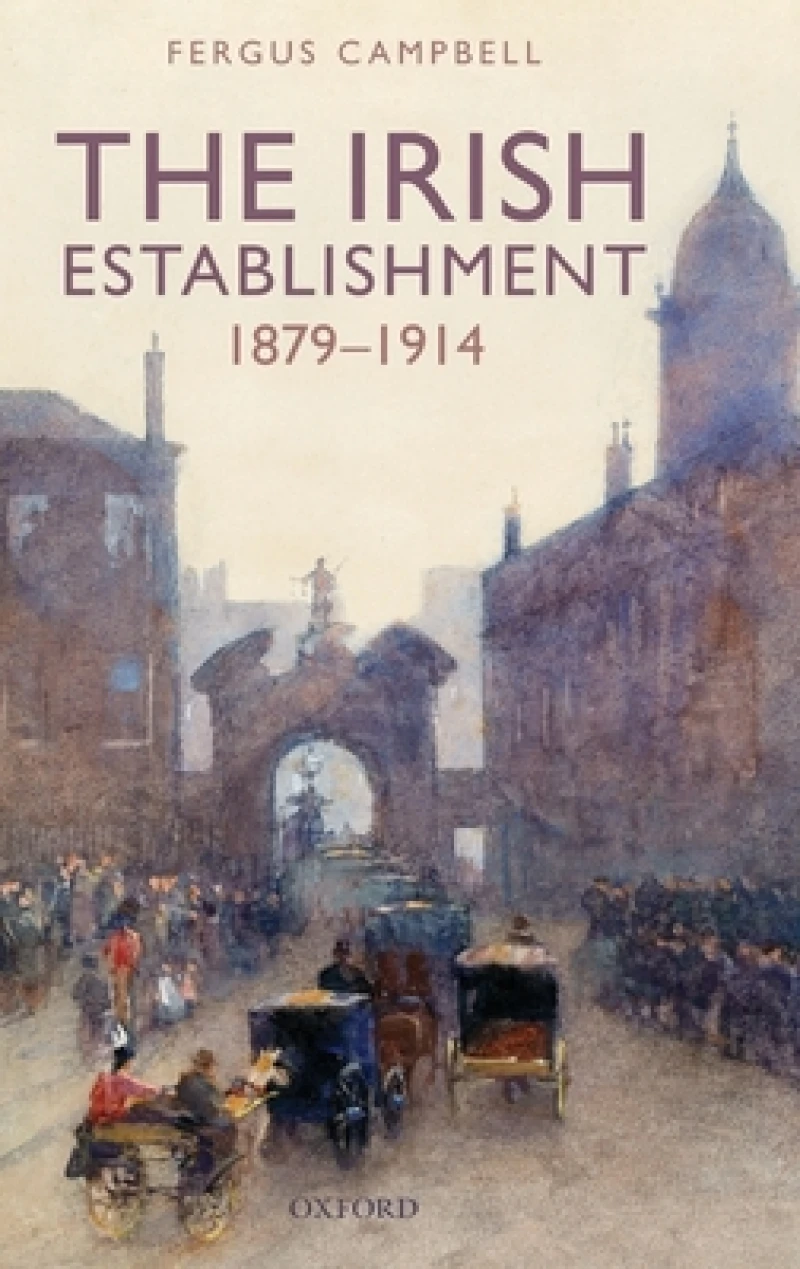
The Irish Establishment 1879-1914
Book Details
Format
Hardback or Cased Book
ISBN-10
0199233225
ISBN-13
9780199233229
Publisher
Oxford University Press
Imprint
Oxford University Press
Country of Manufacture
GB
Country of Publication
GB
Publication Date
Aug 6th, 2009
Print length
364 Pages
Weight
698 grams
Dimensions
24.20 x 16.60 x 2.50 cms
Ksh 29,450.00
Manufactured on Demand
0 in stock
Delivery Location
Delivery fee: Select location
Secure
Quality
Fast
The Irish Establishment examines who the most powerful men and women were in Ireland between the Land War and the beginning of the Great War, and considers how the composition of elite society changed during this period.
The Irish Establishment examines who the most powerful men and women were in Ireland between the Land War and the beginning of the Great War, and considers how the composition of elite society changed during this period. Although enormous shifts in economic and political power were taking place at the middle levels of Irish society, Fergus Campbell demonstrates that the Irish establishment remained remarkably static and unchanged. The Irish landlord class and the Irish Protestant middle class (especially businessmen and professionals) retained critical positions of power, and the rising Catholic middle class was largely-although not entirely-excluded from this establishment elite. In particular, Campbell focuses on landlords, businessmen, religious leaders, politicians, police officers, and senior civil servants, and examines their collective biographies to explore the changing nature of each of these elite groups.The book provides an alternative analysis to that advanced in the existing literature on elite groups in Ireland. Many historians argue that the members of the rising Catholic middle class were becoming successfully integrated into the Irish establishment by the beginning of the twentieth century, and that the Irish revolution (1916-23) represented a perverse turn of events that undermined an otherwise happy and democratic polity. Campbell suggests, on the other hand, that the revolution was a direct result of structural inequality and ethnic discrimination that converted well-educated young Catholics from ambitious students into frustrated revolutionaries. Finally, Campbell suggests that it was the strange intermediate nature of Ireland''s relationship with Britain under the Act of Union (1801-1922)-neither straightforward colony nor fully integrated part of the United Kingdom-that created the tensions that caused the Union to unravel long before Patrick Pearse pulled on his boots and marched down Sackville Street on Easter Monday in 1916.
Get The Irish Establishment 1879-1914 by at the best price and quality guaranteed only at Werezi Africa's largest book ecommerce store. The book was published by Oxford University Press and it has pages.

