
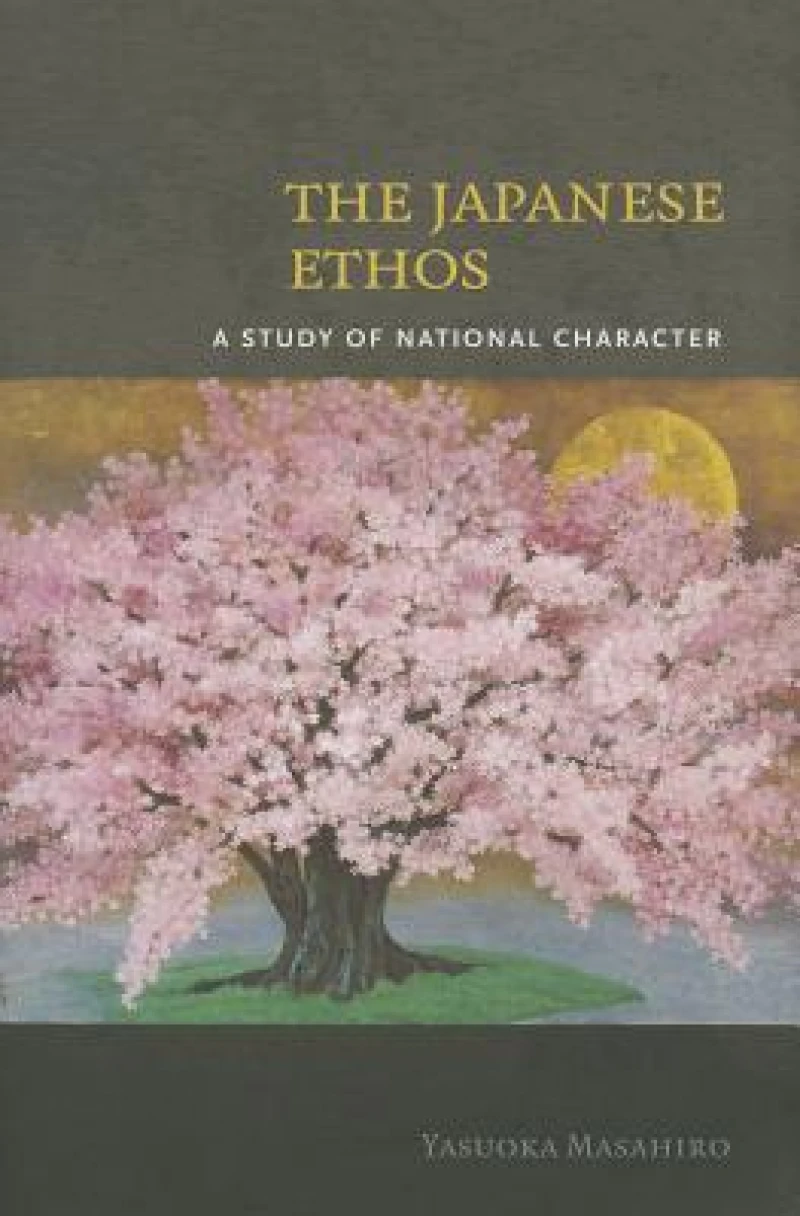
The Japanese Ethos : A Study of National Character
Book Details
Format
Hardback or Cased Book
ISBN-10
0824836235
ISBN-13
9780824836238
Publisher
University of Hawai'i Press
Imprint
University of Hawai'i Press
Country of Manufacture
US
Country of Publication
GB
Publication Date
Nov 30th, 2012
Print length
248 Pages
Weight
530 grams
Dimensions
23.10 x 15.40 x 2.50 cms
Product Classification:
Cultural studiesCultural studiesSociologySociology: customs & traditions
Ksh 3,900.00
Werezi Extended Catalogue
0 in stock
Delivery Location
Delivery fee: Select location
Secure
Quality
Fast
The Japanese Ethos: A Study of National Character is a seminal work of Yasuoka Masahiro (1898-1983). Published in 1924 despite Yasuoka’s dissatisfaction with its shortcomings, the book was kept out of print by Yasuoka until popularity prompted reissuance in 1934 and 1937.
In 1924, some 50 years after opening to the world in the Meiji Restoration, Japan was drowning in a flood of Western ideas, and all of Asia was in turmoil. The British-Afghan War had erupted just 5 years before, followed by Gandhi’s nationwide “non-cooperation” campaign in India one year later. Yasuoka, still in his 20s, and deeply troubled by Western decadence infecting Japan in this time of crisis, urged development of an independent national character. “Now, before our eyes in Japan, citizens, one and all, are unequivocally conscious of being confronted with a terrible crisis. The time is now for Japan, as a nation, to realize a remarkable development of character.”
The Japanese Ethos was written to guide Japan to a promising future through the wisdom of ancient teachings. In it, Yasuoka describes a history and tradition nurtured for more than 2000 years. The moral examples depicted are primarily samurai and he discusses in detail the character traits a samurai must cultivate. In later chapters he gives examples of men of great character. Two chapters address kendo (sword fighting), whose spirit “became the foundation of all the arts and letters, and of Eastern thought.” The samurai spirit was the leading force for the Meiji Restoration and is the essence of this book. For Japan, which lost much of its culture after World War II, The Japanese Ethos has awakened a nation from slumber. Though written nearly a century ago, it is surprisingly current and makes us ponder what it truly means to be Japanese.
In 1924, some 50 years after opening to the world in the Meiji Restoration, Japan was drowning in a flood of Western ideas, and all of Asia was in turmoil. The British-Afghan War had erupted just 5 years before, followed by Gandhi’s nationwide “non-cooperation” campaign in India one year later. Yasuoka, still in his 20s, and deeply troubled by Western decadence infecting Japan in this time of crisis, urged development of an independent national character. “Now, before our eyes in Japan, citizens, one and all, are unequivocally conscious of being confronted with a terrible crisis. The time is now for Japan, as a nation, to realize a remarkable development of character.”
The Japanese Ethos was written to guide Japan to a promising future through the wisdom of ancient teachings. In it, Yasuoka describes a history and tradition nurtured for more than 2000 years. The moral examples depicted are primarily samurai and he discusses in detail the character traits a samurai must cultivate. In later chapters he gives examples of men of great character. Two chapters address kendo (sword fighting), whose spirit “became the foundation of all the arts and letters, and of Eastern thought.” The samurai spirit was the leading force for the Meiji Restoration and is the essence of this book. For Japan, which lost much of its culture after World War II, The Japanese Ethos has awakened a nation from slumber. Though written nearly a century ago, it is surprisingly current and makes us ponder what it truly means to be Japanese.
Get The Japanese Ethos by at the best price and quality guaranteed only at Werezi Africa's largest book ecommerce store. The book was published by University of Hawai'i Press and it has pages.

