
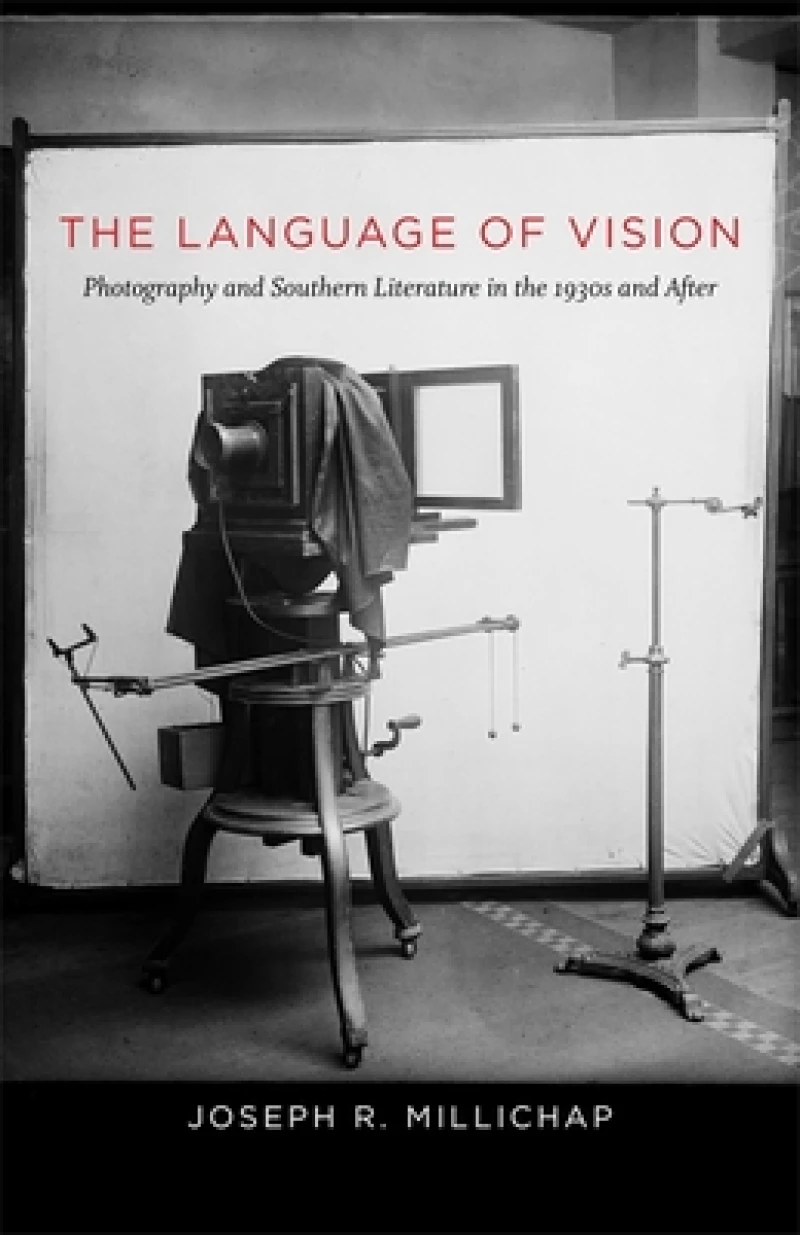
The Language of Vision : Photography and Southern Literature in the 1930s and After
Book Details
Format
Hardback or Cased Book
Book Series
Southern Literary Studies
ISBN-10
0807162779
ISBN-13
9780807162774
Publisher
Louisiana State University Press
Imprint
Louisiana State University Press
Country of Manufacture
US
Country of Publication
GB
Publication Date
Jun 6th, 2016
Print length
184 Pages
Weight
333 grams
Dimensions
22.40 x 14.70 x 1.90 cms
Ksh 7,200.00
Temporarily out of stock, due soon
0 in stock
Delivery Location
Delivery fee: Select location
Secure
Quality
Fast
Celebrates and interprets the complementary expressions of photography and literature in the South. Focusing on the 1930s, and including significant works both before and after this preeminent decade, Joseph Millichap uncovers fascinating convergences between mediums, particularly in the interplay of documentary realism and subjective modernism.
The Language of Vision celebrates and interprets the complementary expressions of photography and literature in the South. Southern imagery and text affect one another, explains Joseph R. Millichap, as intertextual languages and influential visions. Focusing on the 1930s, and including significant works both before and after this preeminent decade, Millichap uncovers fascinating convergences between mediums, particularly in the interplay of documentary realism and subjective modernism.
Millichap's subjects range from William Faulkner's fiction, perhaps the best representation of literary and graphic tensions of the period, and the work of other major figures like Robert Penn Warren and Eudora Welty to specific novels, including Ralph Ellison's Invisible Man and James Agee's Let Us Now Praise Famous Men. Fleshing out historical and cultural background as well as critical and theoretical context, Millichap shows how these texts echo and inform the visual medium to reveal personal insights and cultural meanings. Warren's fictions and poems, Millichap argues, redefine literary and graphic tensions throughout the late twentieth century; Welty's narratives and photographs reinterpret gender, race, and class; and Ellison's analysis of race in segregated America draws from contemporary photography. Millichap also traces these themes and visions in Natasha Trethewey's contemporary poetry and prose, revealing how the resonances of these artistic and historical developments extend into the new century. This groundbreaking study reads southern literature across time through the prism of photography, offering a brilliant formulation of the dialectic art forms.
Millichap's subjects range from William Faulkner's fiction, perhaps the best representation of literary and graphic tensions of the period, and the work of other major figures like Robert Penn Warren and Eudora Welty to specific novels, including Ralph Ellison's Invisible Man and James Agee's Let Us Now Praise Famous Men. Fleshing out historical and cultural background as well as critical and theoretical context, Millichap shows how these texts echo and inform the visual medium to reveal personal insights and cultural meanings. Warren's fictions and poems, Millichap argues, redefine literary and graphic tensions throughout the late twentieth century; Welty's narratives and photographs reinterpret gender, race, and class; and Ellison's analysis of race in segregated America draws from contemporary photography. Millichap also traces these themes and visions in Natasha Trethewey's contemporary poetry and prose, revealing how the resonances of these artistic and historical developments extend into the new century. This groundbreaking study reads southern literature across time through the prism of photography, offering a brilliant formulation of the dialectic art forms.
Get The Language of Vision by at the best price and quality guaranteed only at Werezi Africa's largest book ecommerce store. The book was published by Louisiana State University Press and it has pages.

