
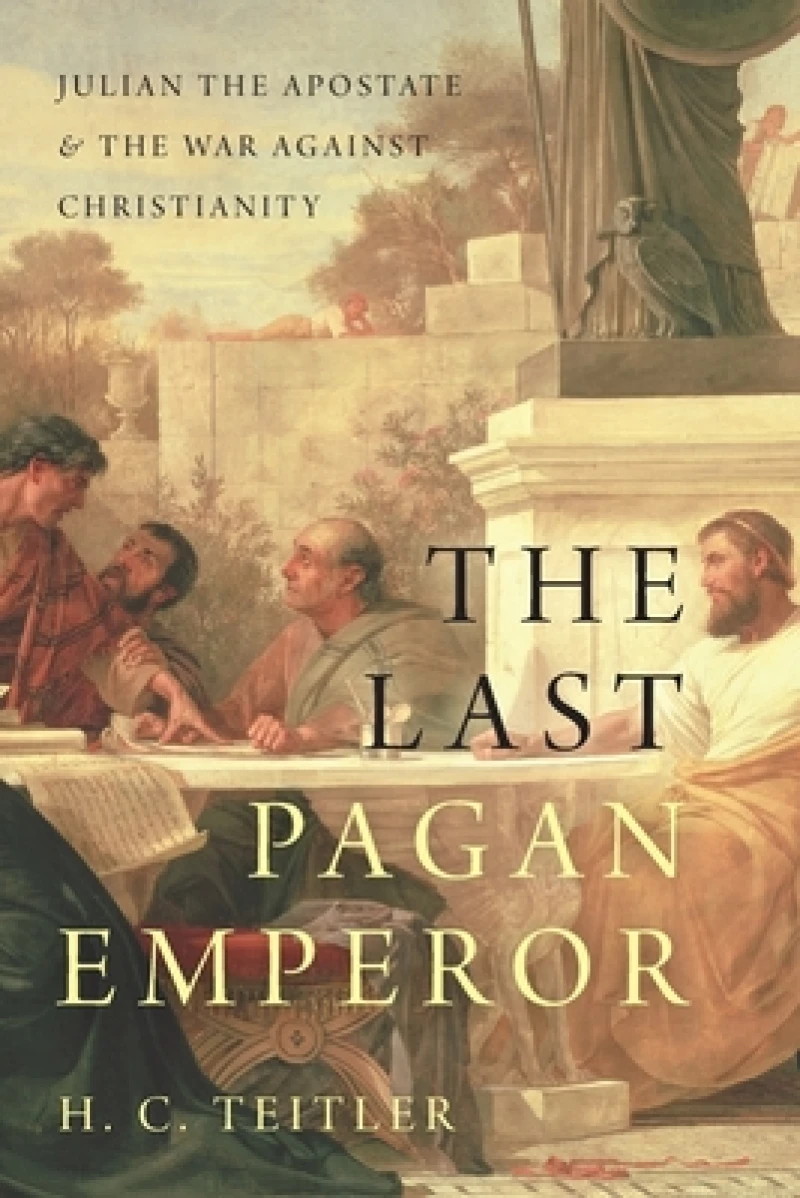
The Last Pagan Emperor : Julian the Apostate and the War against Christianity
Book Details
Format
Paperback / Softback
ISBN-10
0197540732
ISBN-13
9780197540732
Publisher
Oxford University Press Inc
Imprint
Oxford University Press Inc
Country of Manufacture
US
Country of Publication
GB
Publication Date
Oct 22nd, 2020
Print length
312 Pages
Weight
342 grams
Dimensions
14.90 x 20.90 x 2.40 cms
Product Classification:
Ancient history: to c 500 CEHistory of religionAncient religions & mythologies
Ksh 3,950.00
Werezi Extended Catalogue
0 in stock
Delivery Location
Delivery fee: Select location
Secure
Quality
Fast
The Roman emperor Julian (361-363) was raised as a Christian, but soon after apostatized, and, during his short reign, attempted to revive paganism. This provoked the anger of the Christians, who raised accusations against him as a persecutor. In The Last Pagan Emperor, these claims are carefully investigated.
Flavius Claudius Julianus was the last pagan to sit on the Roman imperial throne (361-363). Born in Constantinople in 331 or 332, Julian was raised as a Christian, but apostatized, and during his short reign tried to revive paganism, which, after the conversion to Christianity of his uncle Constantine the Great early in the fourth century, began losing ground at an accelerating pace. Having become an orphan when he was still very young, Julian was taken care of by his cousin Constantius II, one of Constantine''s sons, who permitted him to study rhetoric and philosophy and even made him co-emperor in 355. But the relations between Julian and Constantius were strained from the beginning, and it was only Constantius'' sudden death in 361 which prevented an impending civil war.As sole emperor, Julian restored the worship of the traditional gods. He opened pagan temples again, reintroduced animal sacrifices, and propagated paganism through both the spoken and the written word. In his treatise Against the Galilaeans he sharply criticised the religion of the followers of Jesus whom he disparagingly called ''Galilaeans''. He put his words into action, and issued laws which were displeasing to Christians--the most notorious being his School Edict. This provoked the anger of the Christians, who reacted fiercely, and accused Julian of being a persecutor like his predecessors Nero, Decius, and Diocletian. Violent conflicts between pagans and Christians made themselves felt all over the empire. It is disputed whether or not Julian himself was behind such outbursts. Accusations against the Apostate continued to be uttered even after the emperor''s early death. In this book, the feasibility of such charges is examined.
Get The Last Pagan Emperor by at the best price and quality guaranteed only at Werezi Africa's largest book ecommerce store. The book was published by Oxford University Press Inc and it has pages.

