
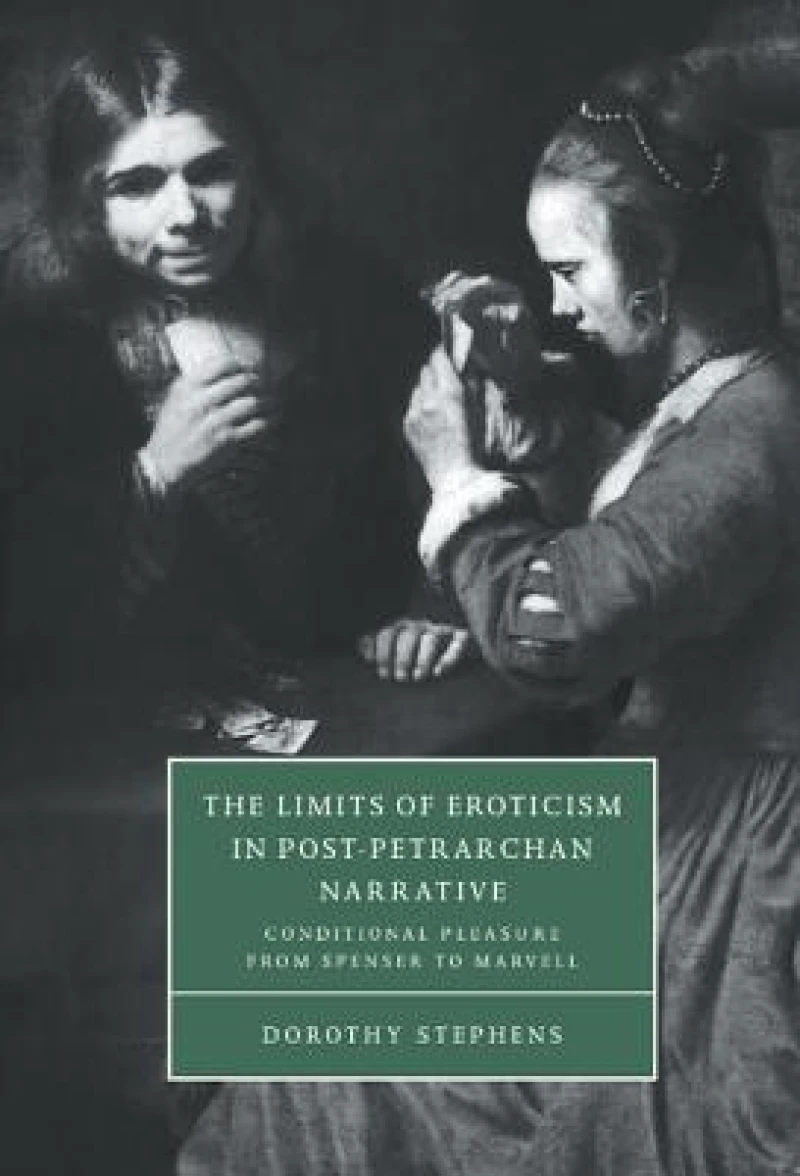
The Limits of Eroticism in Post-Petrarchan Narrative : Conditional Pleasure from Spenser to Marvell
Book Details
Format
Hardback or Cased Book
ISBN-10
0521630649
ISBN-13
9780521630641
Publisher
Cambridge University Press
Imprint
Cambridge University Press
Country of Manufacture
GB
Country of Publication
GB
Publication Date
Nov 26th, 1998
Print length
264 Pages
Weight
489 grams
Dimensions
22.90 x 15.20 x 1.90 cms
Ksh 17,100.00
Manufactured on Demand
0 in stock
Delivery Location
Delivery fee: Select location
Secure
Quality
Fast
Petrarch imagined that the hopeless but pure love of a woman could lead a man to heaven. In sixteenth-century England Edmund Spenser wrote poetry in the Petrarchan tradition while flirting with a very different kind of feminine image, creating an alternative form of eroticism to which later writers responded.
Although theories of exploitation and subversion have radically changed our understanding of gender in Renaissance literature, to favour only those theories is to risk ignoring productive exchanges between 'masculine' and 'feminine' in Renaissance culture. 'Appropriation' is too simple a term to describe these exchanges - as when Petrarchan lovers flirt dangerously with potentially destructive femininity. Spenser revises this Petrarchan phenomenon, constructing flirtations whose participants are figures of speech, readers or narrative voices. His plots allow such exchanges to occur only through conditional speech, but this very conditionality powerfully shapes his work. Seventeenth-century works - including a comedy by Jane Cavendish and Elizabeth Brackley, and Upon Appleton House by Andrew Marvell - suggest that the civil war and the upsurge of female writers necessitated a reformulation of conditional erotics.
Get The Limits of Eroticism in Post-Petrarchan Narrative by at the best price and quality guaranteed only at Werezi Africa's largest book ecommerce store. The book was published by Cambridge University Press and it has pages.

