
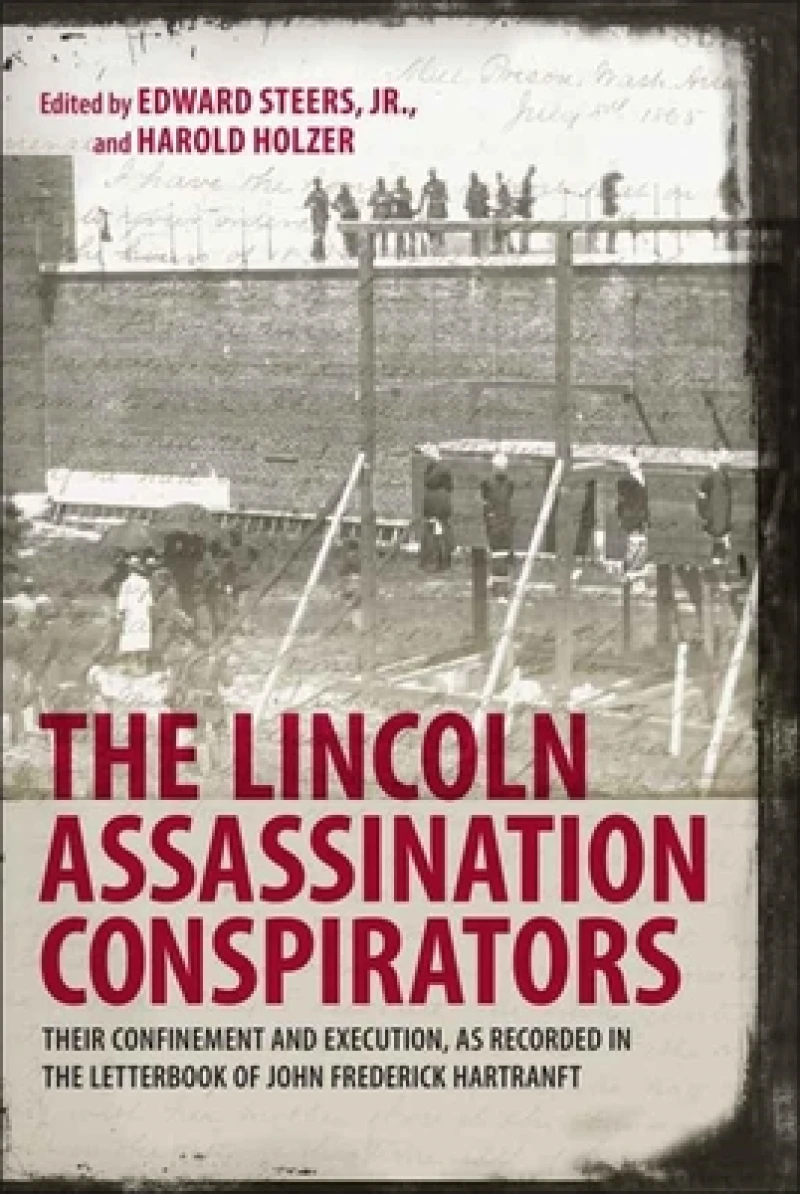
The Lincoln Assassination Conspirators : Their Confinement and Execution, As Recorded in the Letterbook of John Frederick Hartranft
Book Details
Format
Hardback or Cased Book
ISBN-10
0807133965
ISBN-13
9780807133965
Publisher
Louisiana State University Press
Imprint
Louisiana State University Press
Country of Manufacture
US
Country of Publication
GB
Publication Date
Mar 15th, 2009
Print length
208 Pages
Weight
454 grams
Dimensions
23.00 x 16.00 x 1.90 cms
Ksh 4,650.00
Temporarily out of stock, due soon
0 in stock
Delivery Location
Delivery fee: Select location
Secure
Quality
Fast
On May 1, 1865, two weeks after Abraham Lincoln's assassination, recently inaugurated president Andrew Johnson appointed John Frederick Hartranft to command the military prison at the Washington Arsenal, where the U.S. government had just incarcerated the seven men and one woman accused of complicity in the shooting. From that day through the execution of four of the accomplices, the Pennsylvania-born general held responsibility for the most notorious prisoners in American history. A strict adherent to protocol, Hartranft kept a meticulously detailed account of his experiences in the form of a letterbook. In The Lincoln Assassination Conspirators, noted Lincoln scholars Edward Steers, Jr., and Harold Holzer, in partnership with the National Archives, present this fascinating historical record for the first time with contextual materials and expert annotations, providing a remarkable glimpse behind the scenes of the assassination's aftermath.
Hartranft oversaw every aspect of the prisoners' daily lives, from making sure they were fed and kept clean to ensuring that no one communicated with them except on the written orders of Secretary of War Edwin M. Stanton. In his Letterbook, Hartranft scrupulously recounts the arrival of each prisoner and describes the prison routine -- which included three simple meals a day, a twice-daily cell inspection by Hartranft himself, and frequent physical examinations by an army physician. The prisoners wore wrist and leg shackles and, controversially, most of them wore special hoods designed to isolate them from their surroundings.
When the conspirators' trial began, the nation waited eagerly for news, and many sought retribution against those they held responsible for the nation's grief. Hartranft resisted calls for both vengeance and mercy and continued to treat his notorious charges as humanely as possible, facilitating meetings with clergy and sending letters to and from family members. Yet, as his detached, detailed description of the execution of four of the conspirators shows, he did not allow emotion to impede the performance of his duty.
The legal and moral issues surrounding the conspirators' trial -- the extraordinary use of military rather than civil justice, the treatment of the accused while incarcerated, the fine line between swift and precipitous justice -- remain volatile, unsettled issues today. Hartranft's keen observations, ably analyzed by historians Steers and Holzer, will add a riveting new chapter to the story of Lincoln's assassination.
Hartranft oversaw every aspect of the prisoners' daily lives, from making sure they were fed and kept clean to ensuring that no one communicated with them except on the written orders of Secretary of War Edwin M. Stanton. In his Letterbook, Hartranft scrupulously recounts the arrival of each prisoner and describes the prison routine -- which included three simple meals a day, a twice-daily cell inspection by Hartranft himself, and frequent physical examinations by an army physician. The prisoners wore wrist and leg shackles and, controversially, most of them wore special hoods designed to isolate them from their surroundings.
When the conspirators' trial began, the nation waited eagerly for news, and many sought retribution against those they held responsible for the nation's grief. Hartranft resisted calls for both vengeance and mercy and continued to treat his notorious charges as humanely as possible, facilitating meetings with clergy and sending letters to and from family members. Yet, as his detached, detailed description of the execution of four of the conspirators shows, he did not allow emotion to impede the performance of his duty.
The legal and moral issues surrounding the conspirators' trial -- the extraordinary use of military rather than civil justice, the treatment of the accused while incarcerated, the fine line between swift and precipitous justice -- remain volatile, unsettled issues today. Hartranft's keen observations, ably analyzed by historians Steers and Holzer, will add a riveting new chapter to the story of Lincoln's assassination.
Get The Lincoln Assassination Conspirators by at the best price and quality guaranteed only at Werezi Africa's largest book ecommerce store. The book was published by Louisiana State University Press and it has pages.

