
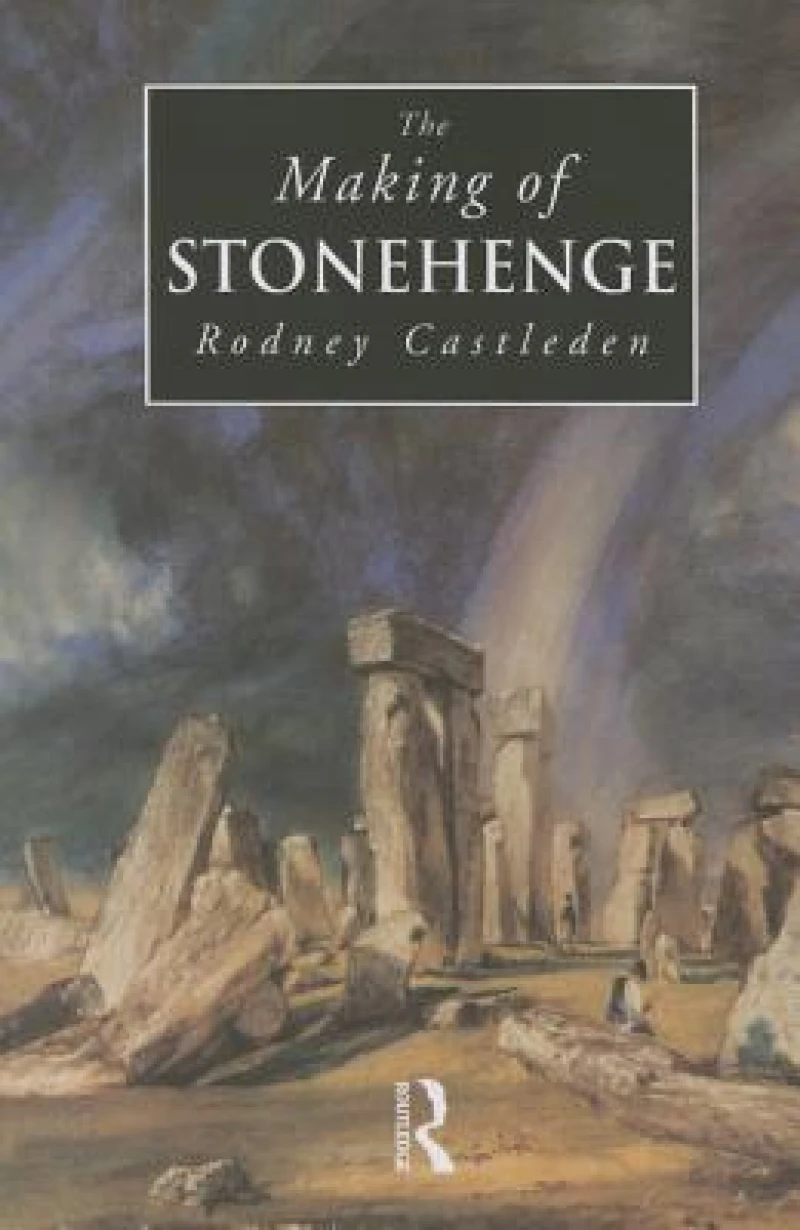
The Making of Stonehenge
Book Details
Format
Paperback / Softback
ISBN-10
0415642884
ISBN-13
9780415642880
Publisher
Taylor & Francis Ltd
Imprint
Routledge
Country of Manufacture
GB
Country of Publication
GB
Publication Date
Sep 10th, 2015
Print length
320 Pages
Weight
486 grams
Dimensions
15.70 x 23.20 x 2.90 cms
Product Classification:
British & Irish historyAncient history: to c 500 CECultural studies
Ksh 10,100.00
Werezi Extended Catalogue
0 in stock
Delivery Location
Delivery fee: Select location
Secure
Quality
Fast
Castleden suggests that there is no one `meaning' or `purpose' for Stonehenge, that from its very beginning it has filled a variety of needs.
Every generation has created its own interpretation of Stonehenge, but rarely do these relate to the physical realities of the monument. Rodney Castleden begins with those elements which made possible the building of this vast stone circle: the site, the materials and the society that undertook the enormous task of transporting and raising the great vertical stones, then capping them, all to a carefully contrived plan.
What emerges from this detailed examination is a much fuller sense of Stonehenge, both in relation to all the similar sites close by, and in terms of the uses to which it was put. Castleden suggests that there is no one ''meaning'' or ''purpose'' for Stonehenge, that from its very beginning it has filled a variety of needs. The Romans saw it as a centre of resistance; the antiquaries who ''rediscovered'' it in the seventeenth century saw a long line of continuity leading back into the nation''s past. The archaeologists see it as a subject for rational, scientific investigation; The National Trust and English Heritage view it as an unfailing magnet for visitors; UNESCO has declared it a World Heritage Site, the cultural property of the whole of humanity. Lost to view amid competing interests over the millenia are the uses it has served for those who live within its penumbra, for whom Stonehenge has never been ''lost'' or ''rediscovered''. It exists in local myth and legend, stretching back beyond history.
What emerges from this detailed examination is a much fuller sense of Stonehenge, both in relation to all the similar sites close by, and in terms of the uses to which it was put. Castleden suggests that there is no one ''meaning'' or ''purpose'' for Stonehenge, that from its very beginning it has filled a variety of needs. The Romans saw it as a centre of resistance; the antiquaries who ''rediscovered'' it in the seventeenth century saw a long line of continuity leading back into the nation''s past. The archaeologists see it as a subject for rational, scientific investigation; The National Trust and English Heritage view it as an unfailing magnet for visitors; UNESCO has declared it a World Heritage Site, the cultural property of the whole of humanity. Lost to view amid competing interests over the millenia are the uses it has served for those who live within its penumbra, for whom Stonehenge has never been ''lost'' or ''rediscovered''. It exists in local myth and legend, stretching back beyond history.
Get The Making of Stonehenge by at the best price and quality guaranteed only at Werezi Africa's largest book ecommerce store. The book was published by Taylor & Francis Ltd and it has pages.

