
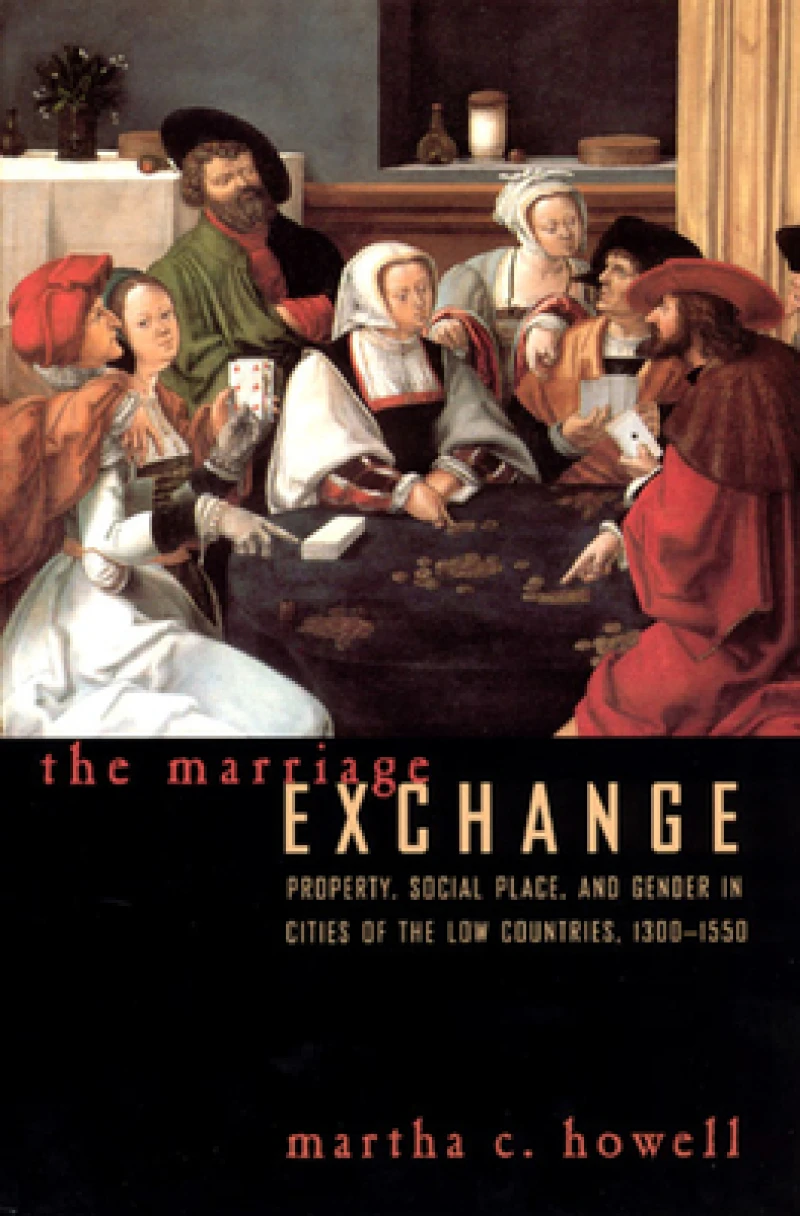
The Marriage Exchange – Property, Social Place, and Gender in Cities of the Low Countries, 1300–1550 : Property, Social Place, and Gender in Cities of the Low Countries, 1300-1550
Book Details
Format
Hardback or Cased Book
Book Series
Women in Culture and Society
ISBN-10
0226355152
ISBN-13
9780226355153
Publisher
The University of Chicago Press
Imprint
University of Chicago Press
Country of Manufacture
GB
Country of Publication
GB
Publication Date
Jun 22nd, 1998
Print length
294 Pages
Weight
602 grams
Dimensions
16.20 x 23.60 x 2.40 cms
Product Classification:
c 1000 CE to c 150016th century, c 1500 to c 1599European historyEarly history: c 500 to c 1450/1500Feminism and feminist theoryFeminism & feminist theorySociology: family & relationshipsSociology: family, kinship and relationshipsContract lawProperty lawProperty law: generalHistoryEuropean history
Ksh 14,600.00
Werezi Extended Catalogue
Delivery in 14 days
1 copies in stock
Delivery Location
Delivery fee: Select location
Delivery in 14 days
Secure
Quality
Fast
Medieval Douai left an enormous archive of documents. This text reveals how these documents were produced in an effort to regulate property and gender relations. At the centre was a shift to a property regime based on contract. The book explores why the law changed and assesses its effects.
Medieval Douai was one of the wealthiest cloth towns of Flanders, and it left an enormous archive documenting the personal financial affairs of its citizens--wills, marriage agreements, business contracts, and records of court disputes over property rights of all kinds. Based on extensive research in this archive, this book reveals how these documents were produced in a centuries-long effort to regulate--and ultimately to redefine--property and gender relations. At the center of the transformation was a shift from a marital property regime based on custom to one based on contract. In the former, a widow typically inherited her husband's property; in the latter, she shared it with or simply held it for his family or offspring. Howell asks why the law changed as it did and assesses the law's effects on both social and gender meanings but she insists that the reform did not originate in general dissatisfaction with custom or a desire to disempower widows. Instead, it was born in a complex economic, social and cultural history during which Douaisiens gradually came to think about both property and gender in new ways.
Get The Marriage Exchange – Property, Social Place, and Gender in Cities of the Low Countries, 1300–1550 by at the best price and quality guaranteed only at Werezi Africa's largest book ecommerce store. The book was published by The University of Chicago Press and it has pages.

