
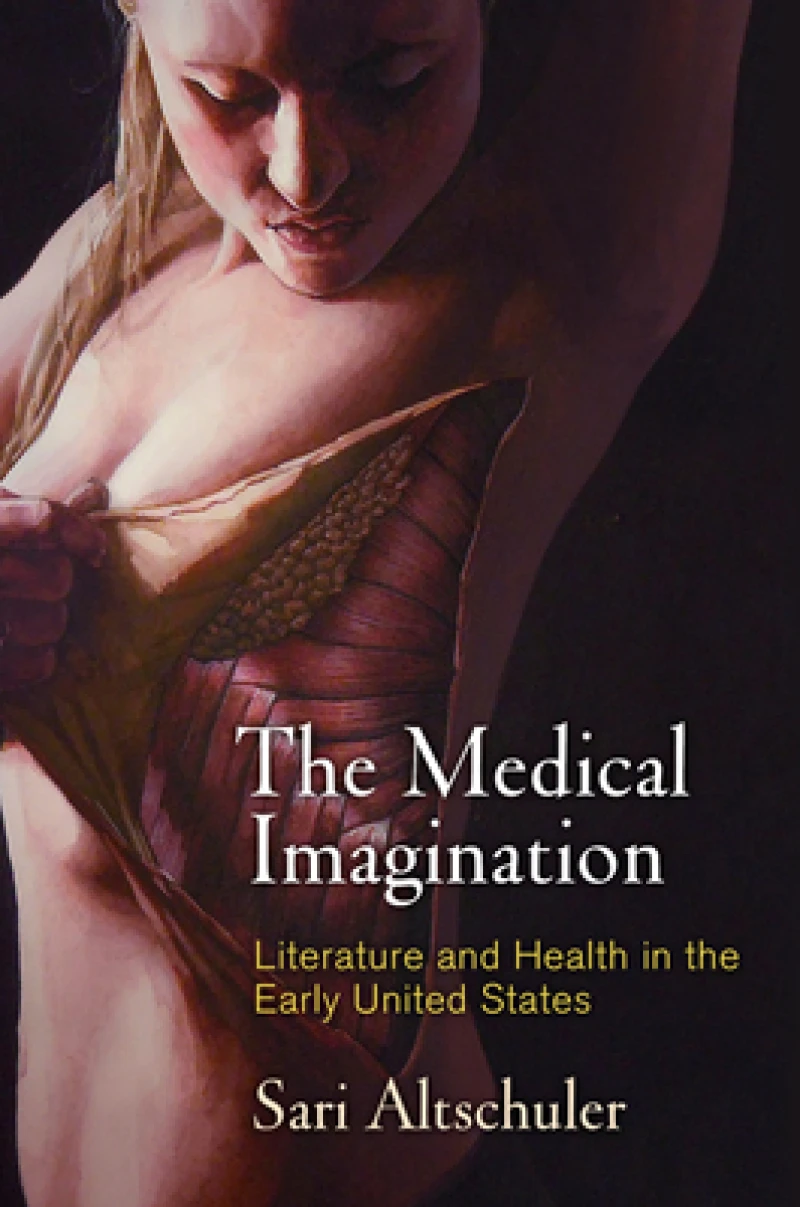
The Medical Imagination : Literature and Health in the Early United States
Book Details
Format
Hardback or Cased Book
Book Series
Early American Studies
ISBN-10
0812249860
ISBN-13
9780812249866
Publisher
University of Pennsylvania Press
Imprint
University of Pennsylvania Press
Country of Manufacture
US
Country of Publication
GB
Publication Date
Mar 20th, 2018
Print length
312 Pages
Weight
640 grams
Dimensions
16.20 x 23.90 x 3.10 cms
Product Classification:
Literary studies: c 1500 to c 1800Literary studies: c 1800 to c 1900 History of medicine
Ksh 9,350.00
Werezi Extended Catalogue
0 in stock
Delivery Location
Delivery fee: Select location
Secure
Quality
Fast
In 1872, Ralph Waldo Emerson wrote, "Science does not know its debt to imagination," words that still ring true in the worlds of health and health care today. The checklists and clinical algorithms of modern medicine leave little space for imagination, and yet we depend on creativity and ingenuity for the advancement of medicine-to diagnose unusual conditions, to innovate treatment, and to make groundbreaking discoveries. We know a great deal about the empirical aspects of medicine, but we know far less about what the medical imagination is, what it does, how it works, or how we might train it. In The Medical Imagination, Sari Altschuler argues that this was not always so. During the eighteenth and nineteenth centuries, doctors understood the imagination to be directly connected to health, intimately involved in healing, and central to medical discovery. In fact, for physicians and other health writers in the early United States, literature provided important forms for crafting, testing, and implementing theories of health. Reading and writing poetry trained judgment, cultivated inventiveness, sharpened observation, and supplied evidence for medical research, while novels and short stories offered new perspectives and sites for experimenting with original medical theories. Such imaginative experimentation became most visible at moments of crisis or novelty in American medicine, such as the 1790s yellow fever epidemics, the global cholera pandemics, and the discovery of anesthesia, when conventional wisdom and standard practice failed to produce satisfying answers to pressing questions. Throughout the eighteenth and nineteenth centuries, health research and practice relied on a broader complex of knowing, in which imagination often worked with and alongside observation, experience, and empirical research. In reframing the historical relationship between literature and health, The Medical Imagination provides a usable past for contemporary conversations about the role of the imagination-and the humanities more broadly-in health research and practice today.
Get The Medical Imagination by at the best price and quality guaranteed only at Werezi Africa's largest book ecommerce store. The book was published by University of Pennsylvania Press and it has pages.

