
Cart 0
The Mercantile Ethical Tradition in Edo Period Japan
Click to zoom

Share this book

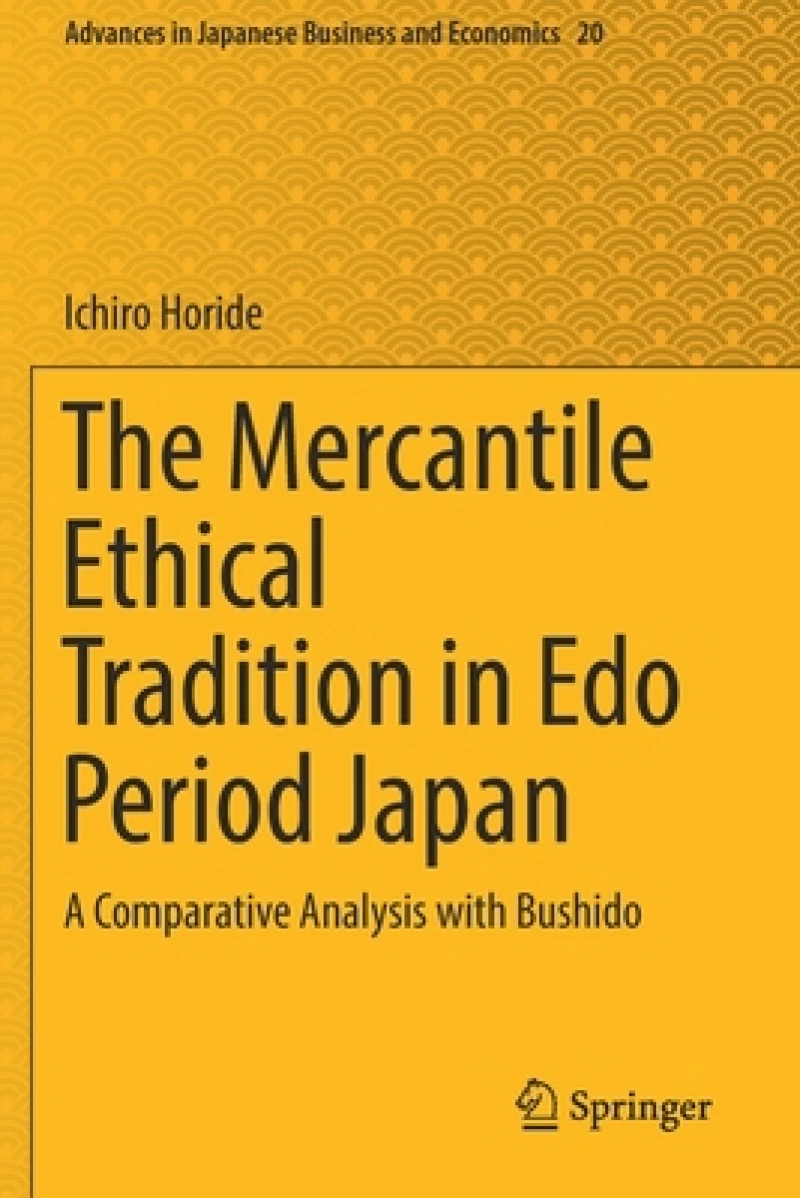
The Mercantile Ethical Tradition in Edo Period Japan : A Comparative Analysis with Bushido

2019 ed.

Book Details

Format Paperback / Softback
ISBN-10 981137340X
ISBN-13 9789811373404
Edition 2019 ed.
Publisher Springer Verlag, Singapore
Imprint Springer Verlag, Singapore
Country of Manufacture GB
Country of Publication GB
Publication Date Aug 14th, 2020
Print length 233 Pages
Ksh 21,600.00
Werezi Extended Catalogue Delivery in 28 days

Delivery Location

Delivery fee: Select location

Delivery in 28 days

Secure
Quality
Fast
This book demonstrates that during Japan’s early modern Edo period (1603–1868) an ethical code existed among the merchant class comparable to that of the well-known Bushido. There is compelling evidence that contemporary merchants, who were widely and openly despised as immoral by the samurai, in fact acted in highly ethical ways in accordance with a well-articulated moral code. Japanese society was strictly stratified into four distinct and formally recognized classes: warrior, farmer, craftsman and merchant. From the warriors’ perspective, the merchants, at the base of the social order, had no virtue, and existed only to skim profits as middlemen between producers and consumers. But were these accusations correct? Were the merchants really unethical beings who engaged in unfair business practices? There is ample evidence that negates the ubiquitous slanders of the warrior class and suggests that merchants – no less than the warriors – possessed and acted in accordance with a well-developed ethical code, a spirit that may be called shonindo or “The Way of the Merchant.” This book examines whether a comparison of shonindo, depicting the ethical point of view of the merchant class, and Bushido, embodying that of the warrior class, reveals that shonindo may have in fact surpassed Bushido in some aspects. Comparing contemporarily published historical documents concerning both shonindo and Bushido, as well as Inazo Nitobe’s classic work Bushido: The Soul of Japan, published in 1900, the author examines how Bushido surpassed shonindo in that warriors were willing to die for their strict ethical code. Shonindo, however, may have surpassed Bushido in that merchants were liberal, willing to expand and extend application of their ethical beliefs into all aspects of everyday life for the overall benefit of society. This ethical code is compared with that of the conservative Bushido, which demonstrably proved not up to the task for the modernization and improved well-being of Japan. Ichiro Horide is professor emeritus of Reitaku University. Edward Yagi (Reitaku University) and Stanley J. Ziobro II (Trident Technical College) collaborated in the translation of the original Japanese manuscript into English.

This book demonstrates that during Japan''s early modern Edo period (1603-1868) an ethical code existed among the merchant class comparable to that of the well-known Bushido. There is compelling evidence that contemporary merchants, who were widely and openly despised as immoral by the samurai, in fact acted in highly ethical ways in accordance with a well-articulated moral code.

Japanese society was strictly stratified into four distinct and formally recognized classes: warrior, farmer, craftsman and merchant. From the warriors'' perspective, the merchants, at the base of the social order, had no virtue, and existed only to skim profits as middlemen between producers and consumers. But were these accusations correct? Were the merchants really unethical beings who engaged in unfair business practices? There is ample evidence that negates the ubiquitous slanders of the warrior class and suggests that merchants - no less than the warriors - possessed and acted in accordance with a well-developed ethical code, a spirit that may be called shonindo or "The Way of the Merchant."

This book examines whether a comparison of shonindo, depicting the ethical point of view of the merchant class, and Bushido, embodying that of the warrior class, reveals that shonindo may have in fact surpassed Bushido in some aspects. Comparing contemporarily published historical documents concerning both shonindo and Bushido, as well as Inazo Nitobe''s classic work Bushido: The Soul of Japan, published in 1900, the author examines how Bushido surpassed shonindo in that warriors were willing to die for their strict ethical code. Shonindo, however, may have surpassed Bushido in that merchants were liberal, willing to expand and extend application of their ethical beliefs into all aspects of everyday life for the overall benefit of society. This ethical code is compared with that of the conservative Bushido, which demonstrably proved not up to the task for the modernization and improved well-being of Japan.

Ichiro Horide is professor emeritus of Reitaku University. Edward Yagi (Reitaku University) and Stanley J. Ziobro II (Trident Technical College) collaborated in the translation of the original Japanese manuscript into English.


Get The Mercantile Ethical Tradition in Edo Period Japan by at the best price and quality guaranteed only at Werezi Africa's largest book ecommerce store. The book was published by Springer Verlag, Singapore and it has pages.


Mind, Body, & Spirit

Price

Ksh 21,600.00

Shopping Cart

Africa largest book store

Sub Total:
Ebooks

Digital Library
Coming Soon

Our digital collection is currently being curated to ensure the best possible reading experience on Werezi. We'll be launching our Ebooks platform shortly.