
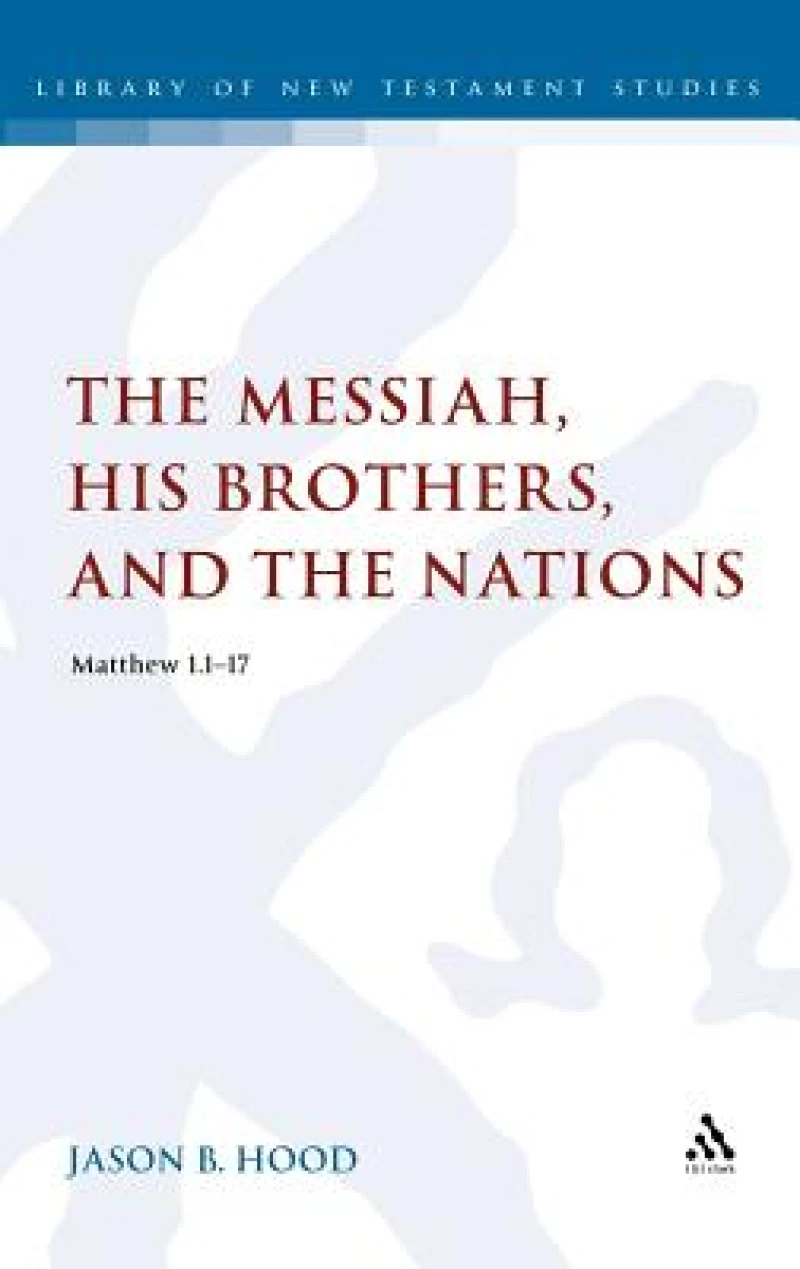
The Messiah, His Brothers, and the Nations : (Matthew 1.1-17)
Book Details
Format
Hardback or Cased Book
Book Series
The Library of New Testament Studies
ISBN-10
0567432289
ISBN-13
9780567432285
Publisher
Bloomsbury Publishing PLC
Imprint
T.& T.Clark Ltd
Country of Manufacture
GB
Country of Publication
GB
Publication Date
May 26th, 2011
Print length
208 Pages
Weight
496 grams
Dimensions
24.10 x 16.30 x 2.10 cms
Product Classification:
New Testaments
Ksh 26,800.00
Manufactured on Demand
0 in stock
Delivery Location
Delivery fee: Select location
Secure
Quality
Fast
Why does Matthew append 'and his brothers' to Judah and Jechoniah (1:2, 11)? Secondly, why does Matthew include the following four annotations: 'and Zerah by Tamar', 'by Rahab', 'by Ruth', and 'by the [wife] of Uriah' (1:3-6)? The title offers a look at the function of biblical genealogies, and the relationship between "Matthew" 1 and 28.
Why does Matthew append ‘and his brothers'' to Judah and Jechoniah (1:2, 11)? Secondly, why does Matthew include the following four annotations: ‘and Zerah by Tamar'', ‘by Rahab'', ‘by Ruth'', and ‘by the [wife] of Uriah'' (1:3-6)? Jason B. Hood uses a composition critical approach in which he examines biblical genealogies and ‘summaries of Israel''s story'' in order to shed light on these features of Matthew''s gospel.
Hood asserts that he addition of ‘and his brothers'' recalls Jesus'' royal role. Judah and Jechoniah in Second Temple literature are both understood to have reversed their wickedness and earned royal status by self-sacrifice, perhaps pointing to the self-sacrifice of Jesus for his brothers before his full enthronement. A review of scholarly explanations of the significance of the ‘four (five) women'' in the genealogy, unearths an overlooked interpretation - Matthew does not name four women in 1:3-6 but four Gentiles (Tamar, Rahab, Ruth and Uriah) traditionally celebrated as righteous.
Hood asserts that he addition of ‘and his brothers'' recalls Jesus'' royal role. Judah and Jechoniah in Second Temple literature are both understood to have reversed their wickedness and earned royal status by self-sacrifice, perhaps pointing to the self-sacrifice of Jesus for his brothers before his full enthronement. A review of scholarly explanations of the significance of the ‘four (five) women'' in the genealogy, unearths an overlooked interpretation - Matthew does not name four women in 1:3-6 but four Gentiles (Tamar, Rahab, Ruth and Uriah) traditionally celebrated as righteous.
Get The Messiah, His Brothers, and the Nations by at the best price and quality guaranteed only at Werezi Africa's largest book ecommerce store. The book was published by Bloomsbury Publishing PLC and it has pages.

