
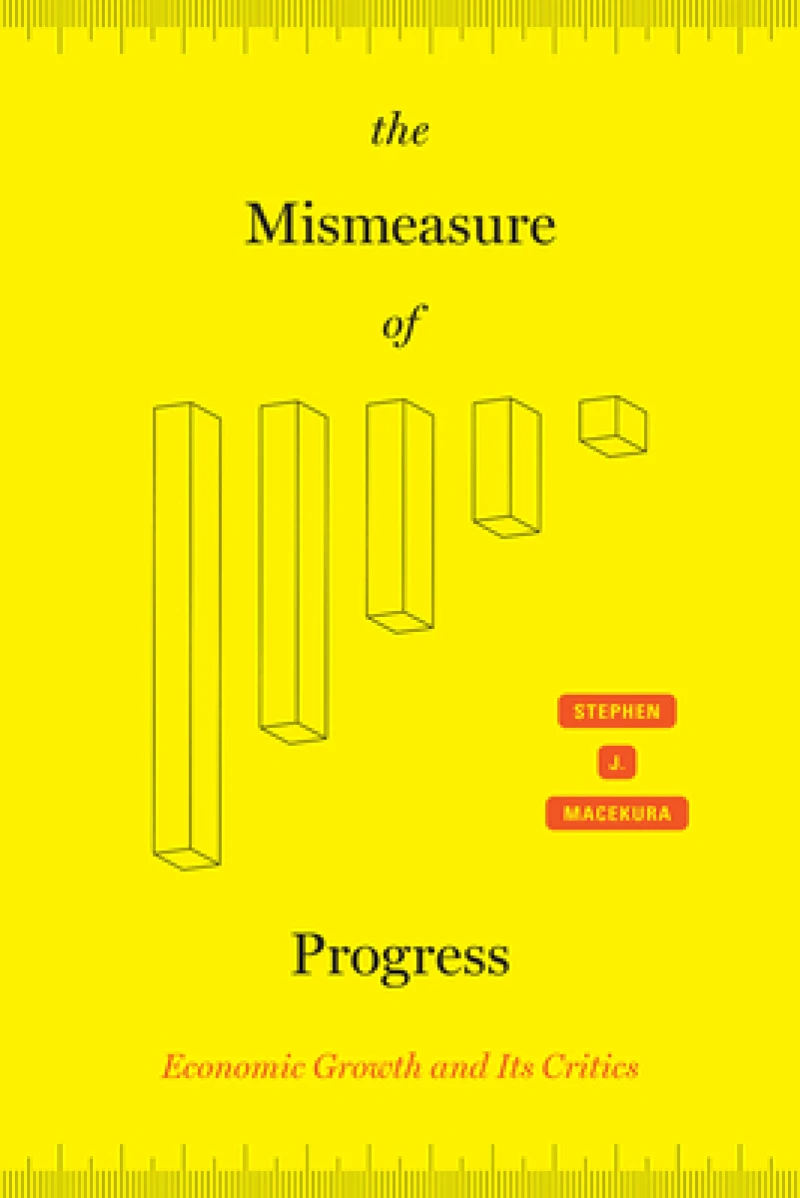
The Mismeasure of Progress : Economic Growth and Its Critics
Book Details
Format
Hardback or Cased Book
ISBN-10
022673630X
ISBN-13
9780226736303
Publisher
The University of Chicago Press
Imprint
University of Chicago Press
Country of Manufacture
US
Country of Publication
GB
Publication Date
Nov 4th, 2020
Print length
320 Pages
Weight
598 grams
Dimensions
16.20 x 23.70 x 2.80 cms
Product Classification:
HistoryArchaeologyMacroeconomicsPolitical economyEconomic history
Ksh 4,550.00
Werezi Extended Catalogue
Delivery in 14 days
1 copies in stock
Delivery Location
Delivery fee: Select location
Delivery in 14 days
Secure
Quality
Fast
Few ideas in the past century have had wider financial, political, and governmental impact than that of economic growth. The common belief that endless economic growth, as measured by Gross Domestic Product, is not only possible but actually essential for the flourishing of civilization remains a powerful policy goal and aspiration for many. In The Mismeasure of Progress, Stephen J. Macekura exposes a historical road not taken, illuminating the stories of the activists, intellectuals, and other leaders who long argued that GDP growth was not all it was cracked up to be. Beginning with the rise of the growth paradigm in the 1940s and 1950s and continuing through the present day, The Mismeasure of Progress is the first book on the myriad thinkers who argued against growth and the conventional way progress had been measured and defined. For growth critics, questioning the meaning and measurement of growth was a necessary first step to creating a more just, equal, and sustainable world. These critics argued that focusing on growth alone would not resolve social, political, and environmental problems, and they put forth alternate methods for defining and measuring human progress. In today's global political scene--marked by vast inequalities of power and wealth and made even more fraught by a global climate emergency--the ideas presented by these earlier critics of growth resonate more loudly than ever. Economic growth appealed to many political leaders because it allowed them to avoid addressing political trade-offs and class conflict. It sustained the fiction that humans are somehow separate from nonhuman "nature," ignoring the intimate and dense connections between the two. In order to create a truly just and equitable society, Macekura argues, we need a clear understanding of our collective needs beyond growth and more holistic definitions of progress that transcend economic metrics like GDP.
Get The Mismeasure of Progress by at the best price and quality guaranteed only at Werezi Africa's largest book ecommerce store. The book was published by The University of Chicago Press and it has pages.

