
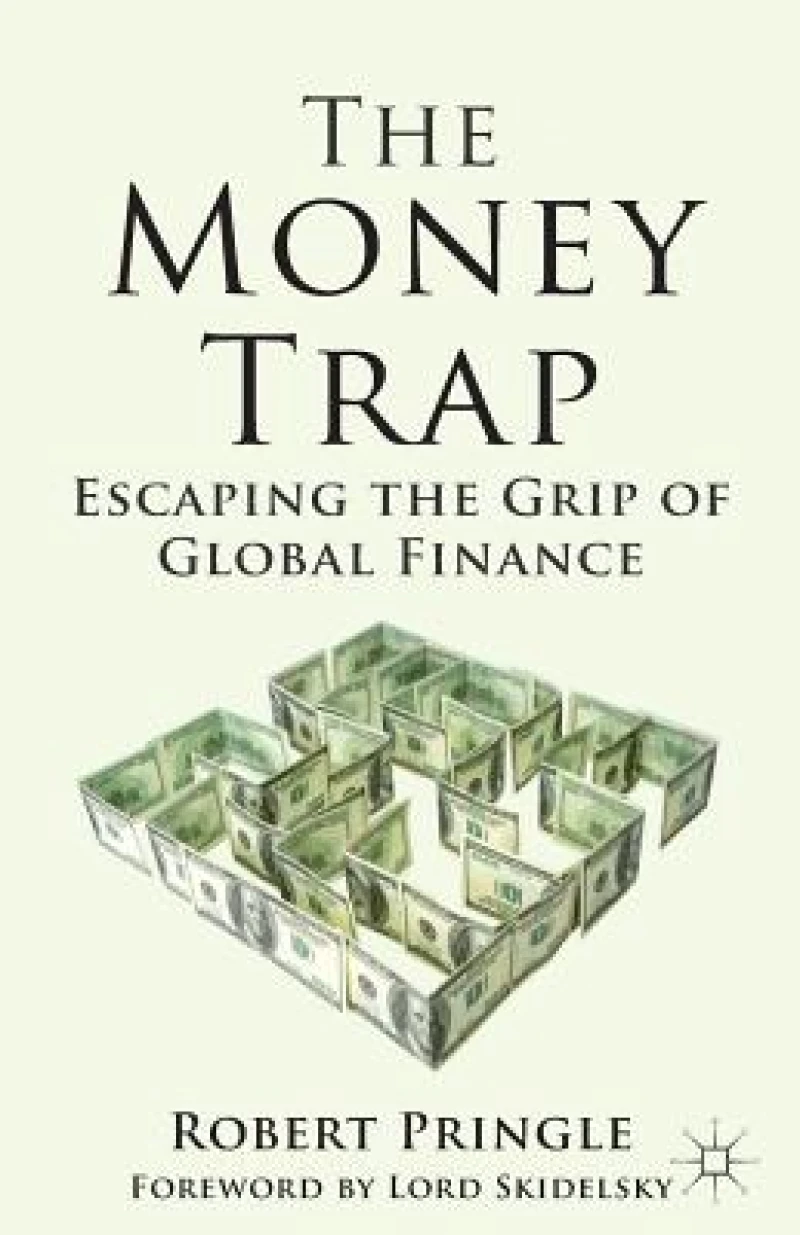
The Money Trap : Escaping the Grip of Global Finance
by
R. Pringle
Book Details
Format
Paperback / Softback
ISBN-10
1137366907
ISBN-13
9781137366900
Publisher
Palgrave Macmillan
Imprint
Palgrave Macmillan
Country of Manufacture
GB
Country of Publication
GB
Publication Date
Jun 7th, 2014
Print length
300 Pages
Weight
452 grams
Dimensions
21.40 x 13.80 x 2.10 cms
Ksh 19,800.00
Werezi Extended Catalogue
0 in stock
Delivery Location
Delivery fee: Select location
Secure
Quality
Fast
The world economy is caught in a money trap. Existing monetary arrangements meet the needs neither of the ageing societies of the West nor of younger emerging economies. This in-depth analysis explains how the world got into the grip of global finance - and how it can escape, with a growing demand for reform.
Why have the efforts of governments and central banks to revive economic growth and solve the problems left by the global financial crisis met with such limited success? Why have markets been periodically paralysed by fear and uncertainty?
This book argues that governments have been using the wrong policy weapons. They have relied on the traditional tools of low interest rates and monetary ease, plus tighter bank regulation and new macro-prudential toolkits.
The Money Trap discusses how governments have failed to understand the roots of the rolling crisis and recession of 2007-12. It argues that these roots lie in the interaction of an elastic credit supply, dysfunctional banking systems and an unreformed international monetary system.
Historically, the advanced countries enjoyed long periods of economic growth with stable money and without systemic banking crises - and minimal bank supervision. We can learn from the historical experience, and from the teaching of great economists. They point to a clear conclusion.
A root-and-branch reform both of banking and of international money is required. The centrepiece of such a reform should be the re-establishment of a trusted international monetary standard.
This book brings together the main strands of the current policy-oriented discussions and analyses a range of solutions, providing readers with an integrated guide and analysis to the events in the years since the start of the crisis in 2007 and their antecedents in the development of the system since the early 1970s. It draws on the author''s extensive contacts and work as a leading financial commentator over the past 40 years.
This book argues that governments have been using the wrong policy weapons. They have relied on the traditional tools of low interest rates and monetary ease, plus tighter bank regulation and new macro-prudential toolkits.
The Money Trap discusses how governments have failed to understand the roots of the rolling crisis and recession of 2007-12. It argues that these roots lie in the interaction of an elastic credit supply, dysfunctional banking systems and an unreformed international monetary system.
Historically, the advanced countries enjoyed long periods of economic growth with stable money and without systemic banking crises - and minimal bank supervision. We can learn from the historical experience, and from the teaching of great economists. They point to a clear conclusion.
A root-and-branch reform both of banking and of international money is required. The centrepiece of such a reform should be the re-establishment of a trusted international monetary standard.
This book brings together the main strands of the current policy-oriented discussions and analyses a range of solutions, providing readers with an integrated guide and analysis to the events in the years since the start of the crisis in 2007 and their antecedents in the development of the system since the early 1970s. It draws on the author''s extensive contacts and work as a leading financial commentator over the past 40 years.
Get The Money Trap by at the best price and quality guaranteed only at Werezi Africa's largest book ecommerce store. The book was published by Palgrave Macmillan and it has pages.

