
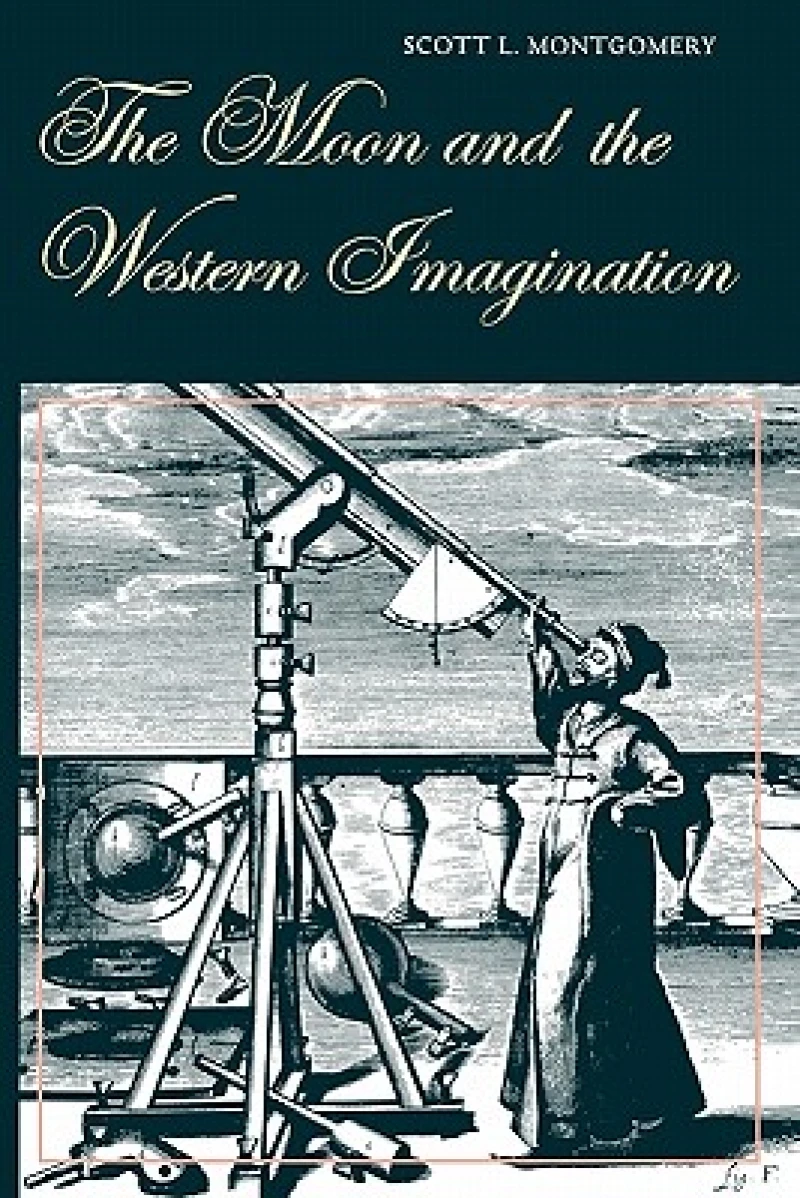
The Moon and the Western Imagination
Book Details
Format
Paperback / Softback
ISBN-10
0816519897
ISBN-13
9780816519897
Publisher
University of Arizona Press
Imprint
University of Arizona Press
Country of Manufacture
US
Country of Publication
GB
Publication Date
Jan 30th, 2001
Print length
264 Pages
Weight
415 grams
Dimensions
23.40 x 15.60 x 1.60 cms
Product Classification:
Solar system: the Sun & planetsSolar system: the Sun and planets
Ksh 3,800.00
Werezi Extended Catalogue
0 in stock
Delivery Location
Delivery fee: Select location
Secure
Quality
Fast
Offers a richly detailed analysis of how the Moon has been visualized in Western culture through the ages, revealing the faces it has presented to philosophers, writers, artists, and scientists for nearly three millennia.
The Moon is at once a face with a thousand expressions and the archetypal planet. Throughout history it has been gazed upon by people of every culture in every walk of life. From early perceptions of the Moon as an abode of divine forces, humanity has in turn accepted the mathematized Moon of the Greeks, the naturalistic lunar portrait of Jan van Eyck, and the telescopic view of Galileo. Scott Montgomery has produced a richly detailed analysis of how the Moon has been visualized in Western culture through the ages, revealing the faces it has presented to philosophers, writers, artists, and scientists for nearly three millennia. To do this, he has drawn on a wide array of sources that illustrate mankind''s changing concept of the nature and significance of heavenly bodies from classical antiquity to the dawn of modern science. Montgomery especially focuses on the seventeenth century, when the Moon was first mapped and its features named. From literary explorations such as Francis Godwin''s Man in the Moone and Cyrano de Bergerac''s L''autre monde to Michael Van Langren''s textual lunar map and Giambattista Riccioli''s Almagestum novum, he shows how Renaissance man was moved by the lunar orb, how he battled to claim its surface, and how he in turn elevated the Moon to a new level in human awareness. The effect on human imagination has been cumulative: our idea of the Moon, and therefore the planets, is multilayered and complex, having been enriched by associations played out in increasingly complicated harmonies over time. We have shifted the way we think about the lunar face from a ""perfect"" body to an earthlike one, with corresponding changes in verbal and visual expression. Ultimately, Montgomery suggests, our concept of the Moon has never wandered too far from the world we know best the Earth itself. And when we finally establish lunar bases and take up some form of residence on the Moon''s surface, we will not be conquering a New World, fresh and mostly unknown, but a much older one, ripe with history.
Get The Moon and the Western Imagination by at the best price and quality guaranteed only at Werezi Africa's largest book ecommerce store. The book was published by University of Arizona Press and it has pages.

